
Although the expected political confrontation between the Government and the President of Poland will mainly concern domestic issues, unfortunately, the topic of Ukraine situationally acted as a “hostage” of the situation and an object of political games.
A new batch of vetoes by Karol Navrotsky on legislative initiatives of the Government and the Sejm caused a resonance in the news about the withdrawal of social assistance for Ukrainian internally displaced persons and the threat of stopping funding for the Starlink satellite internet, which is of fundamental importance for the front and countering Russian aggression.
Against the background of difficult diplomatic efforts to balance the US position, creating additional problems with a reliable partner in Europe is really not the time. Therefore, it is important to understand the subtext of the situation that has arisen and its possible consequences.
What is the real position of the Office of the President regarding support for Ukraine and does the imposed veto mean any changes to it?
Despite the created information background and further guaranteed disputes on issues of a historical nature, Karol Nawrocki will speak from the position of military-political support for Ukraine, especially in the framework of deterring Russian aggression.
As a professional historian, the President is unlikely to deny the classic statement of Polish geopolitical thought, associated with Józef Piłsudski: “There is no free Poland without an independent Ukraine.”
In the above context, Karol Nawrocki has already clearly recorded his own approach: within the limits of available capabilities and competencies, Poland will act as an ally of Ukraine in the war with the Russian Federation.
That is why the topic of expanding cooperation on building a new security architecture on the eastern borders of Europe, developing military-technical cooperation and forcing the Russians to peace is a promising field for establishing partnership relations, which will not be inferior in their essence to the previous format of communication between Volodymyr Zelensky and Andrzej Duda.
Of course, in Ukrainian expert circles, negative assessments will repeatedly arise regarding certain statements or actions of Karol Navrotsky – especially in the historical sphere – however, it is not worth “demonizing” the new President in matters of strategic security importance.
There are enough reasons to believe that the Office of the President will not deviate from the course of supporting Ukraine in the fight against the Russian occupation troops.
The situation with the veto does not fully reflect the political course of Karol Navrotsky’s team regarding Ukraine.
Why then did such a situation arise, dangerous for Ukrainian interests?
Unfortunately, it is worth noting that Ukraine has become partly a “hostage” of the internal political confrontation between the Government and the President, which situationally led to such a deadlock.
Neither the Government nor the President set a goal to weaken Ukraine’s defense capability. On the contrary, there are reasons to count on their unity on this issue. Certain differences may arise in the approaches to ensuring it, but the strategic goal is the same: to provide Ukraine with sufficient support to protect against Russian aggression.
The problem arose in the following:
First, Karol Nawrocki cannot support the continuation of social support for Ukrainian citizens in the form in which it currently operates.
The termination of assistance to unemployed refugees was actively discussed within the framework of the presidential campaign by both key candidates, and deviation from previous declarations for the President would mean putting himself under attack from a significant part of PiS and Confederation voters.
The fact that the topics of “social guarantees” and “satellite communication financing” were included in one package of amendments to the law, which was supposed to extend both from October, became unacceptable to the President.
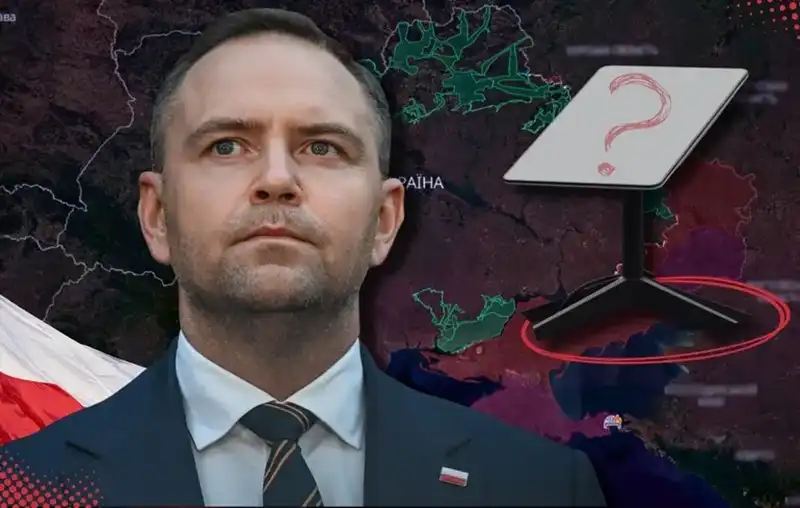
Secondly, the government coalition probably did not expect such a tough position from the Presidential Chancellery. However, the Prime Minister’s team also cannot show weakness and allow the situation to look as if the President forced them to adjust the legislation. Therefore, the Government is actively criticizing Karol Navroczky for jeopardizing Poland’s fulfillment of security obligations to Ukraine regarding the financing of the Starlink satellite internet. Namely, Poland is still acting at the state level as the customer of the specified services for the Ukrainian side.
In the current format, the danger of the specified situation turning into a kind of “political clinch” is increasing.
Will Poland really not be able to pay for Starlink?
Optimism remains regarding the development of a scenario acceptable to Ukraine that will not allow the suspension of satellite communication funding.
The Office of the President has already demonstrated its intention and readiness to continue it. Probably, the position of Karol Navrotsky’s team will be the need to separate the issues of supporting Ukrainian refugees from the expenses for paying for Starlink, which will be continued on the previous terms.
There is no doubt that the Polish Government will also take all possible measures to further provide uninterrupted assistance to Ukraine with Internet communication.
That is why, despite the expected further political disputes, it is still possible to take the topic of Ukrainian security beyond its scope and resolve the artificially created problem during September.
What does the termination of social assistance to Ukrainians in Poland mean?
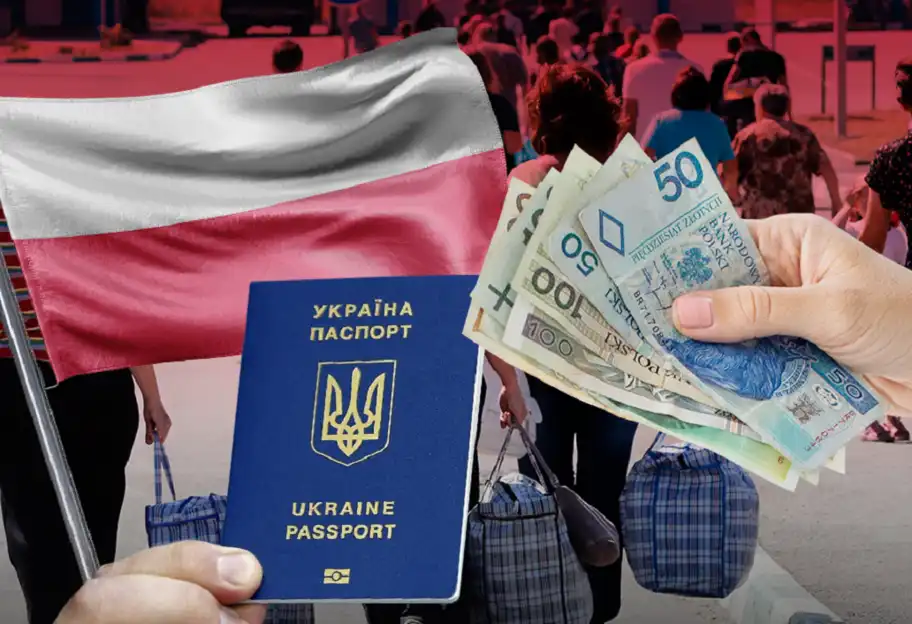
The motivation for the presidential veto is the need to revise certain provisions supporting Ukrainian citizens, the key of which is the cancellation of child benefits in the amount of PLN 800 and a number of medical and other social benefits for Ukrainians who are not officially employed.
To a certain extent, this initiative has signs of political populism, because the majority of Ukrainian citizens in Poland are already employed (according to various estimates, their number exceeds 80%), pay taxes and legitimately use state benefits.
However, the further abolition of these social guarantees may create problems for the most vulnerable social groups who are on Polish territory, but cannot fully provide for their own needs (for example, due to physical health, single mothers or women who, for other reasons, cannot find full-time employment while caring for a child on their own).
An important issue for settlement will also be the resolution of the issue of extending the temporary protection status for Ukrainians in Poland. Currently, it is valid until September 30, 2025. The President’s veto suspended the Sejm’s initiative to extend it until March 2026, which jeopardizes the legality of Ukrainian citizens’ stay on Polish territory
This state of affairs is also disadvantageous for the Polish Government and economy. Since the contribution of Ukrainian business is estimated at almost PLN 100 billion (approximately 2.7% of GDP).
Thus, there are reasons to expect a compromise to be found on this point.
How can Ukraine not become a “hostage” of further political circumstances?
The key conclusion: despite maintaining a constructive security policy of official Warsaw towards Ukraine, Polish internal political contradictions do not correspond to Ukrainian interests and create risky situations.
Although the necessary compromise solutions (primarily regarding the financing of the Starlink satellite communication) must be found, the above-mentioned incident demonstrates the need to ensure the sustainability and bipartisanship of Ukrainian support in Poland and to build effective communication from official Kyiv with the Polish side, taking into account all political factors.
At the same time, it is necessary to try to build a pragmatic dialogue with all political forces and focus on the constructive aspects of bilateral interaction.
We should not forget that the Russian side will also use all possible circumstances to create additional problems for Polish-Ukrainian relations, and we have repeatedly seen examples of such provocations.
At the same time, it is important that the Polish political class also realizes: European security issues cannot become “hostages” of domestic political confrontation. Otherwise, everyone will lose, and only the aggressor will win.