
On October 20, Moldova will hold presidential elections and a referendum in support of the country’s move to the EU. Undoubtedly, Russia hopes that they will be able to take advantage of the situation to ensure the revenge of pro-Russian forces and the restoration of influence on the country.
However, within the framework of the presidential campaign, Russian prospects seem rather dubious. It is likely that they will not succeed in defeating the current President Maya Sanda, and also in disrupting the referendum. Under such circumstances, the Kremlin will have to focus on the 2025 parliamentary elections as a key chance to change political configurations to its own advantage.
Despite numerous attempts by pro-Russian forces to provoke political destabilization in Moldova, Maya Sandu retains the best chance of victory.
The main factor that plays against her is a high anti-rating. It is difficult to impartially determine its real indicators due to the involvement of many sociological surveys, but objective factors give reason to believe that it really exceeds the 40% mark, and the level of trust is at an approximate mark of 25%.
What do these statistics mean?
It will be more difficult for Maya Sandu to win in the second round, when voters without clear electoral guidelines will vote for her opponent with the motivation “the main thing is that the current President is not”.
Such a risk would be exacerbated in the event of the appearance of a really strong and neutral candidate who is able not only to consolidate the conventional left wing, but also to gain a position among centrist citizens. In addition, it would be important to unite the opposition forces in order to act as a united front against the authorities.
However, none of these conditions seem to be guaranteed.
First, there are questions about the prospects of alternative presidential candidates.
When Ihor Dodon chose Oleksandr Stoyanoglo as an “independent candidate”, he did him a “disservice”. Along with the potential support of the voters of the Party of Socialists, the ex-prosecutor general will also inherit the huge anti-ratings of his “political patron”, and Ihor Dodon has more of them than anyone else. The associative perception of Oleksandr Stoyanoglo as a person chosen by the ex-president with pro-Russian views will contribute to this.
In addition, if the previous sociology demonstrated a scenario in which Ihor Dodon would confidently pass to the second round, but lose crushingly in it, then in the case of Oleksandr Stoyanoglo there are no such guarantees. Moreover, in the worst case for him, he may even lose the competition for the second place.
A whole group of candidates, who are going to the elections, appeared next to him. Renato Usatiy seems to be the most competitive of them. An odious political figure who is behind the scenes associated with possible situational connections with the “gray cardinal” of the pro-Russian camp of Moldova – Ilan Shor.
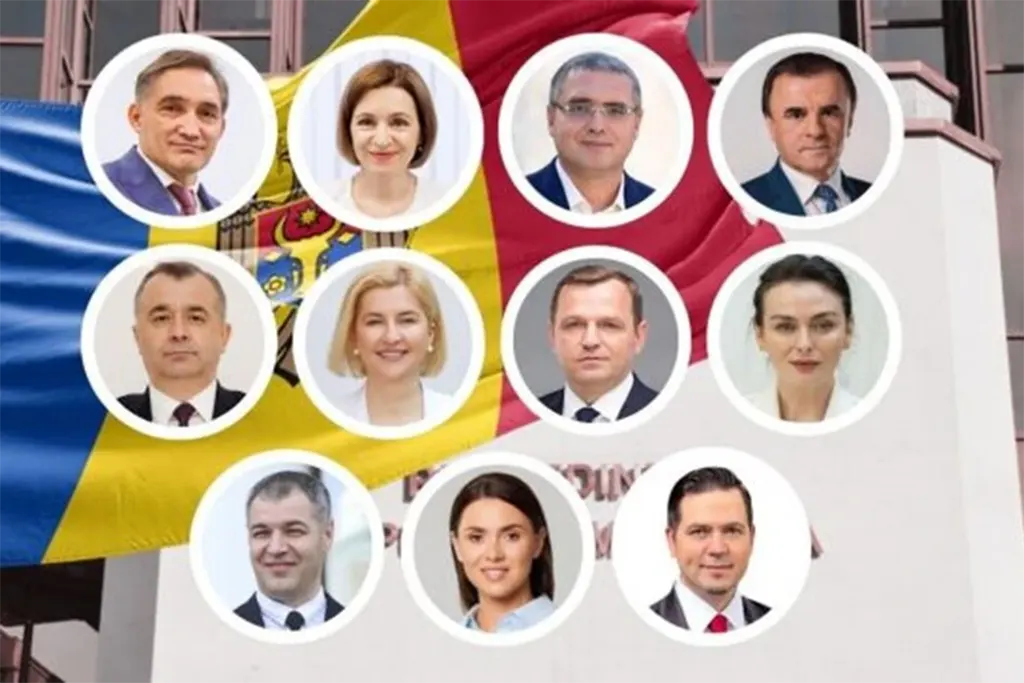
The chances of other contenders – Ion Kiku, Iryna Vlach or Viktor Tarlev – look quite restrained. They can improve if they reach the second round, with the anti-rating Maia Sandu on their side, but sociology gives them weak prospects for second place. The situation can undergo a drastic change only at the last moment, if the infamous “voter network” of Ilan Shor works effectively in favor of someone from a wide list of applicants, for example, ex-Bashkan of Gagauzia Iryna Vlah.
Secondly, the confrontation between Igor Dodon and Ilan Shor can play in Maya Sandu’s favor as to who will become the main agent of the Kremlin’s influence, and therefore will lock in financial flows.
Ihor Dodon hopes that his political career is not over yet and expects to lead the socialist campaign in next year’s parliamentary elections. In his activities, he focuses on the representative of the Russian presidential administration, Dmitry Kozak, who continues to “search for himself” after the failure in Ukraine and sees the possibility of using the elections in Moldova as a way of partial rehabilitation and justification of his existence before the Russian president.
However, Igor Dodon’s time is gradually running out and Ilan Shor intends to take advantage of this. The protectorate of the fugitive Moldavian oligarch in Moscow is handled by Roman Abramovich, and they have actually created an alternative group of influence of the Kremlin in Moldova, which competes with the Dodon-Cossack connection. Ilan Shor plans to establish himself as the “face of the pro-Russian opposition” and the main agent of influence, who will be responsible for the implementation of Russian policy and the development of Russian funding.
The best option for Ilan Shor would be for any of the candidates close to him to go to the second round and overtake Oleksandr Stoyanoglo, which would finally record the failure of Igor Dodon and ensure the hardware victory of the oligarch, who is actively engaged in Moldovan politics from Moscow.
In this context, until now there is no clear understanding of how the “Shora grid” will work. It is logical that the oligarch will support his candidate in the first round, but the question is: will he agree to act in the interests of Oleksandr Stoyanoglo in the second round? Will the Kremlin encourage him to use all resources to help the candidate from Igor Dodon? There is no clear answer, and this will significantly affect the elections.
Conflicts and disorganization in the ranks of pro-Russian forces will contribute to the victory of Maia Sandu in the presidential elections.
In the ideal scenario for her, it is to win in the first round, which seems to be an extremely difficult task, although certain chances for such an option remain. Otherwise, the fate of the presidency will be decided in early November during the next round of voting, where the stakes for Maya Sandu will increase. Opposition votes will not be scattered among all the contenders and will be directed against her. Despite the fact that she remains the main favorite, the potential opponent (the same Oleksandr Stoyanoglo) will have chances for a high result, and the votes of the diaspora abroad should act as insurance for Maya Sandu.
As for the referendum, there is a positive trend towards its successful completion. Although it was partly considered by Maia Sandu’s team as an opportunity to further mobilize their own voters, a positive vote is intended to be an important milestone for the entire population and to consolidate the foreign policy course of the official Chisinau. Under favorable circumstances, the level of support will reach the range of at least 55-60% of votes “for”. This will be a political success for both the current government and the rest of the political forces that are supporting it.
These include the Mayor of Chisinau and the leader of the “MAN” party, Ion Cheban. He was seen as a potential neutral centrist candidate who could act as the main opponent of Maja Sandu in the presidential elections. However, the mayor made a different decision and distanced himself from the presidential campaign, which opened the way for the current President to run for a second term. Ion Cheban decided to focus on the issue of the capital and the development of his own party project on a national scale.
It is worth noting that an important decision of the Mayor was the official support of the referendum on the determination of the European course of Moldova and calls to the population to participate in it. Ion Cheban’s position became important in the context of the referendum campaign and will significantly complicate the plans of pro-Russian forces to disrupt the demonstration of will by provoking low turnout or ensuring weak results.
Against the background of the fact that many experts considered Ion Ceban as a potential front man of the presidential campaign, his actions may be of decisive importance both for keeping Maja Sandu in the position of President and increasing votes in support of the referendum. Both scenarios will be a failure for Russian plans for the autumn part of the election cycle in Moldova.
However, even so, the main battle is still ahead. It will develop around the elections to the Parliament in 2025 and they will be a key bet in Russia.
Of course, if Maya Sandu suddenly wins the first round, it would be better for her to initiate an early parliamentary campaign, but the base scenario remains 2025.
Despite the hope of the “Action and Solidarity” party to maintain a monomajority, the chances of such an option remain extremely low. In this case, Maia Sandu’s party will need an ally for the coalition. At the same time, all other political forces, which sociologists see in the parliament of the new convocation, are in opposition to the current government.
As a result, there is a risk of the formation of a network of pro-Russian forces that will complement the socialists and communists, claiming to form a “revenge coalition” with the nomination of a government loyal to Russia.
This will lead to a crisis and negate the potential success of pro-European forces in the presidential elections and in the referendum.
That is why Maya Sanda and her team need to think at least a year ahead to prevent the implementation of Russian plans.
It is still too early to assess the configuration of forces and Parliament 2025, but a model is already emerging, according to which a situational alliance with Ion Ceban’s “MAN” can once again become a lifesaver for Maya Sandu. If the Prime Minister’s political force gets a sufficient result, it will be able to support the formation of a pro-European majority, which will finally record the defeat of the pro-Russian forces in Moldova, at least until the next election cycle.