
Karol Nawrocki has not yet had time to officially begin his presidential duties, and the leadership of Law and Justice has already begun systematic work to shake up the “October 15 Coalition” so that the current parliamentary majority and the Government can resign early.
Although the planned parliamentary elections are only in 2027, the political confrontation is gaining momentum, promising to turn the next two years into a full-fledged election campaign. In such conditions, the union of the “Civil Platform”, “2050”, “PSL” and “The Left” will either be able to survive for the entire allotted time or will not withstand the pressure, which will lead to the formation of a technical Government as part of the opposition forces led by “PiS” or early elections.
At the moment, none of the possible scenarios seems guaranteed. “Polarization of Poles” does not look like a tautology, but is becoming a dangerous trend.
“Night negotiations of the Main”
A potential “betrayal” came to Donald Tusk’s team where they least expected it. While everyone was aware that “PiS” would try to reach an agreement with another political force “PSL” – for which the topics of protecting the interests of farmers and upholding historical justice are traditionally important – by offering such a coveted post of Prime Minister to Władysław Kosyniak-Kamyś, the coalition was struck in another place.
The Speaker of the Sejm, Szymon Gołownia, acted as a conditional weak link.
The publications about his night meetings with the leader of the “PiS” Jarosław Kaczyński and an influential representative of the party, a member of the European Parliament, Adam Bielan, became a sensation. It turned out that the contacts were not isolated and were organized with the support of the MP “2050”, who was previously a member of the “PiS” Michal Kaminski. The fact that they took place at the home of Adam Bielan adds a special political piquancy to these meetings, which stimulated various conspiracy theories.
Given that information about private meetings suddenly became public, the parties failed to reach any strategic agreements. At least at this stage.
However, “PiS” achieved an intermediate effect: it provoked serious discussions and disputes within the coalition.
It is not known for certain what Szymon Gołownia wanted to get. Perhaps he was offered a transfer to the opposition technical government with a proposal to head it, although the Speaker refutes such a scenario.
It is also not unique that in this way the politician tried to put pressure on Donald Tusk, who is planning personnel and structural changes in the Government, where representatives of “2050” are under threat. Rumors even began about Szymon Hłowna losing the Speaker’s post, which would lead to the final point in his political career.
Regardless of the goal, the results obtained are quite dubious. Disagreements within “2050” have intensified, and a number of party representatives have questioned the expediency of their stay in its ranks under the leadership of the leader, which could lead them to a situational alliance with “PiS”.
From now on, Szymon Hłowna will have to think not only about how to keep the Speaker’s seat and positions in the Government, but also how to prevent the collapse of the “2050” parliamentary club.
This situation gave Donald Tusk pause for thought: having received a vote of confidence for the Government, he seemed to have secured himself at least temporary immunity, but this did not solve the general problem.
One has only to assume that some of the parliamentarians of “2050” led by Szymon Hłowna will simply go into opposition, even without uniting with “PiS”, but exclusively as part of an attempt to distance themselves from the activities of the Government – this will be a failure for the Prime Minister.
In such a scenario, the government’s policy will not be based on the support of the majority in the Sejm, which will finally “tie the hands” of Donald Tusk’s team. There will be no need for blocking by Karol Nawrocki.
Thus, the key goal of the leader of the “Civil Platform” is to prevent the collapse of the majority, since the option of early parliamentary elections looks quite threatening, against the background of the negative indicators of the latest sociological surveys.
Jarosław Kaczyński’s Revenge
Inspired by the results of the presidential elections, the unchanging leader of PiS has begun preparing a comprehensive plan for returning to power.
Karol Nawrocki’s victory promises a tough institutional confrontation between the President and the Government, which may negatively affect the ratings of Donald Tusk and other members of the “October 15 coalition”.
In this case, the next parliamentary elections open a “window of opportunity” for PiS: to win and initiate negotiations on forming a coalition with the “Confederation”.
It would seem that only one question remains open: will these elections be scheduled or early? Jarosław Kaczyński has an action plan for both scenarios and a rematch is not far off.
However, a more detailed analysis of the situation makes it less clear.
A caretaker government led by PiS or early elections?
Although PiS has begun active work against the coalition, Donald Tusk has enough opportunities to maintain it. It is important that Deputy Prime Minister, Minister of Defense Wladyslaw Kosyniak-Kamysz clearly demonstrates his intentions to remain in the alliance with the Prime Minister. He realizes that after two years of being in the majority, PSL has lost electoral support. Therefore, going to early elections is dangerous for the party, and negotiating a coalition with PiS is problematic and, oddly enough, does not find support in the ranks of the political force.
On the eve of the vote of confidence in the Government, a sociological survey was even conducted among PSL members, which clearly recorded the chosen line of behavior: staying in the current parliamentary majority.
It will not be surprising if Szymon Gołownia’s de-march does not lead to immediate critical consequences.
In this case, Jarosław Kaczyński will not be able to stimulate the collapse of the Government in a short time.
But even if we simulate such a scenario, in order to form an alternative technical government, PiS will have to not only win over someone from the “October 15 coalition” to its side, but also negotiate with the “Confederation”.
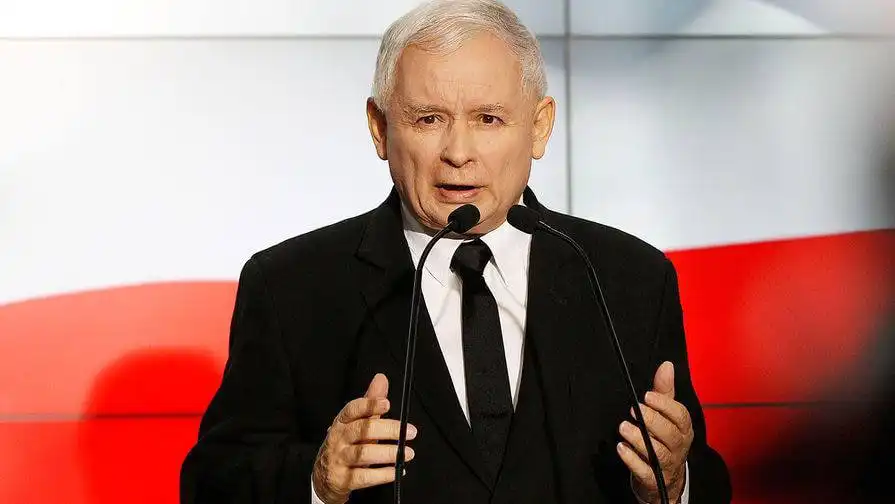
Interestingly, at this stage, no one will guarantee Jarosław Kaczyński simple negotiations with Sławomir Mentzen or Krzysztof Bosak. The reason for this lies in the electoral paradox: in 2023, the “Confederation” failed the elections and received only 18 mandates, and already in 2025, the candidate from the right-wing force significantly increased his ratings, and thanks to its electorate, Karol Nawrocki got ahead of his opponent in the second round.
Moreover, sociological measurements give reason to believe that the “Confederation” can claim 18-20% of the vote, which will give them a convincing third place in the potential parliamentary elections.
That is why an almost rhetorical question arises: to negotiate with PiS from a weak position about a technical Government or to stimulate early parliamentary elections with the prospect of expanding the electoral base? It seems that the leaders of the Confederation will choose the second option.
Summing up, it seems that the scenario of creating a technical Government headed by PiS will require considerable political flexibility on the part of Jarosław Kaczyński and a successful coincidence of many circumstances for him, and therefore is somewhat inferior in its probability to early elections.
At the same time, the current parliamentary majority and its members do not demonstrate interest in dissolving the Parliament. The low ratings of PSL, 2050, and the Left will force them to postpone the dangerous scenario of the early coming to power of right-wing forces, hoping that the situation will improve by 2027.
That is why, if Jaroslaw Kaczynski fails to break the unity of the “October 15 coalition”, he will have to play the long game and wait for scheduled elections.
Consolidation or fragmentation of the right-wing forces?
The basis of Jarosław Kaczyński’s long-term strategy will be the calculation that Karol Nawrocki will decisively oppose Donald Tusk and collapse the ratings of the Civic Platform.
The president-elect really demonstrates a readiness for decisive action and is guided by significant political ambitions. However, he certainly does not look like a person who will fulfill a role written for him by someone else. On the contrary. There are already enough reasons to believe that Karol Nawrocki will act from a subjective position and independently choose a line of behavior.
He has already managed to refuse Jarosław Kaczyński when determining the candidacy for the leadership of the presidential administration, and recently rumors appeared in the media that the President is ready to take on the specified role of Przemysław Czarnek only if he renounces membership in PiS.
What does this mean? Karol Narowski was elected as an independent candidate, although he received significant support from PiS, so it would not be surprising if he continues to position himself as a neutral President of the entire country.
Such ambitious goals would clearly contradict a scenario in which Jarosław Kaczyński would have a fundamental influence on the President’s policy, which means that this element of the plan may not work in the interests of the PiS leader.
Another challenge for Jarosław Kaczyński, oddly enough, is the potential coalition partner Confederation. The leaders of the political force felt that it would be enough to be number two and it would be possible to create real competition for PiS on the right flank.
A competition has already begun between them to see who will more actively oppose the anti-migration movement, which is gaining momentum in Poland and has led to the restoration of border controls with Germany and Lithuania.
While PiS is trying to demonstrate its loyalty and significance to public associations that patrol the German border, trying to prevent illegal crossing by representatives of the Middle East or Latin America, Krzysztof Bosak criticizes PiS for its failed migration policy and manipulation of this issue.
Thus, the struggle on the right flank will intensify. By the time PiS and the Confederation reach the point of forming a coalition, they will repeatedly enter into conflict over the right-wing voter.
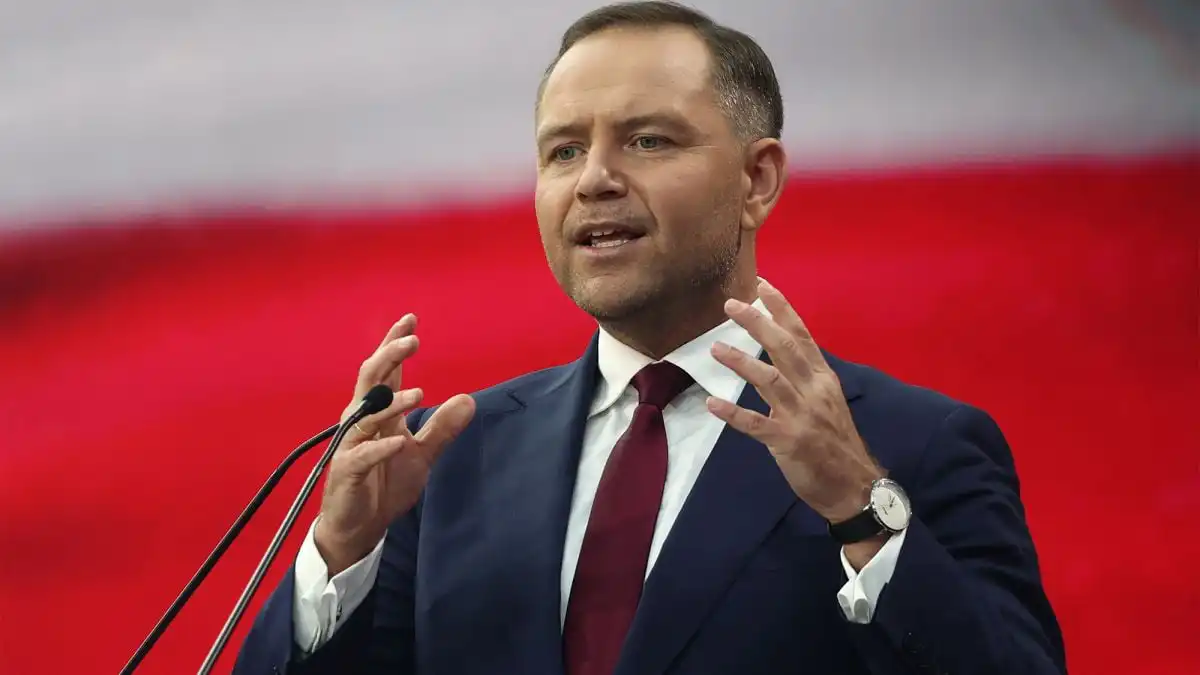
Do dynamic events threaten Ukraine?
Unfortunately, most scenarios carry risks to Ukrainian interests. The collapse of the coalition, a political crisis and early elections – a reorientation of Poland on domestic political issues with uncertain prospects.
Competition between right-wing forces in the framework of the election campaign is another activation of the Ukraine topic and new challenges for bilateral relations.
The formation of a right-wing coalition, which, despite the competition between PiS and the Confederation, seems to be a fairly realistic scenario in the near future – the need to find understanding with representatives of right-wing forces and further smoothing out sharp corners in relations.
Ukraine is clearly not interested in weakening Poland as a strategic ally due to domestic political strife and polarization of public sentiment. Of course, official Kyiv needs to build balanced relations with the Polish Government and President, maintain multi-party support in Parliament, as happened in the previous two years, during the term of Andrzej Duda.
While Polish politics is in a fever, it is important for the Ukrainian side to maintain consistent support, which seems realistic even in the current difficult circumstances. The main thing is to move beyond the issue of military-political support, where Donald Tusk and Karol Nawrocki should be like-minded, and the leadership of all political forces should realize that Ukraine’s victory in the war has strategic importance for Poland’s security, which precedes economic or historical tracks.