
On October 28, a rather specific meeting took place at the site of an international security conference in the Republic of Belarus between the Minister of Foreign Affairs of the Russian Federation Sergey Lavrov and his Hungarian counterpart Peter Szijjarto. Although there are rather abstract formations regarding the agenda in the public space, the current situation gives a clear understanding of what primarily interested both diplomats.
Hungarian mediation in the dialogue with the US
In Russian releases, the metaphorical formulation of “checking the clocks” between the parties was used to describe the meeting. With a high probability, both ministers were also looking for opportunities to turn the “clock hand” back an hour – when Donald Trump intended to hold a summit with the participation of Russia in Budapest.
The Kremlin feels that they are gradually losing the loyalty of the American President and are interested in “playing it all back”.
Initially, Sergey Lavrov failed to reach an agreement with Marco Rubio, since the Russian approach of “meeting for the sake of meeting” is no longer acceptable in the White House. Such an optimistic impulse of the telephone conversation between Vladimir Putin and Donald Trump began to fade. Moreover, the United States announced a new package of sanctions against the largest oil suppliers – Rosneft and Lukoil. The first failure of Russian policy towards the United States.
To correct the situation, Kirill Dmitriev’s “alternative center of Russian diplomacy” was sent to Washington. It was intended to restore communication bypassing Marco Rubio, who thwarted Russian attempts at manipulation and did not recommend that Donald Trump aimlessly travel to Hungary.
However, the expected results were not achieved – rather formalized meetings and comments to the press with dubious messages took place.
The second failure could not be avoided. Perhaps Sergey Lavrov is pleased that his competitor failed and the initiative returned to the ministry, but the Kremlin clearly expects more.
That is why the meetings with Peter Szijjarto are an attempt to use Hungary’s mediation services to regain Donald Trump’s loyalty.
If Viktor Orban is guided by the trust of the US President, why shouldn’t he try to advocate for Russian interests?
In addition, holding the summit in Budapest also meets the priorities of the Hungarian leadership, especially against the background of the upcoming parliamentary elections.
Thus, Viktor Orban and Vladimir Putin are both interested in Donald Trump returning to the idea of a “Budapest meeting”.
Most likely, the key part of the “clock-checking” of the foreign ministers was precisely the coordination of further actions.
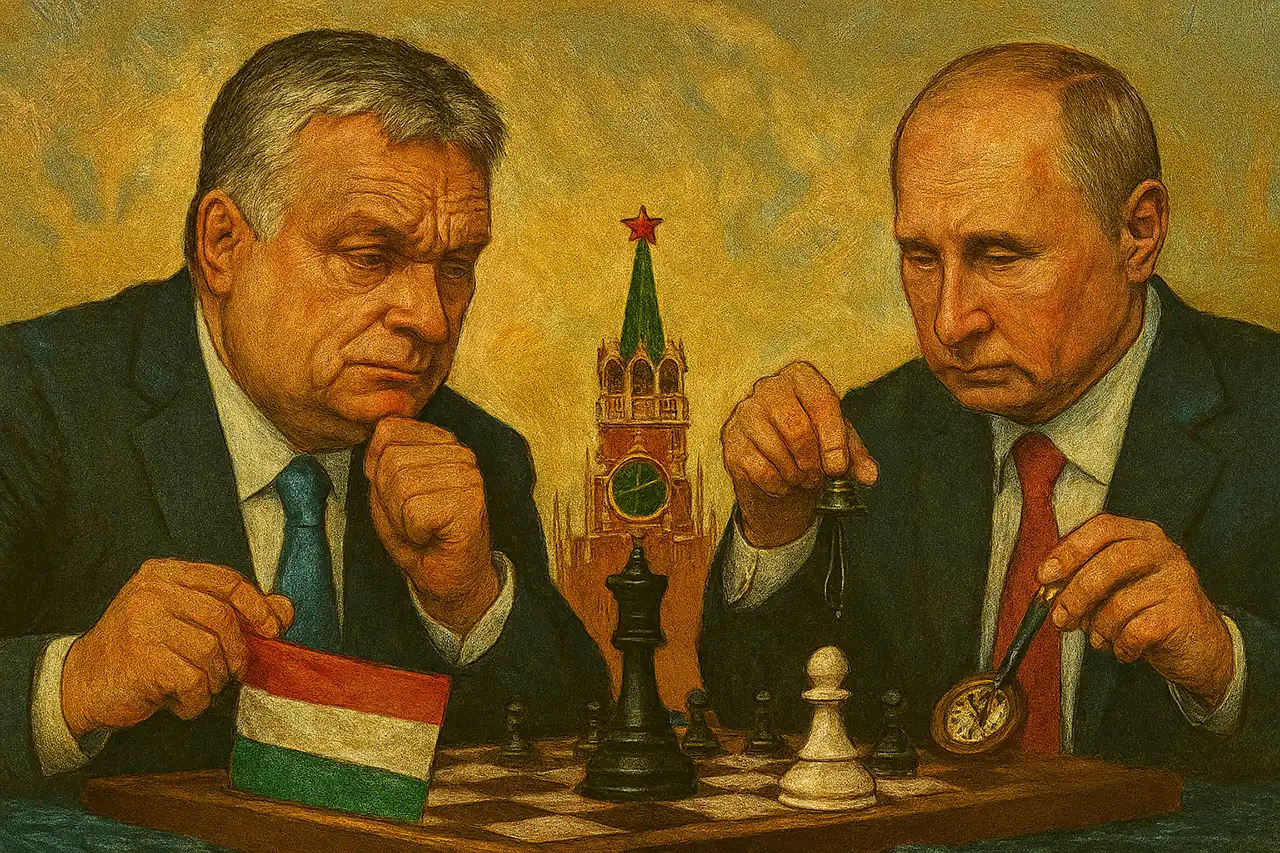
Preservation of Russian oil and gas
Despite the real possibilities for providing alternative sources of gas supply and even real options for replacing Russian oil using the Croatian route, Budapest seeks to preserve affordable and cheap Russian raw materials.
Although Russian energy policy is not the direct responsibility of the Ministry of Foreign Affairs, at the political level the parties were engaged in agreeing on a “road map” of actions, since Peter Szijjártó systematically deals with this issue within his own competence.
Hungary will look for opportunities to remove Hungary from both American sanctions and sabotage the European Commission’s programs to abandon Russian energy carriers.
That is why the energy track will continue to remain a point for Russian-Hungarian understanding and common policy.
Holding a Russian-American summit would be another indirect argument-justification for Viktor Orbán, why he, being a mediator in such important diplomatic matters, can continue trading with Russia.
Hybrid “Visegrad Group” + Russia?
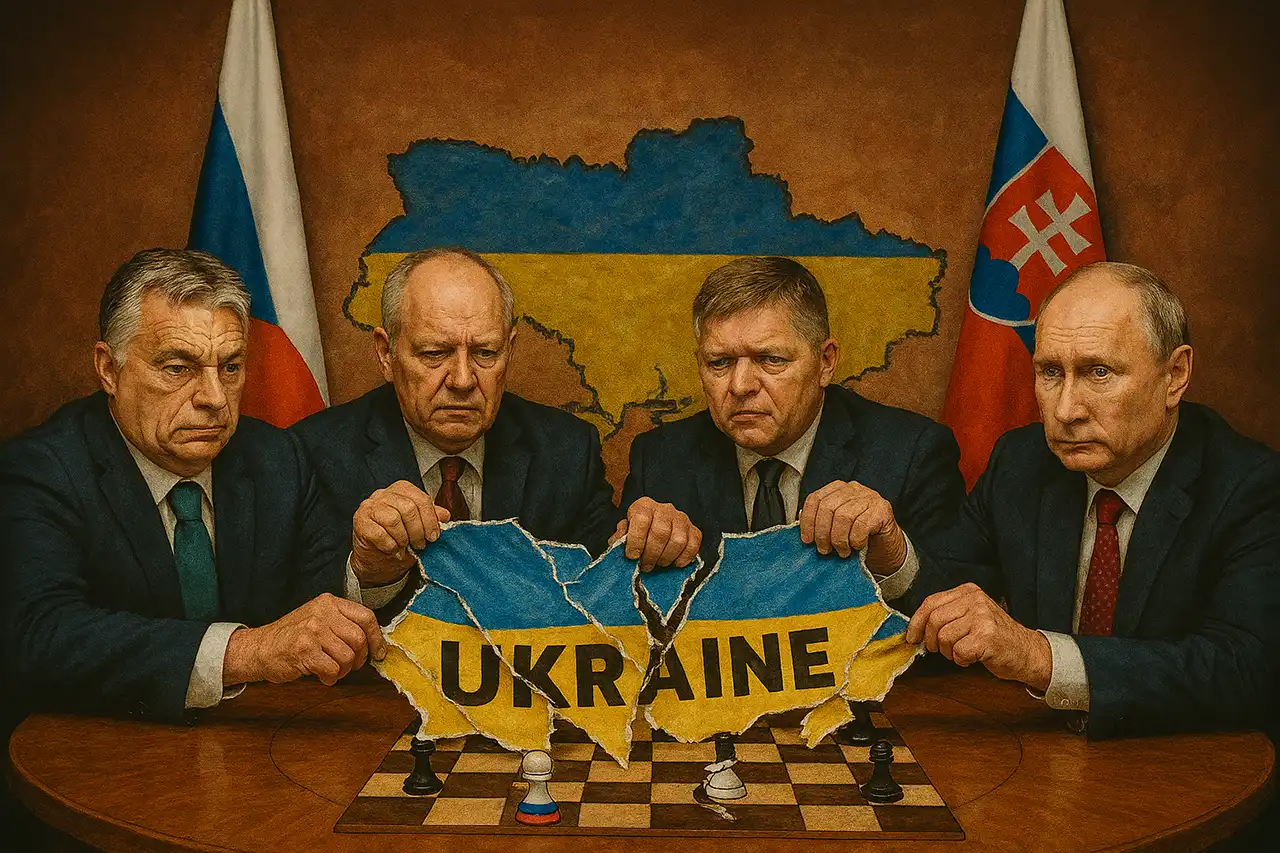
The day before, the American press published a rather sad publication about Hungary’s intentions to create a situational group, which will oppose military, political and economic support for Ukraine on the Visegrad Group platform. For Viktor Orbán, this would be a successful regional project and he sees an opportunity to reach agreements with the leadership of Slovakia and the Czech Republic, based on the results of the parliamentary elections.
Indirectly, this idea was also confirmed by Peter Szijjártó in his speech in Minsk.
For Russia, such an initiative will be of particular interest, since the emergence of a center of influence within the EU that will oppose Ukraine and maintain energy ties with the Russian side is almost the last opportunity to fight for the preservation of at least some presence in the European energy market and an attempt to destabilize unity within the EU.
Therefore, it is not surprising if Russian diplomacy will actively seek opportunities for interaction with such an initiative group led by Viktor Orban, and Sergey Lavrov was happy to raise this issue during a closed contact with Peter Szijjártó.
Russia’s involvement will turn all such initiatives in Eastern Europe into a “Trojan horse”. With a similar approach, Hungary will soon support Russian calls for the creation of a new security architecture in Europe based on the proposals that came from the Kremlin on the eve of a full-scale invasion of Ukraine.
However, it is far from a fact that the Hungarian Prime Minister will be able to adapt the “Visegrad Group” to himself in a full-fledged format, as a kind of alternative to the “Weimar Triangle” or other regional projects within the EU.
At least skeptically, such an idea will be viewed in Poland. For Donald Tusk, Viktor Orban has become a full-fledged opponent who allowed himself to interfere in domestic Polish politics and act at the EU level radically contrary to the position of official Warsaw.
As for the President of Poland: although theoretically his dialogue with Viktor Orban on Polish-Hungarian cooperation can develop in a constructive direction, it is unlikely that Karol Nawrocki will support any initiatives that meet Russia’s energy, security or political interests.
Taking into account all the pros and cons, Peter Szijjarto and Sergey Lavrov had enough topics for negotiations, but the further implementation of their joint plans does not seem so obvious.