
2025 has become a landmark year in Russia’s anti-corruption agenda, particularly against the backdrop of protracted economic stagnation, increasing pressure on regional budgets, and a deteriorating social situation. In the North Caucasus, as in Russia as a whole, the fight against corruption has reached a new level of publicity, thanks in part to extensive media and social media coverage. However, no profound changes in the nature of corruption or its causes have yet been observed. In most cases, these are targeted campaigns that do not address systemic foundations and are intended to urgently replenish dwindling budgets through large-scale confiscation of assets acquired criminally by officials who had previously considered themselves untouchable for decades.
Anti-corruption processes in the regions of the North Caucasus in 2025 have been extremely uneven. Dagestan remains the leader in the number of detected crimes and the volume of embezzlement. The region has cemented its role as an anti-corruption testing ground, with high-profile cases regularly opened, high-ranking defendants detained, and show trials held. Arrests of generals, ministers, and department heads have become commonplace. At the same time, the system itself, with its opacity, clannishness, and deep involvement in shadowy schemes, remains unchanged.
A similar situation is observed in Ingushetia, where, in 2025, a sudden surge in anti-corruption activity occurred amid the calm of previous years. Large-scale schemes for embezzling social benefits were uncovered, relatives of the republic’s head were arrested, and entire ministries were implicated. Security forces acted in a coordinated manner and according to a pre-arranged plan, which suggests a politically motivated purge of the elite, but does not fully confirm this. The population reacted to this in different ways – some welcomed it, others saw it as an attempt to recalibrate the vertical power structure to the new reality. Ingushetia is considered one of the most protest-ridden republics, and the federal center may be trying to deprive its clans of support and influence following previous harsh purges.
Chechnya, in this context, appears paradoxical. Despite colossal budget infusions and the almost complete control of the Kadyrov clan, official data on corruption is virtually nonexistent. The regional authorities prefer to stage localized public confessions of offenders at the district police level, but they reject systemic corruption altogether and dismiss all anti-corruption cases as “no criminal found.” This situation once again confirms that Chechnya, as a region, falls outside the general legal framework of the Russian Federation. Here, the anti-corruption fight is subordinated to political loyalty to Kadyrov, not to the laws of the country, which is drawing increasing criticism from the center. Meanwhile, different political nuances are evident in the Krasnodar and Stavropol Krais. Corruption is no less entrenched in these economically active regions, but it is more often pragmatic and bureaucratic in nature. Theft of budget funds is tied to construction schemes, education, healthcare, and public procurement. In 2025, a series of high-profile anti-corruption scandals erupted in the wealthy Krasnodar Krai, demonstrating the federal government’s attempt to target key figures, break entrenched corrupt ties, and replenish sagging budgets through large-scale property confiscations. These high-profile cases affected both the executive branch and the judicial system of the Krasnodar Krai, demonstrating that the fight against corruption is being waged at all levels.
One of the most discussed cases was the arrest of Alexander Vlasov, acting vice-governor of the Krasnodar Krai, who had also led the Kuban Cossack Host since 2021. He was detained on suspicion of large-scale embezzlement of public funds. According to investigators, he embezzled subsidies allocated for equipping volunteer Cossacks heading to the front in Ukraine. Vlasov’s subordinates issued fictitious documents, and the volunteers were forced to purchase the equipment at their own expense.
This was a real sensation for the Krasnodar Krai. Vlasov was considered a symbol of the state-patriotic vertical, and the Kuban Cossacks a pillar of power in southern Russia. Therefore, the ataman’s arrest caused alarm among the regional elites, who perceived it as a signal that there were no more untouchables. After searches, Vlasov announced that he would volunteer for the front, but was detained by FSB officers just a few hours later. The court arrested him on charges of fraud and abuse of power. This case became emblematic, as it cast doubt for the first time on the ataman’s infallibility as an appointee from above, standing at the intersection of the military, political, and cultural spheres of Kuban with the support of the federal center.
The case of Sergei Les, head of the Krymsk district, was no less high-profile. He was caught fraudulently swindling municipal land, and when investigations began, he attempted to flee with his family. He loaded his personal minibus with approximately one hundred million rubles and 10-12 kilograms of gold, melted down and disguised as metal railroad spikes.
The escape attempt resembled a scene from a movie—the official tried to bypass checkpoints, but was detained after a chase. It was later discovered that Les had registered over a hundred land plots in the name of a front man, selling them without bidding at reduced prices. One example: a 26-hectare plot of land in the village of Varenikovskaya was sold for just 5,000 rubles, while the market price was around six million. The total value of the illegally appropriated land was estimated at almost two billion rubles.
The story of the “golden crutches” quickly spread across federal and regional media, becoming both a meme and a disturbing symptom. It revealed the extent to which petty corruption had permeated the local government system. Even district-level officials perceived bribes as a natural part of life and a form of personal insurance.
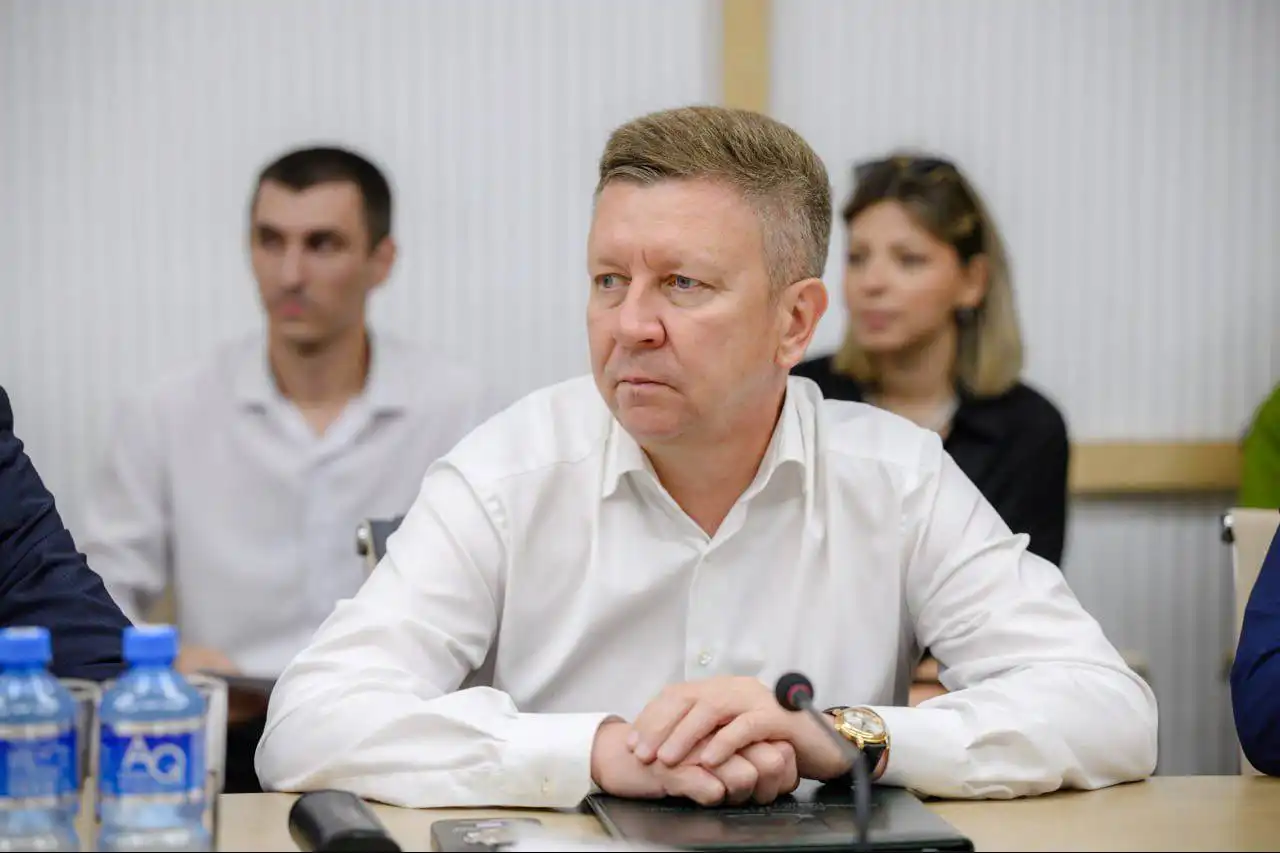
The anti-corruption wave also reached the judicial system. In August 2025, the multi-billion-ruble property portfolio of Alexander Chernov, the former chairman of the Krasnodar Regional Court, who held the position for 20 years, was confiscated. The investigation established that he had acquired dozens of land plots, commercial buildings, and apartments through relatives. The total value of the seized property exceeded 13 billion rubles. This was a blow to the justice system, as judges are legally prohibited from engaging in business.
A series of resignations followed. In October, the Qualification Collegium of Judges upheld the petitions of several influential figures: Roman Kolonichenkov, Chairman of the Sovetsky District Court of Krasnodar; Georgy Yermolov, Judge of the Prikubansky District Court; and several other judges named in high-profile investigations into their ties to business. The resignation of Vladimir Kislyak, whom the media accused of issuing rigged rulings and concealing foreign assets, caused a particular stir. Officially, all of them resigned voluntarily, but the public perceived them as forced measures.
Furthermore, Krasnodar Judge Rustem Trakhov, the son of the former head of the Supreme Court of Adygea, whose family was implicated in a major case of illicit enrichment, resigned. The court had previously seized the Trakhovs’ assets, valued at 13 billion rubles. These events demonstrated that the judicial system, long considered inviolable, had now also been purged. The combination of these three cases, as well as the confiscation of property and funds, including the case of the previously arrested Sochi mayor, Alexei Kopaigorodsky, definitively demonstrated that 2025 was a year of major testing for the Krasnodar Krai. The authorities were clearly seeking to demonstrate their determination to combat corruption even among loyal structures—the Cossacks, the local administration, and the judiciary. At the same time, the massive confiscation of property and funds seized from corrupt officials allowed the Russian authorities to temporarily plug holes in the budget. A similar story had previously unfolded in Karachay-Cherkessia and Dagestan, where large, long-established clan elites were gradually stripped of their power and property by Moscow. Their assets also went toward replenishing the budget, and their positions were filled with functionaries completely loyal to the central government.
Nevertheless, the symbolic significance of these events is difficult to overestimate. For the first time in many years, the Krasnodar Krai witnessed the collapse of the myth of the untouchability of judges and Cossack generals. This has raised public expectations, but simultaneously underscored that the fight against corruption in Russia remains an instrument of internal power balance, rather than the result of systemic reforms.
The national economic situation in Russia has a dual impact on the fight against corruption. On the one hand, the federal budget is under increasing pressure – defense spending is rising, international sanctions remain, the investment climate is declining, and citizens’ real incomes are declining. This is forcing the Kremlin to tighten the screws in the regions, strengthening fiscal control and punishing excessive theft.
On the other hand, economic instability itself is fertile ground for the growth of corruption. When officials are uncertain about the future, they try to make the best of the current situation. When the state relaxes oversight, officials perceive this as a window of opportunity. This explains the rise in the average bribe bill in many regions of the North Caucasus and the revitalization of schemes that were previously too risky or cumbersome.
Thus, 2025 can be considered a year of demonstrative anti-corruption efforts, where force is actively used as a tool of pressure, to reshape elites, and to replenish budgets. However, it is premature to say that the root causes of corruption have been systematically eradicated in Russia, and particularly in the North Caucasus. There is no independent judicial system, no open elections, and no transparent reporting. Without these components, any campaigns, no matter how high-profile, will remain sham. Much will depend on whether this momentum continues in 2026, or whether everything once again devolves into formalities and press releases. For now, we can speak of the beginning of a new, visible phase of anti-corruption policy, but without a profound transformation of the system or a desire to change the root causes of corruption itself.