
This complex research gives a detailed vision upon all elements of situation in agricultural field, dialog between Poland and Ukraine. Here you can find answers on very important questions: what is real situation on the market and from political point of view, insides from the Ukrainian political establishment, possible recommendations on how to resolve the existing problems in the interests for all sides.
Overall assessment. Ukraine has an extremely developed food complex, which was one of the strategic export positions before the war and became the basis of the Ukrainian economy in the conditions of hostilities.
Before the war, Ukraine was one of the five largest grain exporters in the world (75% of production was exported and only 25% for domestic consumption). Ukraine supplied 10% of world wheat exports, more than 14% of corn and 47% of sunflower oil.
Despite the war, Ukraine manages to maintain fairly high production and export figures.
In 2023, more than 16 million tons of wheat, 26 million tons of corn, and almost 6 million tons of sunflower oil were exported.
In general, in 2023, 67.5 million tons of agricultural products of various types were exported, which is 15% higher than in 2022.
Export turnover in 2023 amounted to 22 billion dollars. USA, which is 8% less than the figure for 2022 due to the drop in prices for almost all types of agricultural products compared to the previous year and expensive export logistics. Thus, the general trend of falling prices for agricultural products also has a negative impact on Ukraine’s export revenues.
An important trend is that even in wartime, the collection of all groups of agricultural crops exceeds the needs of domestic consumption by 1.5–3 times.
By the end of 2023, farmers received more than 80 million tons of agricultural products:
- grain and leguminous crops – more than 58 million tons;
- oil crops – almost 21 million tons.
Characteristic features: even despite hostilities, the level of production increases by an average of 10% in key categories. The agricultural sector remains export-oriented. To a large extent, the structure of the Ukrainian agrarian economy contributes to such growth. In addition to the objective factor of soil fertility, the peculiarities of the organization of agricultural production also play a role (large concerns with internal Ukrainian and foreign capital use large land holdings, which sometimes contrasts with the Polish approach of “land decentralization”, they can more actively attract highly qualified personnel and modern equipment , own significant land banks, can attract better fertilizers and will not be limited by the EU rules regarding the “green deal”. It is interesting that in Ukraine there were even statements from official representatives that the Ukrainian side may not claim subsidies from the EU budget in case of accession the conditions for preserving the simplified procedure of agricultural management (without the restrictions of the “green agreement”).
Despite the negative consequences of the war, which dealt a significant blow to Ukrainian farming – direct losses amount to more than 80 billion dollars (destroyed machinery, reduction of arable land due to temporary occupation, increase in the cost of production in the languages of war) – the Ukrainian agricultural sector is adapting and growing. Against the backdrop of the loss of metallurgical enterprises and other segments of heavy industry concentrated in the war zone, the agricultural sector plays a key role in Ukrainian exports.
Considering how dangerous and difficult it is to organize sowing in the conditions of martial law, the Ukrainian side appeals to this factor without reason, because despite the positive dynamics of production, the war takes away qualified labor (the need for mobilization), makes a large part of the cultivated land unusable, carries security risks risks
Trade between Ukraine and Poland. The Ukrainian side, at the level of specialists and the political establishment, is convinced that the importance of Ukrainian grain for provoking the problems of Polish farmers is exaggerated. Moreover, blocking the borders causes no less problems for the Polish side.
If in 2022 Poland played a more important role in ensuring the transit of agricultural products, then in 2023 Ukraine reoriented key flows.
To understand the situation, it is convenient to give the example of January 2022 and 2023. In January 2022, Ukraine exported more than 1 million tons of agricultural products in transit through Poland, in January 2023 the figure is already 0.37 million tons, which is almost 65% less and makes up a small share of the total exports for the specified month – 6 .7 million tons of agricultural products. That is why President Volodymyr Zelenskyy stated that only 5% of products are exported through the territory of Poland.
In the issue of bilateral trade, the “Ukrainian factor” also seems to be misinterpreted by Polish farmers’ organizations:
firstly, for example, in 2023, approximately 350,000 tons of Ukrainian wheat (which is less than 3% of domestic Polish production) and 73,000 tons of rapeseed (which is less than 2%) were imported to Poland;
secondly, the positive balance of bilateral trade with Ukraine for Poland is approximately 7 billion dollars. In 2023, Poland exported goods worth 11 billion dollars to the Ukrainian market (239% growth compared to 2021). Of course, the main part of exports is oil refining products, which are mainly exported by rail, but farmers also earn more than 1 billion dollars at the expense of Ukrainian consumers. Moreover, even if we take exclusively agricultural products, the positive balance is also in favor of Poland (due to the significant volume of exports of raw and dairy products).
The key conclusion is that blocking the border in monetary terms will bring more losses for Polish exporters.
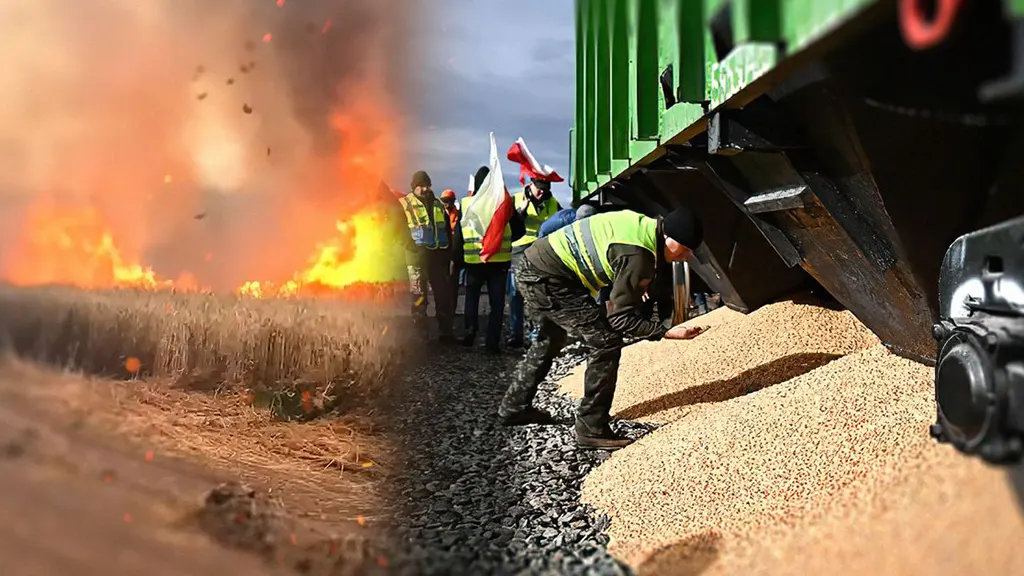
Grain corridor. After the termination of the operation of the grain corridor through the Black Sea, mediated by the UN and Turkey, due to the Russian withdrawal from the agreement, Ukraine has made significant progress in the construction of a new strategic route through Romania.
Thanks to the mediation of the US and the EU and the intentions of the Romanian leadership to receive more investment in the development of its own infrastructure, the Governments of both countries agreed on a system of mutual licensing, which stopped the protests of local farmers and removed political obstacles to the development of large-scale logistics infrastructure, which became an alternative to the previous “grain corridor” (we will additionally send a separate analysis on the specified topic).
In short, the “Romanian model” of solving the problem consists in the fact that Ukrainian companies cannot conclude an agreement for the sale of agricultural products with Romanian companies until the latter receive the necessary permit-certificate from a specialized body in Romania (they must justify why it is necessary to buy grain or other agricultural products specifically from Ukraine to get approval). In addition, the Romanian side appointed a separate institution to control the situation to prevent the illegal entry of Ukrainian grain into the Romanian market. Politically, such a mechanism made it possible to resolve the situation and took away the opportunity for Romanian farmers to speculate on Ukrainian grain. In practice, no Romanian company is known to have tried to use such a mechanism since its inception.
For the sake of objectivity, it is worth noting that such a scenario worked in Romania due to more favorable political circumstances in the country, less influence of farming on political life, the absence of an opposition comparable to “PiS” or “Confederation” and significant cash infusions into farming unions , to “pacify” their protesting moods.
In general, the “Romanian corridor” will take over 70% of Ukrainian exports, provide logistics and transit infrastructure.
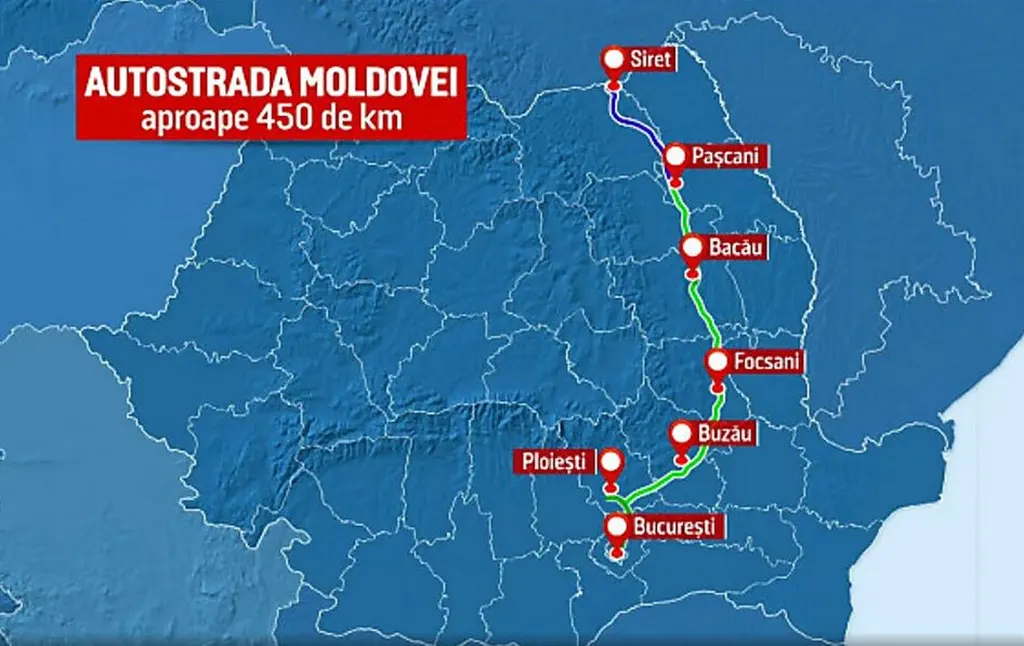
Moreover, Romania is showing interest, and the Ukrainian leadership is taking into account, against the background of problems in economic relations with Poland, the possibility of maximum reorientation of goods transportation by road. The Romanian side is actively building road infrastructure (including with EU funds) for greater participation in transit to Ukraine with the strategic goal of becoming a logistics hub.
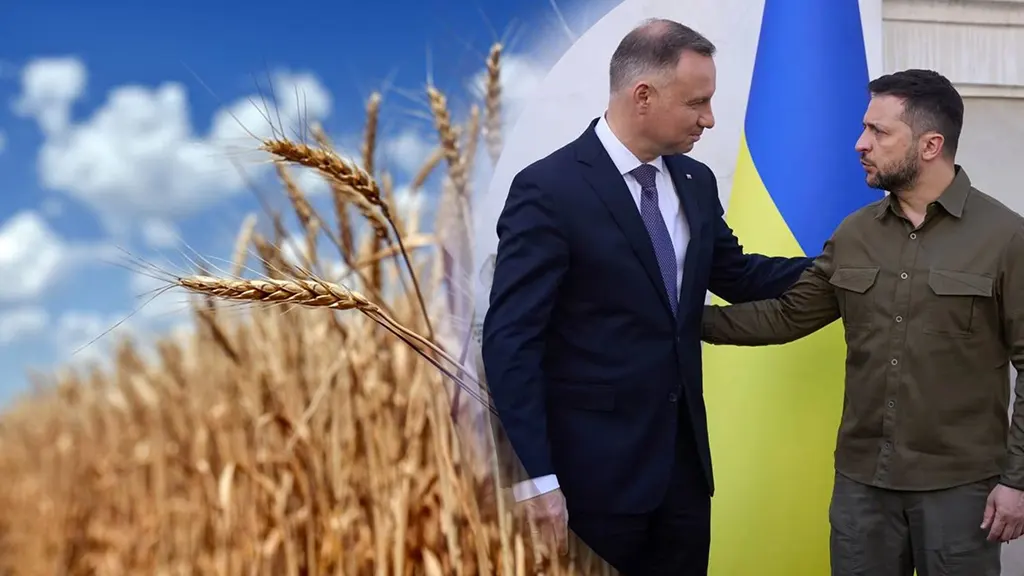
Ukrainian position. The President of Ukraine, Volodymyr Zelenskyi, reacted particularly emotionally to the actions of the representatives of the “Law and Justice” party regarding the introduction of an embargo on the import of certain items of Ukrainian agricultural products and the escalation of the conflict on the eve of the parliamentary elections in October 2023. He had a personal grudge against the President of Poland Andrzej Duda and the leadership of the party, because during personal negotiations in April 2023 they agreed on one thing, and after the return of Volodymyr Zelensky to Ukraine, at the “PiS” congress, Yaroslav Kaczynski announced a tough course of Polish politics and actually leveled the content of previous negotiations at the highest level. Here it is worth considering the individual psychological characteristics of Volodymyr Zelenskyi, who highly values the possibility of finding an understanding of the direction and the need to comply with personal agreements, while the leadership of “PiS” acted in such a way that caused him severe irritation.
As of now, Volodymyr Zelenskyy does not seek to escalate, as he highly appreciates the position of official Warsaw regarding support for Ukraine. He hopes for the development of strategic relations with Poland and does not want problems between the countries due to political circumstances, as is the case with Slovakia and Hungary.
In addition to issues of political partnership and countering Russian aggression, Poland remains a key logistics hub for the supply and maintenance of military equipment in Ukraine’s strategy. The import of petroleum products from Poland, which cannot yet be replaced, is of great importance. In addition, economic logistics through Polish territory is less expensive than through Romania, if we are talking about the countries of Western Europe.
One of the most important circumstances is that Ukraine understands the need to reach an understanding on agrarian issues in order not to create problems for the prospects of European integration.
Volodymyr Zelenskyi’s team hopes to find an understanding with the Government of Donald Tusk, but expresses concern that the Polish leadership does not resort to “double standards”. In other words, if efforts are being made to reach an understanding on a bilateral level, the Ukrainian leadership would not like the Polish Prime Minister to use his own powerful position in the EU to simultaneously lobby for favorable solutions bypassing Ukraine’s position.
According to the results of internal negotiations and consultations at the highest level, the Ukrainian side has formed potential options for actions in case of worsening of the situation (however, the Office of the President does not seek to resort to such steps, hoping that it will not be necessary to escalate):
– initiation of symmetrical actions in relation to Polish export products (there are enough mechanisms to limit exports under various pretexts – phytosanitary control, etc. – which can restrain the supply channels of Polish products to the Ukrainian market);
– lawsuits for damages to international courts (the Ukrainian side is calculating damages from the blocking of the common border. According to various calculations, they may amount to 8 billion hryvnias – more than 200 million dollars).
Of course, there are differences in strategic approaches between the two sides. For the Polish side, it is better to return to the terms of the EU-Ukraine Association Agreement of 2014, when clear quotas and restrictions on Ukrainian agricultural products were fixed. However, Ukraine does not intend to “play back” the situation and expects to use the existing favorable trade conditions on a permanent basis.
In Ukraine, there were certain negative assessments regarding the fact that the potential extension of trade liberalization measures with the EU will involve additional restrictions on poultry meat, eggs and sugar. However, in general, the fact that the EU is discussing the application of a “brake” and the introduction of tariffs on certain segments of Ukrainian products, if they exceed the export figures of 2022 and 2023, is acceptable for the Ukrainian side. In the specified time period, Ukraine reached the peak of sales, and it would not have been possible to significantly increase their dynamics without additional restrictions.
That is why disputes will still arise between Ukraine and Poland regarding the model that should be used as a basis for the organization of trade in agricultural products with the EU (probably the model of 2014 or 2023).
Currently, there are opportunities for organizing a pragmatic dialogue at the political level to prevent similar political models of stimulating large agrarians in the future.
Conclusions.
1) It is appropriate to focus attention on the strengthening of control over the transit of Ukrainian products as a basis for solving the problem. The entry of Ukrainian grain into the domestic Polish market is made impossible by the unilaterally introduced embargo. Only transit is possible and mutual joint actions are necessary to ensure control. For its part, Ukraine offers system licensing (following the Romanian example) so that Ukrainian exporters will not be able to sell products to the Polish side without the appropriate state permission. In turn, Ukraine does not have the physical ability to control the grain and the risks of “grey exports” on Polish territory, so the coordination of the work of customs and law enforcement agencies is necessary to prevent the occurrence of “leakage of grain during transit”.
A potential option may be the need to pay a “transit bond”: depending on the volume of grain, the exporter officially credits a temporary deposit to the account of a special Polish fund, which is returned in full when the reloading of products in Polish or Baltic ports is recorded. If the volumes of grain import and export do not match, the funds will remain in the fund account and will be used in the interests of Polish farmers. Thus, the exporter from Ukraine will not be interested in the fact that his goods do not reach the final consumer.
2) Consider reviving the idea of the “Baltic Grain Corridor” with the controlled involvement of the Baltic countries. This project was initiated by the Ukrainian side in the summer of 2023, and at that time agreements were reached with Lithuania. The key element is to making a railway road from Ukraine (in its standards) to Gdansk and Klaipeda that can ensure big volumes of Ukrainian export (not only grain, but mainly other positions, such as metals, etc.).
Start a dialogue regarding the need for investment in the development of infrastructure for the transit of Ukrainian grain through Polish territory. In particular, international companies operating in Ukraine can invest in the construction of grain reloading facilities and a separate terminal in one of the Polish ports (in turn, the Polish side can consider providing preferential conditions for its construction). Thus, a large business operating in Ukraine will be involved in the development of transit infrastructure in Poland, and the construction of a separate terminal or storage warehouses for Ukrainian needs will relieve Polish warehouses;
3) Optimize the introduction of restrictions and quotas. For example, the previous Government of Poland initiated an embargo on grain from Ukraine, but soybean meal and soybeans were also subject to restrictions. At the same time, Polish farmers themselves are interested in their import, which opens up opportunities for dialogue regarding the specified position;
4) Create a “road map” of prospective areas of joint production of agricultural products with added value. To create a logistics hub in the border areas of Poland, where quality products will be produced from cheaper Ukrainian raw materials in a partnership format. At the same time, the work of enterprises and the sale of their products will create jobs for Polish citizens and increase export income. In parallel, next to the idea of joint agricultural production, projects in the field of military industry will be of great relevance for Ukraine. Despite the different categories, the indicated initiatives can be combined at the political level;
5) To raise the issue of the creation of a specialized group on the Ukrainian side, which will conduct constant consultations with Polish colleagues on the subject of developing joint decisions on the issues of coordinating the agricultural markets of both countries, preparing Ukraine for European integration, etc.