
News of Ramzan Kadyrov’s serious illness and imminent death have been circulating in the public sphere for many years. Officials deny them each time, and Kadyrov tries to demonstrate their inconsistency by personal example. However, the frequency of these reports, amid periods of public silence, suggests there is some truth to them. By the end of 2025, it became clear that Ramazan Kadyrov’s illness was real and progressing, despite all attempts at treatment and concealment. The emergence of a video showing Ramzan Kadyrov slowly walking with a cane became an indication that concealing the illness was no longer possible. This news triggered a surge in news coverage discussing possible regime change in Chechnya should its authoritarian leader be replaced. Considering the biographical backgrounds of several potential figures and expert assessments of their succession, using insider information, we can draw some cautious conclusions about the figures and potential scenarios for the development of the situation in Chechnya in the event of Ramzan Kadyrov’s death.
The Scenario of patronage
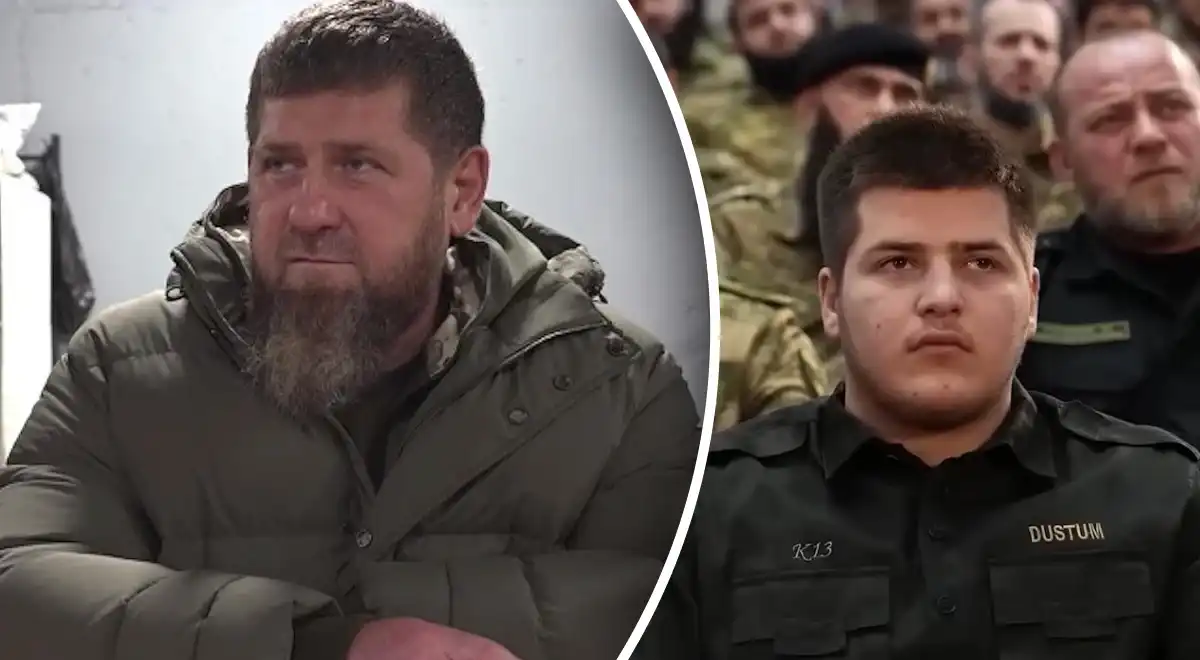
In recent years, Ramzan Kadyrov has very rapidly and persistently promoted the figure of his youngest son, Adam, as a key figure in his family history. Adam has received numerous posts and awards, regularly appeared in the news, and met with Putin. Adam occupies a place in the future Chechnya’s vision as the ideal heir, who should replace his father. In essence, Ramzan Kadyrov, using his son as an example, is repeating his own biography, as his father, Akhmat Kadyrov, similarly promoted him as the future heir upon reaching 30—the age at which he can assume the highest positions as heads of federal subjects in Russia. As the saying goes, there’s nothing new under the sun. This scenario suits the Chechen elites perfectly, who wish to retain power without significant changes. Three questions typically arise in the Adam Kadyrov succession story.
First, why Adam, now 18, and not his eldest son, Akhmat, who is two years older? Akhmat has also held high positions in Chechnya since 2024 – as Minister of Youth, then as Minister of Sports, and since 2026 as Acting Deputy Prime Minister. He is considered a more effective and influential leader, unlike the utterly refined Adam. However, both of Kadyrov’s sons are considered puppets, incapable of inspiring fear in their own people and lacking any significant connections outside of Chechnya. Most likely, Adam was chosen because of his family ties to Delimkhanov, the “guardian of the Chechen regime in Moscow.” Adam Kadyrov’s mother is from the Delimkhanov family, and thus he is seen as a connecting link between the two main clan families that rule Chechnya. Adam’s appointment as a prince under his uncle Adam Delimkhanov, whose name he bears, until he reaches 30, represents a secure succession option that suits the elite.
Secondly, will Adam Delimkhanov be willing to play the role of interim ruler until Kadyrov Jr. grows up? Overall, Delimkhanov’s biography and mentality suggest he’s comfortable with this situation. He’s never particularly aspired to power in the republic. He’s perfectly content with his role as an intermediary between Chechnya and the federal center, which also provides protection for businesses and Chechen gangs, including those used to fight undesirables outside Chechnya. Delimkhanov acts as a sort of Chechen ambassador to Russia, while also acting as a guard against inter-clan blood feuds, keeping families on all sides in fear of mutual responsibility.
Thirdly, will this Kadyrov succession scheme suit the Russian federal authorities? This is where we get to the most interesting part. It appears that Moscow is generally not opposed to the Kadyrovs maintaining power, but there is one caveat.
The “Governor” Scenario
This is precisely the scenario of the federal authorities, who would like to leave Chechnya with the Kadyrovs, but at the same time increase their own influence and diminish Chechnya’s. The ideal scenario for Moscow is a Kadyrov-controlled Chechnya, reduced to the level of all the other regions of the North Caucasus – with obedient pawns at the helm, fulfilling all demands from the center. This scenario pits two major figures, both playing a role in the transfer of power in Chechnya in the event of Ramzan Kadyrov’s death, against each other.
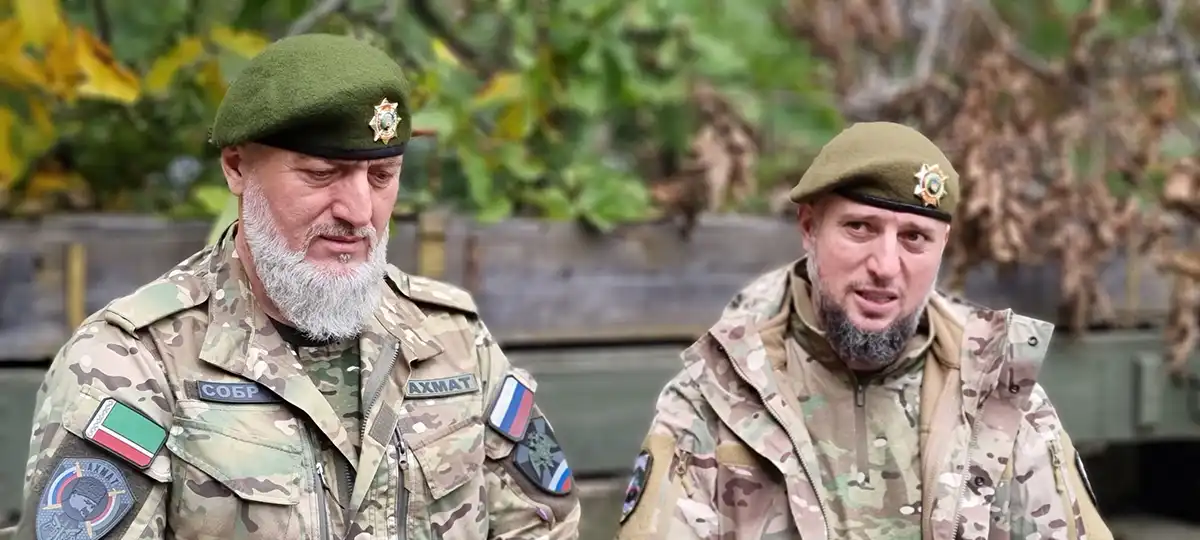
Undoubtedly, the favorite of the Presidential Administration is Apti Alautdinov, the head of the Akhmat Battalion, a hero of the war in Ukraine, whose reputation Moscow has been cultivating for years. Alautdinov is an obedient purveyor of the “Russian” ideology, who coexists with all religions and peoples and obediently carries out the President’s orders. He is a purveyor of Russia’s imperial power. However, Alautdinov has an extremely weak reputation within Chechnya, where he is perceived as an “outsider,” a representative of a clan other than Kadyrov’s. Choosing such a figure to replace Kadyrov would mean a clear and direct conflict with local elites, leading to unpredictable consequences.
On the other hand, there’s Adam Delimkhanov, who partially suits Moscow, but is extremely toxic and difficult to manage, irritating the federal authorities. Another problem is that Delimkhanov is causing a rift within the FSB, as one part of it has always supported him (indeed, created him), while another actively opposes him. Delimkhanov’s opponents within the FSB constitute the core of that structure, which would like to seize control of the Chechen National Guard, and especially the Chechen gangster lobby in Russia, whose financial flows represent a lucrative slice of Russia’s gray economy.
Thus, the scenario involving Moscow’s viceroy in Chechnya faces two complex challenges. One successor will inevitably spark conflict with the Chechen elites, while another could spark a struggle within the security forces. This situation cannot be avoided, as Delimkhanov is a key figure in the Chechen succession scenario. The only mitigating option here is for Delimkhanov to assume the role of interim successor in the Adam Kadyrov scenario, with his role in federal structures transferred to Alautdinov. Whether Delimkhanov will agree to this remains to be seen, as will the outcome of internal power struggles within the security forces.
Of course, there are other contenders. For example, Magomed “Lord” Daudov, Speaker of the Chechen Parliament since May 2024, who would automatically assume the leadership of Chechnya in the event of his death. However, his professional abilities, limited connections, and weak support from Moscow favor a technical figure who could hold the post of head of Chechnya until one of the scenarios is completed. All other figures, such as Ruslan Edelgireyev (the presidential envoy to the North Caucasus Federal District, loyal to Moscow), Yakub Zakriev (an educated businessman and former head of the Chechen administration), and Abuzayd Vismuradov (Deputy Prime Minister of Chechnya), despite all their unique characteristics, are still weak figures and are not taken seriously in the fate of Chechnya.
Nevertheless, a third scenario remains, which cannot be ruled out given the conflicting interests of the parties.
The “Chaos” Scenario
This scenario doesn’t presuppose any specific individuals and is built rather on situations where the changes in the first two scenarios encounter unexpected resistance from individuals who don’t want the change. It’s difficult to predict anything right now, but it’s clear that any disputes and disagreements about the succession plan will inevitably lead to an imbalance in the system. In a society where thousands of people and dozens of clans are waiting for any window of opportunity to exact blood feuds for all the evil the Kadyrov have committed in Chechnya, any slight instability is perceived as an opportunity. This is especially true because the diaspora is closely monitoring the situation and is still able to influence opinions in Chechnya through information channels.
Therefore, there is always a chance that any succession agreements will at some point run afoul of someone’s personal interests, and the situation will spiral out of control. In this case, we can expect not only increased violence and conflict in Chechnya, but also in neighboring regions that have their own scores to settle with Kadyrov’s regime, which has exerted influence on its neighbors in recent years. The reality of this situation is evident in the nervousness that has spread among the leaders and officials of Russia’s North Caucasus republics in late 2025 and early 2026, amid news from Chechnya and the overall negative atmosphere in Russia. Economic difficulties and the protracted war in Ukraine are compounded by the uncertainty surrounding the situation in Chechnya. This nervousness has already spread to society, where rumors and debates are rife about the future of the North Caucasus and the possible threat of growing instability, which could return the region to the situation of the 1990s.
2026 will reveal how events will unfold, but one thing is already clear: they are accelerating, and serious decisions about change in the region will be made soon.