
In June 2025, a message appeared in the public media that Moscow was allegedly preparing to carry out a forceful reshuffle of power in the self-proclaimed republic of South Ossetia. The source linked this situation to the extremely expanded criminal trade network in the republic, which had become a “gray zone”. The situation became so aggravated that it led to an increase in crime and smuggling, as well as dirty methods of fighting for sources. The last straw for the Kremlin was the demarche of the head of the republic, Alan Gagloev, who ignored Putin’s personal invitation to participate in the St. Petersburg “CPSU Congress” of the SPIEF (“international” economic forum), where he sent his representative. The source also mentioned that the Kremlin plans to appoint Colonel General Sergei Bachurin, who is capable of solving problems using crude methods, to the leadership of the republic. How real is this news that appeared in just one Telegram public? And is the situation in South Ossetia really that sad?
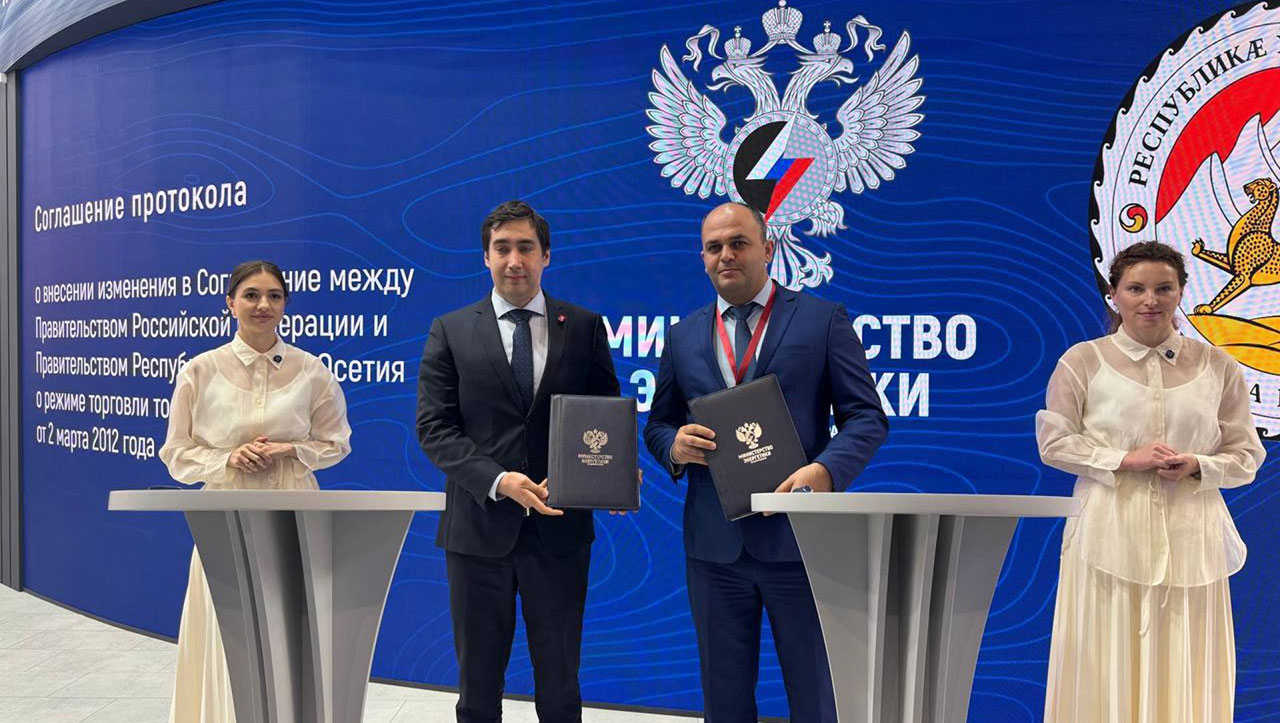
Indeed, only the Chairman of the Government of South Ossetia Konstantin Dzhusoev came to SPIEF-2025 this time, and he signed documents on cooperation with the head of the Republic of Adygea there. It’s not that this was a breakthrough document, but the head of the Republic Alan Gagloev was not there. However, quite recently, on June 12, Gagloev and Putin had a completely routine telephone conversation, which in no way hinted at the existence of a conflict between Tskhinvali and Moscow. One might think that someone deliberately publicly leaked information on one of the well-known Telegram Channels “Yozh” as part of the fight for contraband flows. But the information turned out to be not isolated and is confirmed by other sources.
It turned out that the head of the republic, Alan Gagloev, together with Konstantin Dzhusoev, who represented him at the SPIEF, have long been under suspicion of participating in large-scale fraud, the purpose of which was the funds sent by the Kremlin for socio-economic support of the unrecognized republic. We are talking about three years – 2022-2025, when these funds were massively stolen. According to official estimates alone, Moscow transferred direct aid to Tskhinvali for 2022-2024 in the amount of up to 21 billion rubles, which amounted to 80% of the republic’s budget. However, there are no reports on the expenditure of these funds. The schemes of this theft are quite simple and are built on kickbacks (up to half, according to some sources) through shell companies that received the money transferred by Moscow through VTB Bank. And this is not the first such story – in May 2025, the first deputy head of the KGB of South Ossetia, Alexander Tuayev, was removed from office due to ties to crime and corruption, accused of protecting the smuggling of fuel and lubricants to Georgia. Tuayev is a close friend and protégé of President Alan Gagloyev, and his removal was accepted by the chairman of the KGB Oleg Shiran at the time when Gagloyev was in Moscow for a meeting with Putin. That is, information about large-scale criminal cases of the republic’s leadership did not arise out of nowhere and it has a background story, which, it seems, really leads to a denouement under the leadership of the Kremlin. However, it is too early to talk about the results of the investigation – the Investigative Committee of the Republic of South Ossetia is conducting an inquiry, but neither it nor the Prosecutor General’s Office of the Russian Federation have officially announced the initiation of cases. The question is whether Moscow is interested in a change of power in the republic or is this part of the internal struggle of the Ossetian elites? In April 2025, information appeared in the public sphere about the precarious position of Alan Gagloev and his low ratings, which allegedly pushed him to fight dissent and relatively free media in the republic. His situation is associated not only with the criminal redistribution, but also with accusations of supporting the Georgian special services during the elections by which he was elected. These accusations arose against the backdrop of revelations by Georgian officials during interrogations of a special commission created by the Georgian authorities to investigate the current opposition. One of the episodes of the accusation is related to the rapid installation of a border post on the border of the territories of South Ossetia not controlled by Tbilisi in 2019 in order to stop the uncontrolled expansion of the borders of the separatist enclave. In Tskhinvali, this situation then caused a political crisis, which brought to power Alan Gagloev, who is suspected of receiving support from the Georgian special services.
Moscow has long turned a blind eye to these machinations, since payments to North Korea related to the purchase of oil in circumvention of international sanctions are carried out through Russian bank accounts of MRB Bank in South Ossetia (as a result, the bank fell under US sanctions). Probably, Moscow’s increasingly narrowing financial capabilities are forcing it to act harshly where money requires control and its losses in 2025 are incomparably higher than in previous years. In addition, China’s growing role in the Caucasus region is associated with Beijing’s pressure on the authorities of Georgia and Russia regarding the reintegration of Abkhazia and South Ossetia with the “complete removal of regional barriers” and the expansion of transport corridors (especially the Middle Corridor). Against the backdrop of the expanding conflict in Iran, where China risks losing vast transportation hubs in the event of a regime change, such attention to the Caucasus region as an analogue for their replacement will increase (including not only the Middle Corridor, but also the North-South connection routes, the Russian Trans-Siberian Railway with the Black Sea ports of the Russian Federation and Georgia via Abkhazia, the Georgian Military Highway and the Ossetian Military Highway).
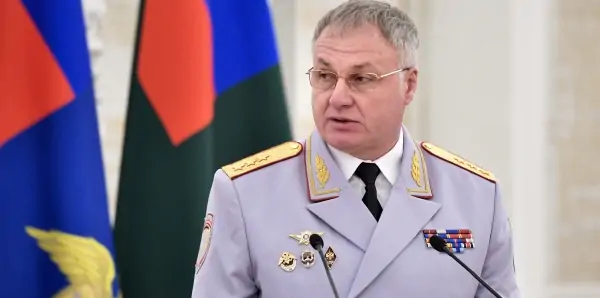 Although at this stage this rather contradicts the internal policy of the Kremlin, which in 2025 simplified the process of obtaining Russian citizenship for Abkhazians and Ossetians. Nevertheless, in the long term, in the event of reintegration of the territories, Moscow will use passports to control Tbilisi, as it does throughout the post-Soviet space. Let’s assume that the Kremlin really decided to carry out a military operation and change the leadership of South Ossetia. Who is Sergei Bachurin, whom it plans to put in charge of the republic in this situation? Sergei Bachurin is the head of the Main Directorate of the Ministry of Internal Affairs of the Russian Federation for the North Caucasus Federal District, a close associate of Yuri Chaika and the head of Dagestan, Sergei Melikov. He is a tough and strong security official, partly similar to the leaders that the Kremlin has preferred to see in the Caucasus in recent years. His closeness to the old influential politician in the North Caucasus, Chaika, and the pro-Moscow, anti-Kadyrov Melikov, speaks of Bachurin’s rather high position and authority in the eyes of Moscow. It was Bachurin who resolved major conflicts in the Caucasus in recent years: the riots at the Makhachkala airport in 2023, the suppression of protests and large-scale repressions against Ingush activists in 2019, who received huge prison sentences.
Thus, if Sergei Bachurin is put in charge of restoring order in criminal South Ossetia, we will most likely see a scenario similar to what has happened in Ingushetia and Dagestan in recent years. Full control of the republic by the federal authorities in Moscow and a probable solution to the issue of the republic’s status in such a case. Since it is not very clear how the Kremlin will put its official at the head of a formally independent republic. However, the situation may end with a cleansing and control of the territory, where local authorities will be put in a situation of total dependence on the Kremlin’s “gray cardinal”, the actual manager of local affairs. Such a situation is possible if the hint, repeatedly thrown into the media space by interested parties, is not properly taken into account by the leadership of South Ossetia.