
Anton Naichuk, Ph.D, the head of East European Council
The next 2 years will be extremely important for the political situation in Moldova, as the country is entering a long election cycle: presidential elections will be held in 2024, and parliamentary elections in 2025. Both campaigns will determine the further frames of the political process and the results are quite unpredictable.
The most relevant questions, the answer to which can provide a detailed understanding of the situation, should be formulated as follows:
– will Maia Sandu and the “Action and Solidarity” party manage to retain monopoly power for the next term?
– how many votes will the political forces loyal to Russia be able to mobilize?
– will there be promising alternative projects? In this context, what are the chances of success for the Mayor of Chisinau Ion Cheban and his “MAN” project?
Let’s start analyzing the situation in order.
Presidential elections and expectations of Maia Sandu. The current President looks like the main favorite to win in the current circumstances. Various polls give Maia Sand support at 25%+, twice that of potential competitors. Her chances seem to be the highest and she can count on the first position in the first round of voting.
Potentially, intrigue can appear in the second round.
The optimal opponent for Maia Sandu would be Ihor Dodon, who does not stop trying to retain the status of the leader of the Socialist Party and go to the elections as a representative of the so-called “pro-Russian forces”.
Existing trends and the electoral situation allow us to predict a scenario in which Maia Sandu will convincingly defeat Ihor Dodon in the second round and retain the high post.
If you should not count on a sensation in the format of “battle of the Presidents”, then there is another potential scenario and a candidate who can “shuffle the cards” for Maia Sandu’s political advisers.
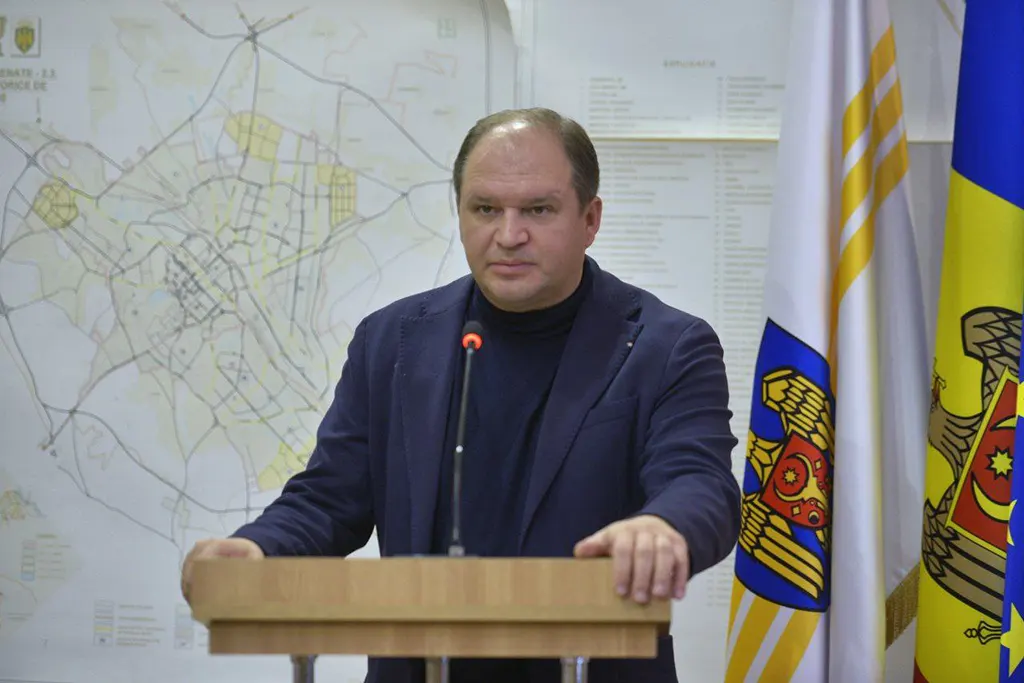
Ion Ceban as the “joker” of the presidential campaign
The mayor of Chisinau won a decisive victory in the local elections in 2023, and the capital will become a reliable platform for the launch of national election campaigns.
So far, Ion Ceban does not show readiness to go to the presidential elections, but the situation may change dramatically.
The fact is that Ion Cheban can not only impose a fight, but also go to the second round. He has a good chance of beating Ihor Dodon or other candidates from the opposition forces (Ilan Shor is left out, as he and his party may simply be barred from the elections).
It is important that in the second stage in the face-to-face confrontation with Maia Sandu, he will have a much better position than the same Ihor Dodon.
Firstly, Ion Ceban can position himself as an alternative candidate/”third force”. Speaking from a centrist position, he can balance between the traditionally pro-European electorate (partially taking votes from Maya Sandu’s voters, who for various reasons were disappointed in her politics) and the “conditionally pro-Russian” (which has long not supported Igor Dodon or cannot vote for Ilan Shor , as his participation in the campaign is blocked).
At the same time, Ion Ceban will effectively “take away” voters who are somewhere in the middle between both camps – those who once voted for the Democratic Party or simply support a “neutral” candidate.
According to various polls, about 20% of the population has not yet decided on their choice, which is also a large enough field for the work of Primar’s team of political technologists.
Secondly, if in the case of Ihor Dodon, the voters who want to vote against Maia Sandu in the second round of the elections, most likely, will simply stay at home, then in the case of Ion Cheban, there are more chances that they will choose him as an acceptable alternative.
Among all the potential opposition candidates, only Ion Ceban looks like a political figure who will be able to successfully play on the “anti-rating” of Maja Sandu.
Weak “pro-Russian candidates”. There is a real shortage of leadership in these camps. Despite his long experience in politics, Ihor Dodon does not look competitive for the presidential campaign, and no one from the new generation of socialists and communists has yet proven himself as a national figure.
Other political projects – such as the former leader of Gagauzia Iryna Vlah – risk remaining in a situation where national ambitions will be limited to regional potential. In other words, despite the popularity within Gagauzia, becoming a leader on a national scale can become an insurmountable task.
Against the background of a certain shortage of personnel, the question remains open: how many electorates remain in the country with a traditionally loyal attitude towards Russia and parties that support an oriented Russian political course. The local campaign of 2023 and various sociological measurements give grounds for assuming that the indicator may fluctuate around 20%. If this is not enough for the presidential elections, the socialists and communists will still be able to have their say in the parliamentary elections.
The unpredictability of the 2025 parliamentary elections. It should be expected that the pro-government party “Action and Solidarity” will not be able to maintain a monomajority and continue to rule the country alone. And then, regardless of the result, he will face the question of finding a partner for a coalition, where problems may arise.
Especially if the configurations based on the results of the voting will be similar to the distribution of forces in the parliament of the city of Chisinau, where neither the socialists, nor “PAS”, nor “MAN” have enough votes to create a unipolar majority and will have to conclude situational alliances to ensure work. If it is easier to solve it at the city level, then at the national level, without a full majority, it will not be possible to form a new Government, the work process will be blocked and the country will be at the level of an internal political crisis. Someone will have to make unpopular coalition decisions.
Maia Sandu’s team does not want to end up in a situation similar to the one that took place in the parliamentary elections in Poland in 2023. Then when the ruling “Law and Justice” won, but did not have enough votes to form a majority in the Parliament, and eventually lost power.
Continuing the comparison with Poland, the recently created party of Ion Ceban “MAN” would be happy to take over the experience of the Polish “Third Way”, the bloc that received the “golden share” and secured a convincing third place with a convincing performance, which allowed to form a coalition with Donald Tusk.
It is expedient for the “Cheban`s Political Party” to choose the line of the third force – between conventional and traditional pro-European and pro-Russian blocs, in order to position itself as a real alternative.
Their promotion as a new project and a stable platform of voters in the capital will be pluses for the political force. The disadvantages are the lack of national-level party infrastructure, local representation in all regions. Ion Ceban will have to shape it on his own with his team or go for a situational alliance in a block with another political force that does not have this level of support, but has the resource.
However, this is only the first dilemma for the Mayor of Chisinau.
Another – if the party reach successful result, with whom will it be able to form a coalition? Of course, it is difficult to give accurate far-reaching forecasts and everything will depend on the number of seats in the Parliament based on the voting results, but if “MAN” wins 10-15% of the votes, it will have a significant impact on the formation of the majority.
And then many current trends can change. Although the ruling team is now criticizing Ion Cheban, in 2025 they can be looking for him a temporary partner for coalition.
When we are talking about the Socialists, Ion Ceban’s willingness to join them in a coalition may create significant problems for his positioning as a pro-European politician. Even if such a union is formed under the slogans “save the country from Sandu” or something similar. But here too, one should not rush ahead, since it is not clear or even hypothetical that both political forces will have enough votes for a full majority.
The development of new European-centric political projects that will be created under a potential coalition should not be ruled out. The problem with such a scenario is the lack of time to run it. However, such a development remains realistic, unless a decision is suddenly made to hold early parliamentary elections in the same year as the presidential elections.
Conclusions.
1) If the presidential campaign looks more predictable, the parliamentary elections can significantly affect the political configurations in the country. A situation may arise when three political forces with different ideological orientations will be forced to look for an acceptable coalition model;
2) Revenge of the so-called of pro-Russian forces in Moldova seems unlikely during the presidential campaign, however, in the parliamentary elections, the socialists can influence the process of forming a coalition;
3) Despite the high chances of retaining the presidency, Maia Sandu and her party will not retain a monomajority, which will complicate the domestic political situation in the country based on the results of the 2024-2025 election cycle.