
Vision of East European Council Editorial board
The end of January turned out to be very constructive for Ukrainian diplomacy on the regional track. The organization of the visit of the Prime Ministers of Poland and Slovakia, as well as the summit in Transcarpathia with the participation of the Minister of Foreign Affairs of Hungary, became important steps towards stabilizing the situation with neighboring countries.
If in the case of Hungary and Slovakia, the key motives of the Ukrainian side and the frames of potential agreements were clear, and expectations were restrained, then in the case of the arrival of the Polish leader, ambitious goals were set to “reset” relations and return to a comprehensive strategic partnership.
At first glance, the meeting was a success and the parties set large-scale plans, but is everything so “cloudless” in the Polish-Ukrainian future?
In expert and political circles in Poland, there is a more restrained view of the results of the trip.
From the point of view of the Polish government, bilateral relations will have three dimensions, each of which will differ in importance, level of compliance and priority for the Polish side:
- security and international politics
- economic issues
- historical politics
Security policy in a broad sense is the broadest and most promising area of building long-term relations between Poland and Ukraine. This direction includes not only issues and measures regarding current assistance to Ukraine in the fight against Russia, but also issues of future security guarantees, integration of defense doctrines, cooperation in the arms industry, and support for Ukraine in the processes of integration into EU structures.
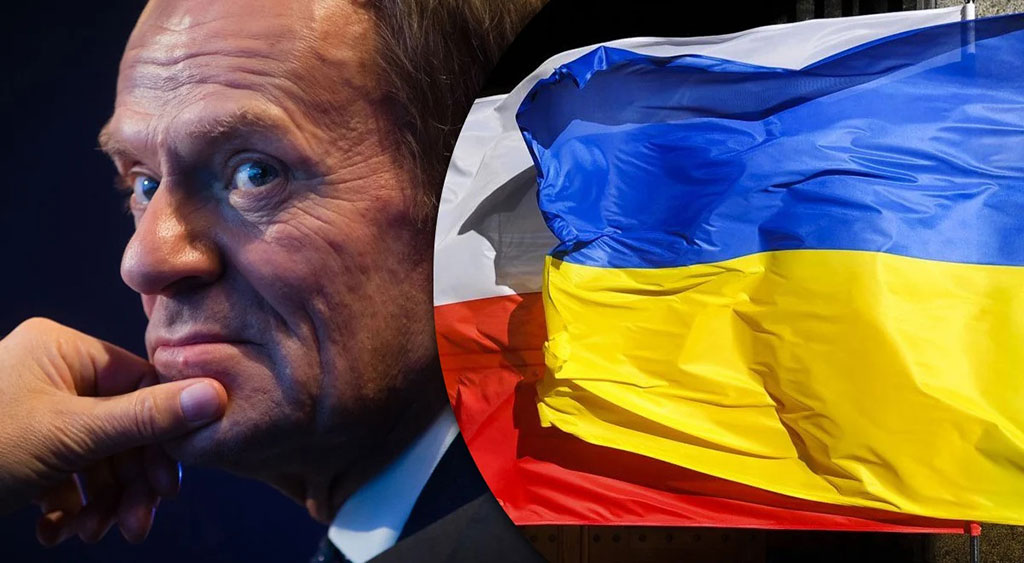
Ukrainian affairs will be on the list of priorities for the new government, but it should be remembered that the priority for the Government of Donald Tusk will be the restoration of the position and the development of relations at the EU level.
Donald Tusk has no negative baggage in relations with Ukraine and has been critical of the trade war that was started by his predecessors in relation to Ukraine in the second half of 2023. However, one should not overestimate expectations or think about an immediate radical change in the approaches of official Warsaw, which is expected by many representatives of the Ukrainian expert community.
Critically important in understanding the future position of Poland towards Ukraine is the adoption of the “political worldview” of Donald Tusk, which will determine its further strategy: even if the Government is ready to change course by 180 degrees and cancel all the reforms of its predecessors in the domestic arena, this means similar actions in the international arena.
The Ukrainian side has little reason to believe that the Polish authorities will “capitulate” to the expectations of official Kyiv and will make all concessions against the interests of their own farmers and transporters.
Despite full support in matters of security, politics and countering Russian aggression, in the economic sphere, Donald Tusk will act from a pragmatic and tough position, which will continue to create difficulties for the settlement of problematic issues of agricultural export and the operation of the carrier market.
Analyzing the statements of Donald Tusk during his visit to Kyiv and the discussion in the political camp of the “Civic Platform” after his return, it is worth distinguishing 5 separate blocks:
- Political support.
The new Government will support Ukraine’s aspirations to join both the European Union and NATO. Such an approach corresponds to both the interests of Poland and the individual beliefs of the majority of representatives of the current Government.
Ukraine can count on a reliable ally, but it should be remembered: Donald Tusk did what was expected of him. Ukraine’s integration into the EU and NATO does not depend solely on Poland, so the Polish Prime Minister does not undertake any special obligations.
Unfortunately, on the way to European integration, the Ukrainian side will have to agree on many economic issues, but already now, Poland will play a prominent role in the functioning of the “pro-Ukrainian coalition” in Europe, especially in the field of fighting the Russian occupation.
In addition, Donald Tusk has already made an important political gesture by supporting Poland’s accession to the security declaration of the G7 countries, which means that another important document (following the example of the one signed with Great Britain) is not far away.
- Cooperation of arms industries.
Donald Tusk said that Poland can provide a package of weapons at the expense of a Polish loan. In addition to the information on the production of ammunition specified at the press conference, deliveries are possible of Rosomak armored personnel carriers and systems on its chassis, Krab howitzers, various types of unmanned aerial vehicles, etc.
However, an equally interesting and mutually beneficial direction of cooperation can be the execution of orders at Polish enterprises that meet the specific needs of the Ukrainian army.
Poland has secure factories and industrial facilities that have experience with equipment that originates from Soviet and NATO technical thought. Polish companies are interested in the development of Ukrainian products, provision of safe industrial facilities and technical support.
The list of potential goods of interest to the Polish side includes: “Korsar” and “Stugna”, anti-ship missile “Neptun”, etc.
Thanks to the constructive position of the officials of Warsaw and Kyiv, an excellent opportunity has appeared to significantly strengthen the defense capabilities of the armies of both countries.
- Appointment of Pavel Koval as Commissioner for Reconstruction of Ukraine.
Despite Pavel Koval’s considerable experience and expertise in Ukrainian issues, he does not act as a specialized expert in economic issues. Given his high level of professionalism and managerial skills, it can be expected that he will form an effective team that will directly perform technical tasks, opening up new opportunities for Polish-Ukrainian cooperation. The function of the politician will be to “smooth the corners” in matters of bilateral interaction in order to “unload” the Minister of Foreign Affairs Radoslav Sikorsky and Donald Tusk himself.
- Exhumation of the victims of the “Volyn tragedy”.
The issue of exhumation was raised by Donald Tusk on purpose as a way to test the sincerity of the intentions of the Ukrainian side regarding further cooperation. During Donald Tusk’s first term in office, he rarely raised difficult historical topics in Polish-Ukrainian relations, so as not to spoil current relations with political or economic issues, for which he was repeatedly attacked by opponents on the Polish political scene. Historical politics between Poland and Ukraine during this period was more the sphere of activity of the then presidents of Poland, first Lech Kaczyński, and later Bronisław Komorowski.
However, for now, the entourage of the Polish Prime Minister counted on a positive practical initiative from the Ukrainian side. Despite this, only further assurances were received. Thus, so far, Ukraine has lost the opportunity to take a serious step toward meeting Donald Tusk, which he could use as a “significant victory” in the domestic political arena.
- Issues of infrastructure
Prime Minister Denys Shmyhal’s statements at the joint press conference did not have the expected effect on the Polish side, despite visually positive impressions. Proposals for joint projects will certainly be analyzed in detail in the relevant ministries, but at this stage they have not sparked the enthusiasm in Poland that would make the visit an exceptional success. The members of the “Civic Platform” believe that statements about the participation of Polish enterprises in privatization processes in Ukraine (especially in the field of energy and heating infrastructure) would be much more interesting for Poland.
Instead, the idea of building an autobahn through Ukrainian territory may cause problems with the willingness of Polish businesses to invest in this project, especially when disputes between carriers continue. There are also many doubts about Poland’s readiness to open 4 more checkpoints.
In this vein, both countries need to take a more detailed approach to the formation of infrastructural cooperation programs. A constructive format can be the creation of a specialized interdepartmental commission.
Summing up, it can be noted that in the assessments of the Polish side, Donald Tusk’s visit is considered moderately successful. However, it should not be assumed that the opening of a new page in Polish-Ukrainian relations will leave all urgent problems in the past. We will have to make compromises and overcome significant contradictions. If Donald Tusk will act as a reliable ally in the sphere of the political and security component, then in economic matters the Ukrainian leadership will feel the consequences of the pragmatic course of official Warsaw more than once.