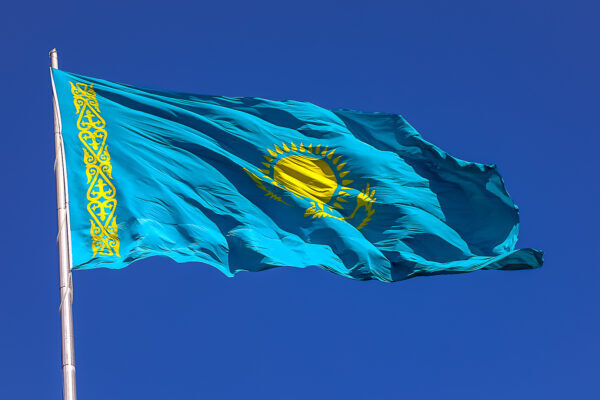
Kazakhstan: current situation and development prospects
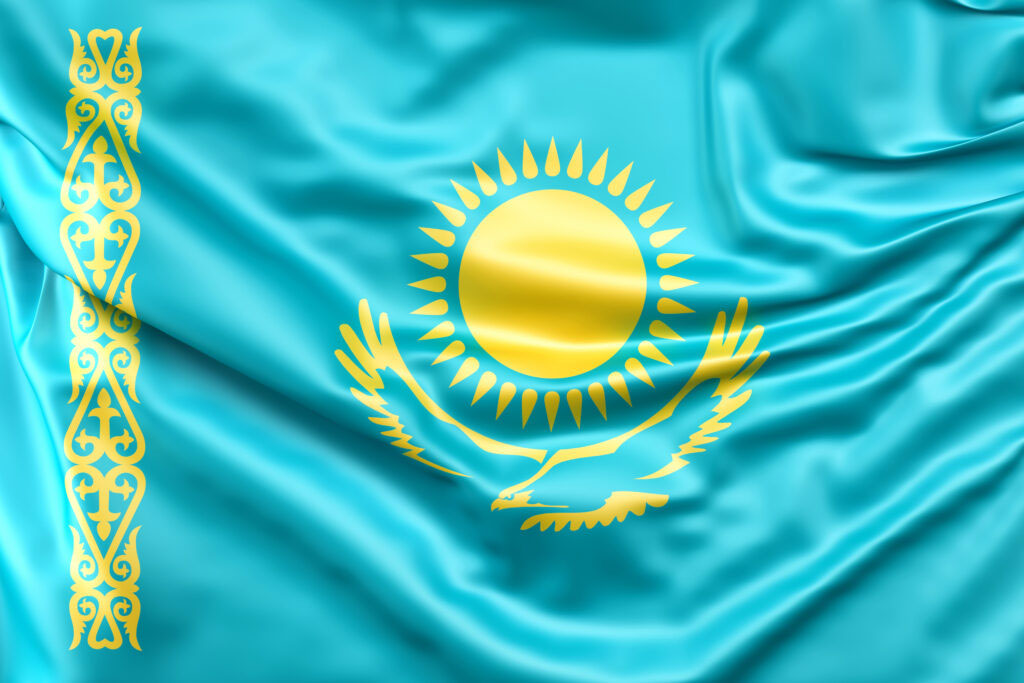
Analysis of the EEC editorial team
Preface
Over the past 30 years, Kazakhstan has pursued a policy of balancing with the most influential centers of influence in the region – the People’s Republic of China, the United States, and Russian Federation.
Russia’s aggressive policy and the start of a full-scale war against Ukraine marked the beginning of serious upheavals in the sphere of the Kremlin’s international interests. In Nur-Sultan, they understood that Russia is an unreliable ally, which is ready to use force tools to put pressure on neighboring states. Moreover, in the case of Ukraine, the war was absolutely not a rational step either from an economic or a political point of view. Kremlin propaganda openly declares that the war against Ukraine is a confrontation between Moscow and Washington.
For Kazakhstan, this looks extremely threatening from the point of view that the largest investments in the economy of this country were made by two players – the People’s Republic of China and the United States. Kazakhstan is far from a democratic state and has the same problems with corruption as Ukraine, but this has not stopped American companies from investing about 55 billion dollars in their economy. In addition, the recent visit of the head of the Ministry of Foreign Affairs of Kazakhstan, Mukhtar Tleuberdi, to the USA testified that the Kazakhs are actively working on the possibility of transferring American production from Russia to themselves. And such prospects look quite real – Kazakhstan plans to become a substitute for Russia in many areas of the economy.
Escape from the Kremlin
In the middle of the Kazakh society, the perception of Russia as a threat has intensified. Firstly, the majority of Kazakhs reacted very painfully to the landing of Russian troops to suppress protests in January of this year. Secondly, the war against Ukraine was a real shock for them. Tokaev monitors this and understands very well that it is difficult to imagine a more favorable situation for a geopolitical demarche. However, he is trying to do this cautiously, securing preliminary support on the international stage.
As a result of Western sanctions, Russia is predicted to suffer huge economic losses in the medium term, which a priori puts the effective functioning of EAEU in a difficult position. Similar processes already took place after 2014, which had a negative impact on Kazakhstan’s economy. The authorities of Kazakhstan are well aware that the scale of the future crisis will be many times greater in any case. There is also a huge risk of a large number of Kazakh companies falling under secondary EU and US sanctions due to trade with Russia.
The safety factor is completely discredited. The CSTO is a direct representation of Russia, which cannot in any way be interpreted in the context of any security guarantees for Kazakhstan. However, Kazakhstan does not plan to make a sharp rapprochement with NATO. The priority option for Nur-Sultan is to create a powerful military-political alliance with Turkey and Azerbaijan.
The concept of the Turkic Union
The idea of the Turkic Union in the concepts of various historians and political scientists of the region was nurtured for decades, but it acquired a systemic character with the coming to power in Turkey of Erdogan, who made it the basis of his strategic interests.
Turkey intensified cooperation with Azerbaijan and, with the help of international weight and its own military factor, helped Baku close the most painful national gestalt – the de-occupation of Nagorno-Karabakh, and the leader of Azerbaijan, Ilham Aliyev, strengthened his position at a time when the probability of losing power for him was extremely high. This became the quintessence of bilateral relations between Ankara and Baku, and allowed Erdogan to make more moves.
At the same time, bilateral relations between Turkey and Kazakhstan were systematically established primarily in the economic sphere, the political vector of the parties was always whispered about. Russia’s military adventure in Ukraine made it possible to take decisive steps. Nur-Sultan and Ankara have started a rather complicated game, in which Kazakhstan has priority in negotiations with Beijing, and Turkey acts as a de facto mediator with the United States. From the point of view of economic prospects, the parties are trying to agree with Beijing on the implementation of the Trans-Caspian trade corridor, which involves the involvement of a number of countries – Kazakhstan, Azerbaijan, Georgia (only as an integral part of the route) and Turkey.
The idea is simple – Russia is under sanctions, which makes it difficult to use its territory for the export of Chinese goods to Europe, and the concept of the “New Silk Road” remains one of the priorities for the Celestial Empire. The best alternative is to bypass Russian territory via the Trans-Caspian Corridor. This will attract additional investments in the infrastructure projects of the countries participating in the route, will provide huge revenues to the economies through transport tariffs and, most importantly, will interest China in stability in the region. That is, the possibility of using Russia’s force “argument” against Kazakhstan will significantly decrease.
Another aspect is the achievement of an agreement in principle with the USA. Ankara’s latest somersaults regarding the membership of Finland and Sweden in the Alliance are aimed, among other things, at Washington acting as a de facto guarantor for Kazakhstan in the context of the escalation of their confrontation with Moscow. While the first steps on the way to exit from the CSTO and EAEU will certainly become critical in the context of Russian-Kazakh relations, and a strategic decision on this has already been made in Nur-Sultan.
The question of the timing and actual nature of the next steps remains open. In order to interest Washington as much as possible, it is necessary to strengthen economic interest and move in the short-term plane into the orbit of their political influence.
It seems that certain agreements have already been reached. In particular, a lot of attention is paid to the referendum in Kazakhstan, which was held a few months ago and included more than 50 points. Among the most resonant are the deprivation of the de facto status of the second state language in Russian, the reform of the judicial and law enforcement systems, the demonopolization of the state market, and the adoption of a number of initiatives aimed at intensifying business activity (including foreign ones), regulating the work of the opposition, and general “democratization” of the state.
It is clear that the timing of the preparation of the vote (a month from the moment of the announcement) and the number of questions asked along with the traditionally “democratic” nature of any election process in Kazakhstan testify to one thing – the authorities have decided to obtain formal legitimization of the new course and create a foundation for further dialogue with Washington on mediation of Turkey.
In fact, Tokayev received a huge opportunity to increase real influence and take over the maximum responsibility for the situation in the country. De facto, the key non-public slogan of the referendum was the phrase “not like under Nazarbayev.”
Almost 30% of all articles. In the identified changes, a lot of attention was paid to various restrictions on presidential power, such as bans on the head of state’s affiliation to parties or restrictions on the right to hold any public positions for the president’s relatives – these are more populist aspects and a reaction to corruption scandals related to by the Nazarbayev family, who gained great publicity through the efforts of the current authorities.
The very fact of Nazarbayev’s public participation in the vote became the quintessence of the entire process – Yelbasy admitted that he had turned into a retired VIP, without preserving the influence of his environment. As for the voting process itself, everything turned out quite predictably – the turnout was 68%, and the support rate was almost 80%.
The referendum included only one question – “Do you accept the changes and additions to the Constitution of the Republic of Kazakhstan, set forth in the draft Law of the Republic of Kazakhstan “On Amendments and Additions to the Constitution of the Republic of Kazakhstan”, published in the mass media on May 6, 2022.” In practice, we were talking about an unprecedented set of provisions that still need to be legitimized through changes to the Constitution and a number of new legislative initiatives.
Preparation for new elections
An important aspect of the new political reality of Kazakhstan is the change in the electoral system, which is transformed into a mixed type, where 70% of the parliament will be elected according to the proportional system and only 30% – according to the majoritarian system. Nur-Sultan wants to implement a certain model of controlled democracy, where elections for majority constituencies (30% of seats) will be held in a relatively democratic way, as a number of proposed changes include the possibility of running for non-party candidates in majority constituencies. The same logic is followed in expanding the powers of local authorities, which are also planned to be enshrined at the Constitutional level. What is it for? This will allow creating a more or less real opposition, which should cause positive reactions in Brussels and Washington, at least in the public expert discourse, but will also limit the real capacity and influence of alternative political groups, which are unlikely to make up more than 10-15% of the total number of parliamentarians.
This should be considered as preparation for extraordinary parliamentary elections, which, according to some experts, may be held in 2023 in order to strengthen the position of President Tokayev before the presidential elections, which are scheduled for December 2024. Such a step seems quite logical, because conducting an election campaign with complete control over all branches of government is a guaranteed success with a probability of 99%.
What’s next?
The international policy of the official Nur-Sultan will remain quite stable, without any major changes. Turkey and China will remain key partners. Kazakhstan will also expand cooperation with Azerbaijan and Uzbekistan in regional projects. The context of Russian-Kazakh bilateral relations will stabilize, but will lose its strategic security and economic significance – the possibility of Kazakhstan’s exit from the EU and the CSTO becomes only a matter of time.
Kazakhstan plans to introduce a huge range of reforms in various sectors of public administration and economy, which and in what format will be implemented in practice is difficult to say now, but Nur-Sultan seeks to achieve an economic leap, including by attracting foreign investments and transferring a significant share of Western production from Russia .
An appropriate legislative framework is being prepared to create additional investment incentives, which should play a key role in the final decision of a number of American and European companies to invest in Kazakhstan.
In this aspect, Kazakhstan already has very serious successes, unlike Ukraine, since the total volume of US investments in the state’s economy is more than 50 billion dollars. Therefore, it should be expected that Kazakhstan will continue the policy of balancing between the key centers of power and will strengthen the factor of activity of American and Chinese capital in the structure of its own economy. At the same time, Kazakhstan will try to increase the level of bilateral cooperation with Turkey in order to obtain additional guarantees of its own security in the context of threats from Russia.
A number of bilateral and multilateral agreements are planned in the military plane between Kazakhstan-Turkey-Azerbaijan, which will create a basis for the formation of a new security block in the region, de facto. Economic cooperation will deepen on the basis of this union. Kazakhstan will negotiate with Azerbaijan to create new export opportunities primarily for its own energy resources due to problematic communication with Moscow. One of the possible scenarios is the construction of an additional line to the Baku-Supsa oil pipeline with a capacity of at least 5 million tons per year. This project will involve the creation of a sufficiently complex route: Kazakhstan – Caspian Sea – Azerbaijan – Georgia – Turkey – Europe. A significant amount of Kazakhstan’s interest and efforts will be focused on investments in the infrastructure sector in cooperation with the participants of the Trans-Caspian trade route, but much will depend precisely on the security situation in the region – the probability of another phase of full-scale military escalation between Azerbaijan and Armenia.
In general, it is clear that real integration within the framework of the Turkic Union may be significantly delayed and undergo significant upheavals due to possible opposition from other players, but the strategic contours have already been formed and they are gradually moving from the theoretical to the practical plane.