
Associative expert of the East European Council, Vitalii Shtybin
5 years ago I was able to take part in a meeting of the Russian State Duma committee dedicated to the discussion of interethnic relations in Russia and the plan for their development for 2020. At that time, this topic was not yet a priority for the authorities and was supervised by Ildar Irekovich Gilmutdinov, a State Duma deputy who headed the special committee on interethnic relations, as well as a member of the Council on Interethnic Relations under the President of the Russian Federation.
There was a heated discussion of possible vectors for strengthening interethnic relations. Representatives from various regions offered their options for the development of national cultures. I was then given 2 short minutes in which I tried to outline the modern experience of teaching the native language in the Republic of Adygea, which grew out of private projects.
Later, I realized how pointless this event was when I delved into reading the program of a similar conference for last year. Reading its contents, I realized that the vast majority of proposals presented at last year’s meeting of this committee were not adopted. They didn’t even try to implement them. This was yet another imitation of vigorous management activity, which is the basis of public administration in Russia.
Two years later, Ildar Irekovich voted in the State Duma of the Russian Federation for the abolition of the Presidential post in his native Tatarstan, despite the direct instructions to defend this post given to him by voters and the authorities of Tatarstan during his next nomination to federal deputies in Moscow.
Why and how did this happen?
FROM INDIFFERENCE TO TOTAL ATTENTION
If we consider how the views of the Russian authorities on issues of interethnic relations and historical memory have evolved in retrospect, we can see how the state gradually adapted a previously marginal agenda. In many ways, this process repeats similar cycles of the Soviet era, when the USSR authorities rushed from the extreme of multinational “indigenization” to the extreme of a single “Soviet (read Russian) people.”
The attention of the Russian authorities to the topic of historical memory began to manifest itself in 2007 in episodic actions related to the Great Patriotic War. They reflected a feverish search for a “national idea,” tightly linked to support for the Russian Orthodox Church and a tougher policy towards its criticism. Interethnic relations were still outside the scope of attention at that time.
Since 2012, immediately after the failure of the historical opposition rallies on Bolotnaya, the Russian authorities have headed for control and tightening of historical memory. They were exemplified by similar processes in Poland, Hungary and Ukraine, where the politics of memory by that time had become part of the general political background. Russia clearly fell out of it due to its “imperial” and multinational specifics. Events in Ukraine in 2014 only accelerated these processes, including by intercepting the agenda of Russian nationalists, whom the state, on the one hand, used in a hybrid war, and on the other, successfully eliminated too independent activists.
Since then, the search began for ideas of interethnic coexistence of different peoples in Russia under the umbrella of a common national ideology, which today can still be described as national-Bolshevik, no matter how absurd it may sound. In a state whose main concept is the imitation of everything, such contradictions are quite capable of coexistence.
Until 2018, there was a gradual increase in interest in interethnic issues, both in government and in society, but these processes were not systematic. The state was carried away by the formation of a stable myth about the Great Patriotic War, which became a dogma of Russian ideology and a way of putting pressure on dissenters. Russian authorities followed the theories of anthropologist Jan Assmann, who talks about the transition of living memory of the past into an artificially collected “history” 3 generations after the events, with the departure of most living witnesses. During these years, there was a mythologization of that period of history, which the Russian authorities considered the only element of collective memory that held society together. This process also affected those elements of civil society that were directly involved in issues of memory of the Second World War. For example, the most famous movement is the “Immortal Regiment,” which was initially exclusively civilian, created on the basis of horizontal ties and sincere interest of people in the past of their families. By 2018, all of its founders were removed from participation in it and went into deep opposition to the Russian authorities, who seized control of the project and introduced mythological symbolism with the St. George ribbons into it. At the same time, the authorities involved administrative resources in the form of budget workers and students who, for money, wore portraits of strangers. The average person for the most part did not notice the substitution.
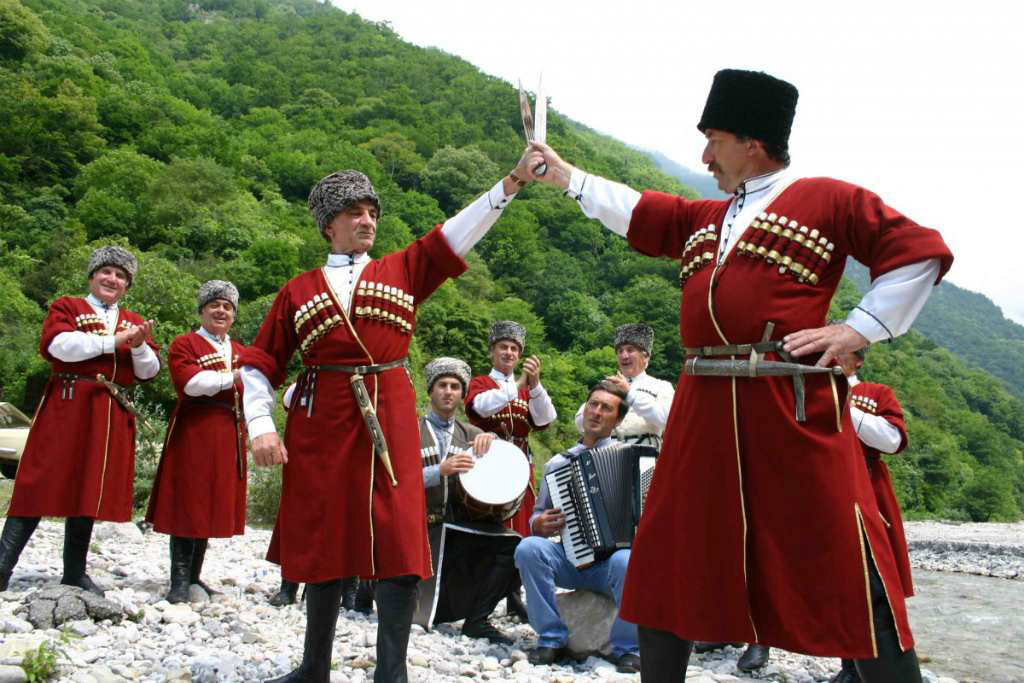
At the same time, civil projects related to national themes were developed in the country. Various regional organizations for the development of the culture and language of the peoples of Russia have emerged, and local national media have developed. The Memorial Foundation actively worked with databases of those repressed on ethnic grounds with the installation of monuments. Ethno-tourism has developed on a wide scale. A whole cultural phenomenon has appeared in Yakutia – Yakut cinema, which to this day allows itself to use an anti-colonial narrative, free from Moscow, despite periodic scandals. In those same years, Russian media, working with interethnic topics or themselves representing national groups using native languages in various media formats, began to unite in a network under the auspices of a non-profit organization – the Guild of Interethnic Journalism. It was headed by a member of the Council under the President of the Russian Federation on Interethnic Relations, an expert of the advisory council of the Interdepartmental Working Group on Interethnic Relations of the Government of the Russian Federation and the Committee on Nationalities of the State Duma of the Federation Council of the Russian Federation – Margarita Lyange. Of course, the topic of interethnic relations was key for her when moving up the political ladder, but the created organization turned out to be truly effective and worked to promote a harmonious agenda of interethnic relations in the country and combat negative chauvinistic stereotypes in the media, especially state ones. As control over the topic of interethnic relations in the Russian Federation increased, this organization tried to act as a reasonable counterbalance to the destructive ideas of Russian officials.
IT’S OVER TO COME BACK AGAIN
2018 was a turning point for the topic of interethnic relations in Russia. From that moment on, persecution, arrests, and expulsion of national activists from the country became common practice. Especially among the Caucasian and Finno-Ugric peoples. The divergence of the goals and interests of the state and numerous civil structures became obvious, as had previously happened with activists working with historical and family memory of the Second World War.
There were loud protests against the law on the voluntary study of native languages, which effectively doomed the languages of the small peoples of the Russian Federation to extinction. The problem of decreasing native language speakers among young people was acute in the country even before this law, due to the total Russian-speaking environment. The law placed native languages in a situation of choice made by parents. And this choice was based on exclusively pragmatic principles. What is the use of a language that is not used in any way in life outside the family circle? Naturally, parents en masse choose the Russian language, so that their children’s good knowledge of it will ensure their future in the Russian state. In this insidious way, the choice was limited in favor of practically beneficial assimilation. Of course, numerous networks of linguistic and cultural activists have tried and are trying to somehow influence the situation, but their scale and resources are too weak. There are not enough of them to create materials that can satisfy the mass consumer; these are individual stories. With the exception of republics with a monoethnic population, such as Chechnya, Ingushetia or Tuva, in all other regions the situation by 2021 has reached a critical point, at which the majority of young people under 12-15 years old no longer speak their native language, even if they understand it.
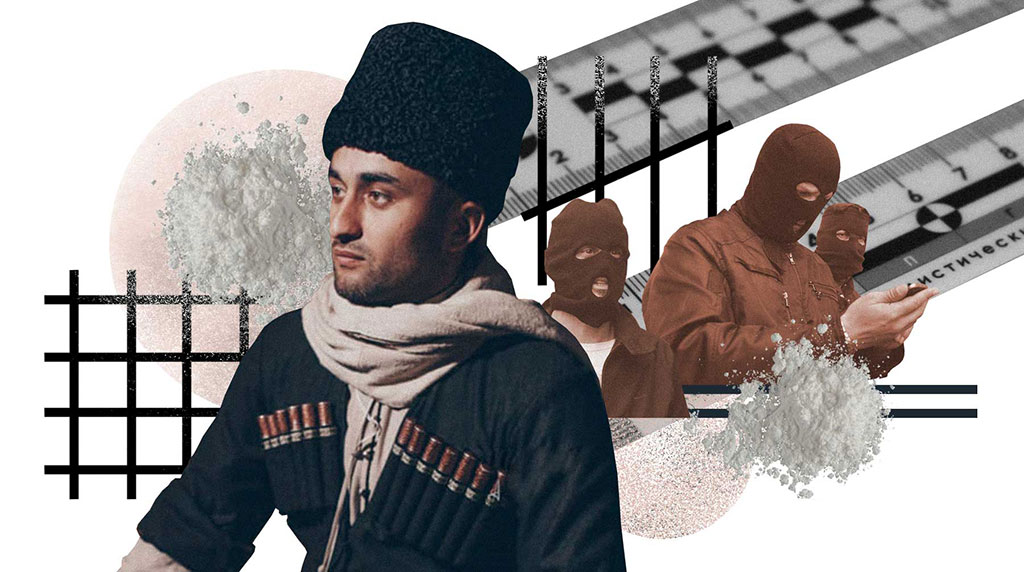
The adoption of the law on languages in 2018 caused a wave of protests, which quickly subsided under pressure from security agencies and threats to recognize their participants as separatists with all the ensuing consequences. There are known cases when Caucasian activists who advocated preserving the principles of federalism (an absurdity in a state called the Russian “Federation”) were actively persecuted by special services. A striking example is the case of Circassian activist Martin Kochesoko from Kabardino-Balkaria, whom Russian security forces harshly arrested right on the federal road, where drugs were planted on him. This was an amazing move, since everyone knew Martin as a Circassian traditionalist, a Muslim, who on principle did not even drink alcohol or cigarettes. Thus, no one believed the investigator’s version. At the same time, the case of journalist Ivan Safronov, who was given drugs in exactly the same way during his arrest, achieved enormous resonance in the Russian Federation. Public outrage then led to the overturning of the sentence and the arrest of the security forces involved in his detention. Therefore, Martin Kochesoko was then released, although in his case no one was punished.
Repressions in relation to historians and activists of the memory of national repressions in the USSR developed in a similar way, culminating in the arrest and disproportionately cruel sentence against the elderly Karelian historian Yuri Dmitriev, who, with the support of the Memorial movement, was engaged in collecting the memory of representatives of the intelligentsia executed in Stalin’s times of different peoples in the Sandarmokh tract.
In parallel with this, there was a process of eliminating the last signs of federalism in Russia through the elimination of independent positions of leaders of national republics. By 2022, there were practically no locally elected leaders left in Russia; all regions were completely subordinate to Moscow. As a mockery, local national positions were left behind for local positions and parliamentary bodies, which no longer reflected their real essence. Thus, by 2022, Russia has returned to the old Soviet concept of “national in appearance, socialist in content,” with the only difference being that the word “socialist” can be safely replaced with “imitation.”
Another feature of this time was the attempts to develop the concept of a “Russian multinational people” following the example of the same Soviet concept of the “Soviet people” from the 1970s-80s. Since 2020, issues of interethnic relations have been transferred to a separate federal structure – the Federal Agency for National Affairs (FADN), headed to this day by a young and promising official – Igor Barinov. This department immediately became actively involved in the search for a concept of “one people” that was convenient for the state. Throughout 2020, grants were actively allocated for various scientific conferences. Those already scheduled forcibly changed the topics of their meetings. The academic community was skillfully directed to search for the ideological concept of a “Russian multinational nation” using materials from different eras and countries. Each such conference was supervised by special services, and the organizing committees necessarily included representatives of the Federal Agency for National Affairs, who, it would seem, themselves did not believe in the seriousness of the stated topics.
Thus, step by step, an ideological basis was developed for the creation of a mythological “Russian multinational nation,” a strange hybrid that was intended to stitch together, like Farnkenstein, a disparate Russian society, held together only by the old threads of imperial thinking. However, 2022 came, and the war again intervened in the concepts, forming new ideas and new problems.
THE VISE OF WAR AND NATIONALISM
The war significantly changed the concept of interethnic relations in Russia. From the very first days, the ideological narrative of Russia changed sharply towards the Russian national with its call for the “salvation and defense of the Russian world.” Some organizations found themselves in a difficult situation, since national groups perceived such slogans as a direct manifestation of Russian nationalism and fascism. The situation was further aggravated by the emergence of various groups and organizations representing the oppressed peoples of Russia abroad, such as the Association of Free Peoples of Post-Russia. No matter how they assessed the public agenda they presented, the Russian authorities actively used it to justify the strengthening of their own ideology. This ideology immediately transformed any talk about the division of Russia and the creation of independent national states into the concept of a “besieged fortress” and a threat to the “Russian multinational people,” of which all the peoples of the Russian Federation were declared to be a part. Thus, while these political groups were generally ineffective externally, they did a disservice to their peoples inside Russia, whose elites became deeply embroiled in the Kremlin’s ideological agenda of defense against an external enemy.
The Russian authorities were well aware of these sentiments, therefore, during 2022-23, they were able to reconfigure their approach in such a way as to move away from the exclusive concept of the “Russian world” in favor of a “Russian multinational world” experiencing an existential threat to its existence from an external enemy in the form of the collective West, which by association associated with Nazism. Unfortunately, the opposition Russian media, mistakenly called liberal, also played a significant role in strengthening this concept in the public consciousness. In 2022, they aggressively conveyed to the world the idea that the main military atrocities in Ukraine were committed primarily by representatives of small national groups in Russia, such as Dagestanis, Chechens, Buryats or Tuvans, thereby shielding the Russian majority.
Of course, quite a large number of representatives of these peoples fight in the ranks of the Armed Forces of the Russian Federation. However, the reason for their participation in the war does not lie at all in some “wild” state of mind, as these media tried to present, following the good old imperial chauvinistic attitude. The same slogans are familiar to historians from materials from past eras up to the 18th century, when each time the atrocities of Russian troops were passed off as the excesses of a perpetrator from representatives of the small peoples of Russia – Caucasians, Cossacks, people from Asian nations. Unfortunately, the participation of representatives of the small nations of the Russian Federation in the war is associated primarily with the monstrous economic backwardness and underdevelopment of many national regions of the Russian Federation due to the over-centralized conscious policy of Moscow. The banal lack of prospects for providing basic life needs pushes people from these regions to risk participating in the war. At the same time, independent investigations show that war crimes in Ukraine were committed equally by people from Russian regions and from other national ones, without any special distinction. It is enough to look at the in-depth reports from the republics from independent journalist Vladimir Servinovsky to understand what kind of internal drama is developing in these depressed regions within families of people from national minorities.
Another myth is the massive support for the war in Ukraine among Russian national minorities. This myth is easily refuted by communication with local residents on the ground, reports by independent journalists, and riots against mobilization, the boldest of which took place in Dagestan, which in the international media is often attributed to the status of a region that totally supports Putin’s power. Moreover, the author of this text personally communicated with hundreds of representatives of various public structures and organizations, officials and ordinary people in the republics of the North Caucasus – Adygea, Karachay-Cherkessia, Kabardino-Balkaria and North Ossetia from February to May 2022, in the first months of war. In personal communications, none of the respondents expressed support for the war, and moreover, many even emphasized that they were forced to restrain the impulses of young people in their republics who wanted to hold rallies against the war and against the ideas of the Russian world, which were perceived as acutely alien and dangerous in the Caucasus. The only region where the attitude towards the war was neutral was the Mozdok region of North Ossetia due to the influence of the clergy installed from outside and due to the presence of military bases of the Russian Armed Forces here, as the only jobs for young people in the region.
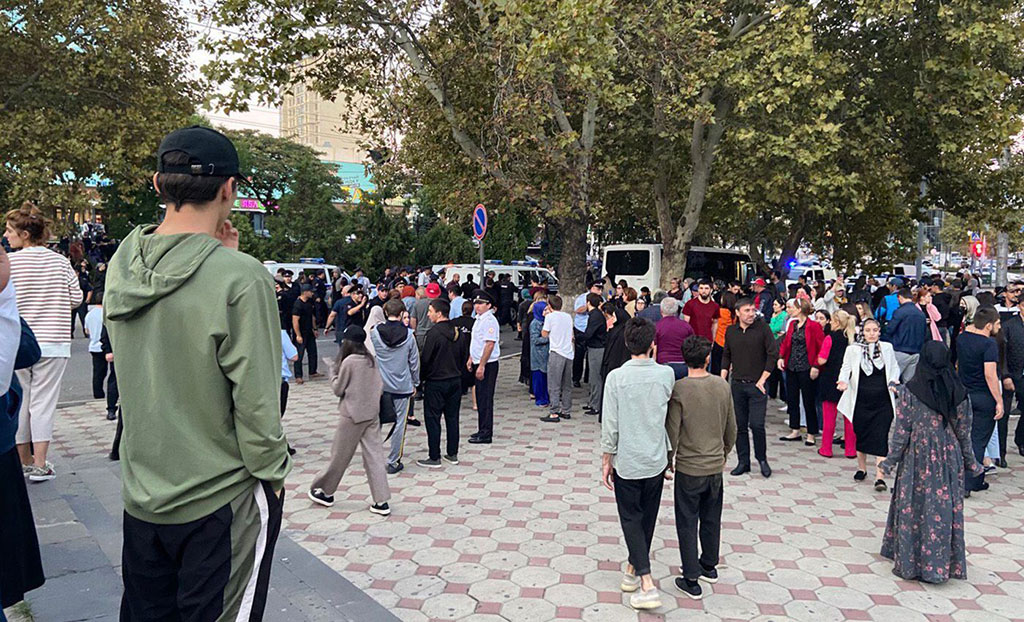
By 2023, it became clear that the Russian authorities take conflicts on interethnic grounds very seriously, which are laid down by the very policies of the state and which they manage to contain with great difficulty. This became especially noticeable after the uncontrolled wave of anti-Semitism that swept through the Caucasian republics in the fall of 2023, culminating in the seizure of the airport in Makhachkala by a crowd. These events show not only the weakness of state structures in the face of an aggressive crowd, but also the high activity of internal forces at a high level, ready to take advantage of the interethnic conflict situation in a difficult moment to solve their political problems.
Representatives of small ethnic groups in the Russian Federation find themselves hostage to this situation and this war. On the one hand, the high level of racism and chauvinism characteristic of Russian society, as well as the deeply depressive economic situation of their republics, pushes them to the margins of that very “Russian multinational nation.” On the other hand, the outside world also stigmatizes and marginalizes them, not giving their voice the opportunity to speak on their own behalf and in their own defense. The only exceptions can be called large republics like Tatarstan or Yakutia, which have the opportunity to develop economically and avoid adventures with interethnic ideology, but they are also under the total control of Moscow, although they actively participate in politics in the form of groups of power interests, along with the distinguished special status of Chechnya . The latter, used by Moscow to promote the agenda of anarchy and intimidate Russian nationalists from among the participants in the military conflict, has long and very seriously irritated its Caucasian neighbors.
The only conclusion that suggests itself from an analysis of the situation with interethnic relations in Russia today is that they are in an extreme stage of tension. Centralization and assimilation in the pre-war years, excessive flirtation with the Russian nationalist agenda during the war years, as well as ongoing isolation and economic depression in the regions of national minorities – this is the overall bleak picture of the development of non-indigenous peoples of the Russian Federation. In such a situation, only forceful methods and the local pitting of elites, which is customary for Moscow, become the only methods capable of keeping them from mutual conflicts and bloodshed. Paradoxical as it may seem, the power of Moscow today is the only thing holding back many regions of Russia from repeating the Yugoslav scenario. Russia is unable to exist outside the imperial paradigm, which is the only binding element of its extremely different regions in economic and cultural development. Appeal to an exclusively national government agenda inevitably leads to conflicts with national ideas in the regions.
Perhaps the concept of the “Russian multinational people” could lead to some kind of evolution in the development of the country before the war. But today it has turned into an ideological weapon, which provides temporary protection well inside, but during the transition to peacetime it is capable of blowing up society with numerous accumulated post-war problems. These factors are very important to take into account for everyone who is interested in saving the region from a major war or understanding how to minimize its consequences for others.