
Anton Naichuk, Ph.D, the head of East European Council
Since the full-scale invasion, China has remained a “lifeline” for the Russian economy, which has not yet allowed it to “go to the bottom” from the pressure of sanctions.
On the part of the Russian political establishment, there are optimistic statements about the strategic union of the two states, which records Russia’s turn to the East.
Representatives of a number of leading American think tanks see threats in the development of the Russian-Chinese trade-economic and military-political partnership and prospects for its transition to an unprecedented level.
The systematic meetings of the leaders of both countries complement the imaginary portrait of a powerful alliance between Beijing and Moscow, which is supposed to transform the international order.
However, the real situation confirms the classic statement that “there are no black and white colors in politics”. The current relations between the People’s Republic of China and Russia appear insufficient for a deep strategic alliance, but also too far from crisis phenomena that would allow Beijing to join the sanctions.
When we often criticize the fact that Western partners use the approach of “giving Ukraine enough to prevent its defeat”, without providing a sufficient level of financial or military support, a similar parallel can be drawn in relation to Russian-Chinese relations.
The People’s Republic of China helps Russia exactly where it corresponds to Chinese interests, and precisely in those volumes that will not create international problems for these interests.
Fortunately, this is not enough for a Russian victory, but unfortunately, it is still enough to prevent defeat.
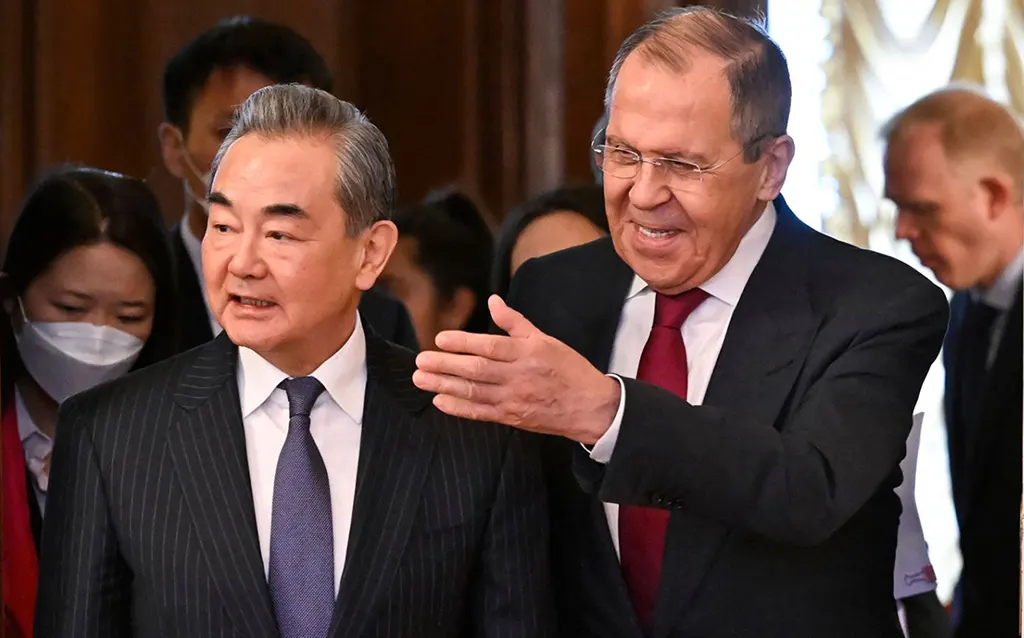
Diplomatic neutrality in favor of Russia
In the political sphere, China’s diplomacy is much closer to the Russian position than to Ukraine. The passivity of the Chinese side in relation to the Peace Summit in Switzerland emphasizes a negative trend: “Chinese neutrality” suits Moscow more than Kyiv.
U.S. attempts to put pressure on China to limit bilateral ties with Russia yield modest results (which we will talk about later), but do not create conditions for achieving the strategic goal of the PRC’s willingness to turn its back on Russia.
Trade between the countries maintains positive dynamics, Russian raw materials are successfully sold on the Chinese market, technologies are finding routes to reach the Russian military-industrial complex, and the construction of products is widely represented in Russia.
This can be explained by several circumstances:
firstly, Beijing is not interested in defeating or dismantling the current Russian regime. If the scenario of the disintegration of Russia is treated with caution even in the countries of Europe and the USA, it is perceived with particular skepticism in the Chinese capital;
secondly, China shows a significant interest in keeping Russia in the orbit of its own strategic influence. For the Chinese side, the ideal scenario of a “freeze” of hostilities in Ukraine based on the example of 2014-2015, which would preserve Russia’s drift in the Chinese direction, would not create grounds for a quick reset of relations between Russia and the collective effort, and would also distract Europe from the issues of war, updating the topic business that will be of particular importance to official Beijing;
thirdly, in the future, the People’s Republic of China plans to use Russia as a kind of “geopolitical battering ram and buffer”.
On the one hand, China is successfully using the situation to strengthen its own positions in the countries of the “global south”, and the Russian narratives of the struggle for a new world order seem convenient to the Chinese.
On the other hand, China does not rule out Donald Trump coming to power in the US, which could start a new stage of the US-China economic war. In this context, the Chinese authorities are preparing for a similar scenario: while the collective action uses all the sanctions potential against Russia, when it is China’s turn, American resources may not be enough, and Europe will shy away from the confrontational approach of the potentially new US President, being “tired” of opposition to the Russian economy. In addition, cheap Russian resources will additionally allow to prepare for a theoretical confrontation with the USA;
fourthly, the conventional Ukraine-Taiwan-Israel axis formed during the war, which enjoys the support of the United States and most European countries, causes displeasure on the part of the Chinese side in Taiwan.
The People’s Republic of China has no intention of imagining a scenario in which Ukraine defeats Russia and sets a powerful precedent for Taiwan. From the point of view of politics on the Chinese vector – constant comparisons of Ukraine with Taiwan, their inclusion in joint aid packages, etc. – creates significant problems for achieving the goals of official Kyiv in the People’s Republic of China.
Taken together, the listed factors affect China’s position, which contradicts Ukrainian expectations and is materialized in Russia’s support. Beijing advocates “neutrality” in which Russia should not lose.
At the same time, such fundamentally important details for Ukraine as the de-occupation of territories are for China are only tactical issues that take a back seat to Chinese strategic goals.
Unfortunately, for Xi Jinping, the line of interest does not run through the territory of Donetsk or other Ukrainian regions, but along the global map, where spheres of influence are distributed in competition with the United States.
Although it is not pleasant, Russia is still in the conditional pro-China camp and until it has a better option at the “negotiating table” in the Middle East, Beijing will maintain the chosen course, which is situationally better for the Kremlin.
However, to what extent does the model of Russian-Chinese cooperation correspond to the principle of “global union”? Practice shows that China skillfully drew “red lines” in the so-called “borderless partnership”.
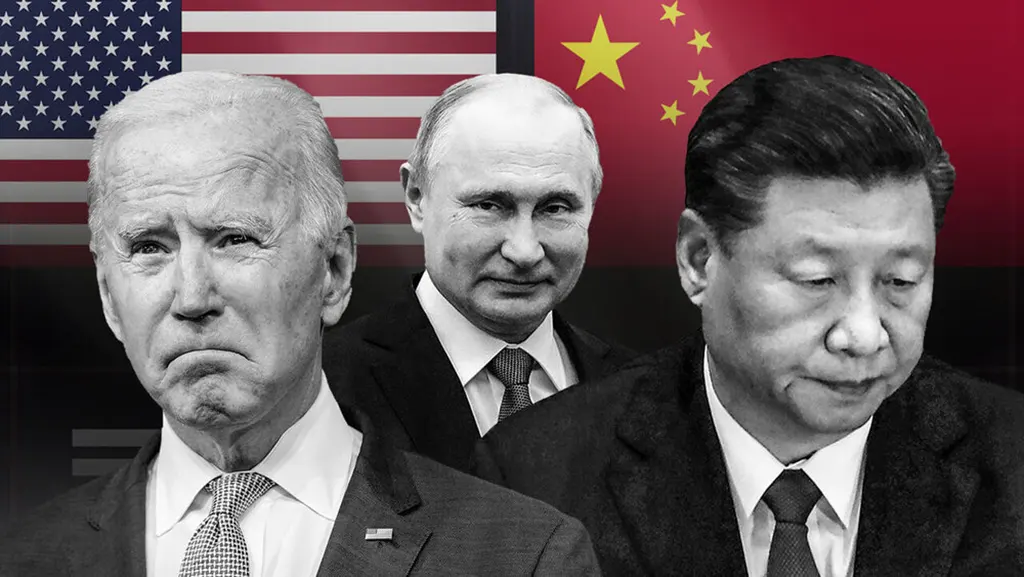
Oil in exchange for technology
Of course, the dynamics of trade between the countries is positive and according to the results of 2023, it increased by more than 26%. However, an important nuance: the export of Chinese products to Russia increased by almost 47%, and in the opposite direction by less than 13%. At the same time, if the structure of Russian exports includes raw materials – energy resources, wood, etc., then Chinese goods have added value and technological origin.
This trend means that China has mastered a new large market for its own products and a source of cheap raw materials.
However, even in the sphere of purchasing Russian energy carriers, the People’s Republic of China clearly sets its priorities:
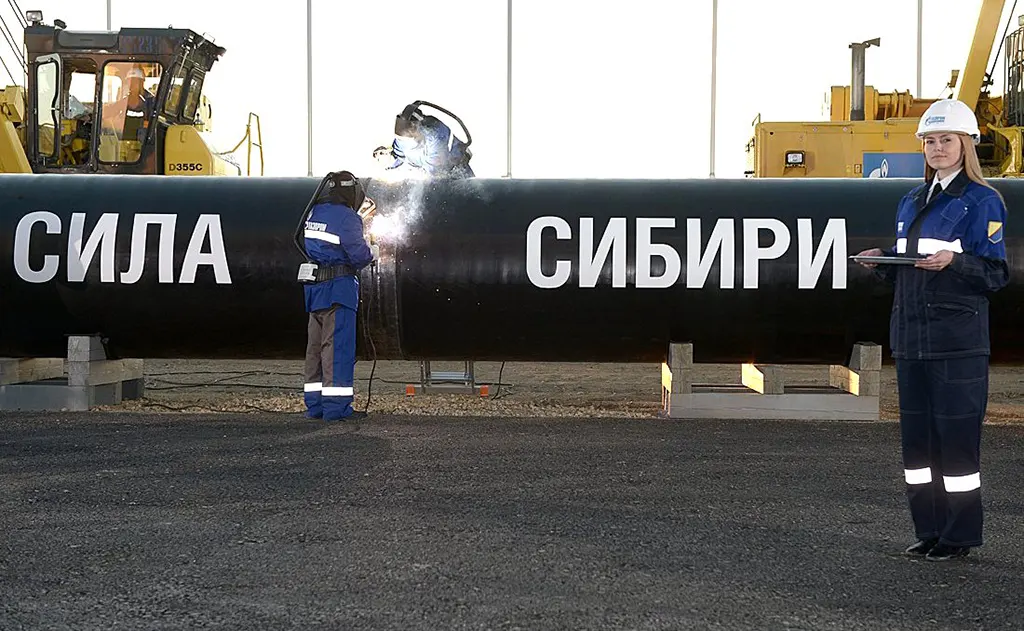
1) Russia’s attempts to redirect gas from Europe to China have not been realized on the expected scale. Moreover, the Chinese side sets its conditions in the construction of “power of Siberia – 2” and Putin’s personal visits did not allow the situation to move.
2) China maintains a duty not to import Russian coal, unlike Australian coal. Although the Kremlin is trying to resolve this issue, the Chinese authorities do not depart from their principle of “import diversification”. According to Beijing, Russia should be dependent on them, not the other way around.
3) With tough sanctions on LNG projects (like “Arctic LNG-2”), China is in no rush to provide technology to keep them from failing. Also, the PRC does not show much activity in the issue of production and supply of specialized tankers to Russia, which would allow the transportation of raw materials. Especially when Russian companies feel a special deficit due to the termination of contracts with South Korea.
Of course, all strategic minuses are covered by one big plus, which allows Russia to continue the war. Next to India, China has assumed the role of the main buyer of Russian oil, which still does not allow to completely “tighten the belt” for the Russian budget. It is worth stating that the decision as an international community to oppose this has not been made until now.
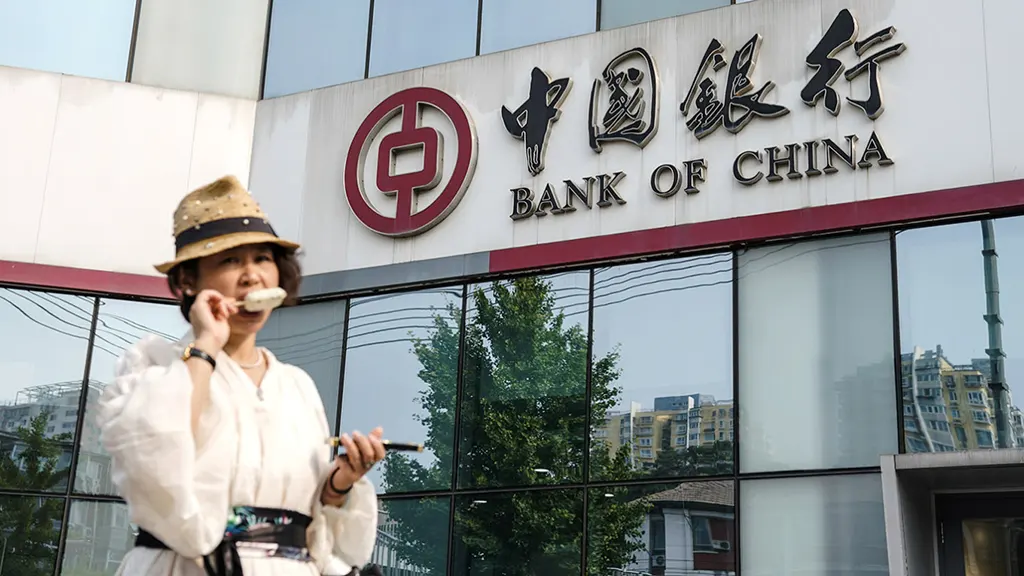
Bank settlements for a month.
Despite the growth of trade between countries, the banking system does not work in the best way. Chinese banks are afraid of falling under sanctions, which creates significant problems for Russian counterparties.
We have to look for various alternative routes for sending funds to the Celestial Empire. Small intermediary banks come in handy, making the transaction much more expensive and longer (from three weeks to several months). In addition, the result is not guaranteed.
VTB, as the only Russian bank represented in the People’s Republic of China, is overloaded with orders several months in advance. Sberbank’s attempts to obtain representation in the Chinese banking system also did not yield any results.
The risks outweigh the benefits, so China will not play these games.
In addition, after warnings from Blinken and Yelen, China recommended banking institutions of Kyrgyzstan, Turkey and other intermediary countries to “be careful” with Russian counterparties, because the National Bank of China checks such payments. This is negative news for Russian business.
Most likely, the most unpleasant surprise awaits Russia still ahead. If the Chinese approach is maintained, it is unlikely that the Russian economy will be able to open credit lines in China. At the same time, the available Chinese money will become especially important in 2-3 years, when the Russian reserves will be exhausted, and the revenues of the oil and gas sector will not cover the expenses of the defense sector.
In the war of attrition, Russia will have to turn to China more than once, but they will not get positive answers everywhere.
A new geopolitical axis
Of course, the Russian leadership hopes to initiate the creation of a geopolitical alliance with China, which will also include other partners such as Iran, Syria, North Korea, and in a strategic perspective, a wider circle of participants from among the countries of the “global south”.
Putin’s visit to North Korea and Vietnam should also be considered in this context. It is important for the Kremlin not to remain isolated and involve as many countries as possible in its military scam.
China will exercise caution and monitor the fact that Russia’s “turn to the east” has not “shuffled the cards” in the game of official Beijing and created a dangerous imbalance in the region.
Undoubtedly, China is actively monitoring Putin’s trip so that it does not create critical problems for Chinese diplomacy. It can be assumed that the Russians will try to “appease” China and, together with North Korea, start negotiations on the issue of allowing Chinese ships to pass through the Tumanna border river into the Sea of Japan.
Due to geographical circumstances, Chinese ships need the permission of the Russians and Koreans to pass the final 15 km section to go directly to sea. If earlier, the Russian side blocked such an initiative, considering itself capable of restraining Chinese regional ambitions, the situation has already changed. From now on, the Kremlin will have to do anything to maintain Chinese support, and the implementation of this decision may become an object of Chinese interest.
It cannot be ruled out that in exchange for such “concessions” that will strengthen China’s regional influence and open it direct access to the Sea of Japan, in the future Beijing will “turn a blind eye” to the uninterrupted supply of North Korean weapons for Russian needs.
In the current circumstances, Russia needs a geopolitical alliance more than the China: the Chinese approach will continue to be based on obtaining point preferences, and Russia will continue to have to act from a weaker position.