
Most news from the North Caucasus in recent months has been related to Chechnya. Despite the pro-Russian nature of the Chechen authorities, this is only an external image that exists for the sake of receiving federal budget funds and maintaining power at the expense of federal resources. For the same reason, the main training base of Russian PMCs operates in Chechnya, which Vladimir Putin visited in mid-August 2024, after the appearance of Ukrainian troops in the Kursk region. Such trips of his, after a long public silence, are usually associated with difficult decisions that Putin has to make in difficult situations.
Probably, after the negotiations in Azerbaijan with a humiliating for the “fan of the USSR” public visit to the monument to those killed as a result of the introduction of Soviet troops into Baku in 1989 and feverish attempts by Russian propagandists to pass it off as a visit to the monument to those killed in the Great Patriotic War, Putin shared additional preferences with Kadyrov. This is also hinted at by Azerbaijan’s desire to join BRICS immediately after this meeting, since within this union it is easier to regulate the transportation of parallel imports, bypassing sanctions. Apparently, both the Azerbaijani authorities and the Kadyrov clan received significant concessions and shares from Putin, both in the current and future flows of goods. In exchange, he could ask for an increase in the volume of supplies (especially military supplies from Iran) and greater participation of Kadyrov’s personal army in the frontline regions of Russia.
This is also hinted at by the second humiliation – the public kissing of the Koran in Grozny, which was perceived negatively by a part of the pro-government society. There could be no other reaction, given how many volunteers from among Russian nationalists fight in the ranks of the Russian army. This forced step shook Putin’s traditionalist ideology, but did not harm it, given the large number of Muslims in Russia and the ability of the authorities to maneuver in matters of religion. On the other hand, this spectacular step increased Putin’s ratings in Muslim countries. Therefore, it cannot be said that it was unambiguously negative. This also fits into the general concept of Chechen policy. The ideal model, which is periodically projected by the Chechen authorities, is a kind of mixture of the UAE/Bahrain with the political and cultural practices of Saudi Arabia, including modern Islam, which is alien to the historical Caucasus.
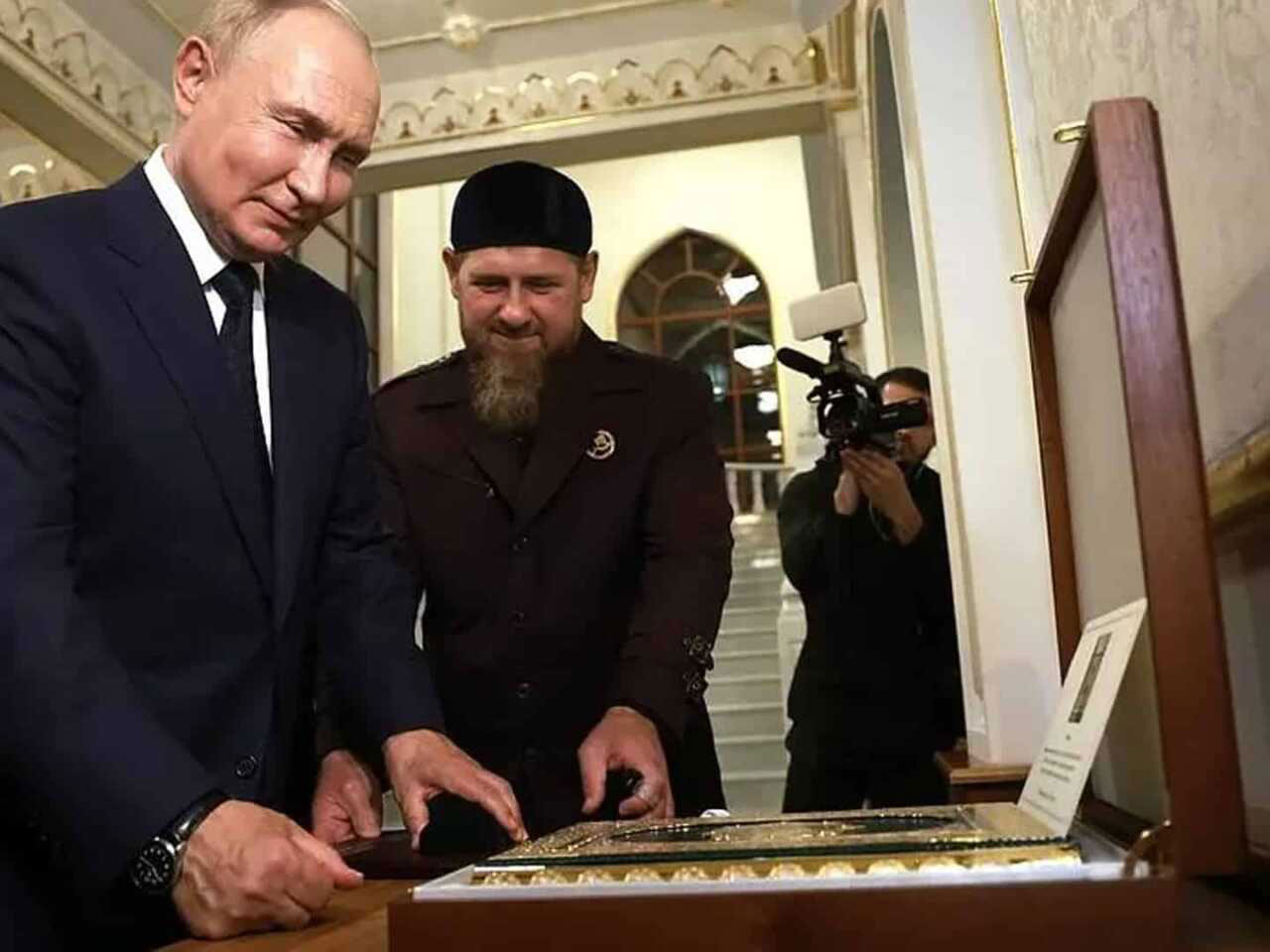
Russian laws have long been in effect in Chechnya very selectively, and in a certain sense the region is used as a local “lawless zone” within which the internal issues of the regime, which are too obviously at odds with the concepts of law and morality, are resolved. For example, political murders are most often organized by the hands of the Chechen authorities, and those who are objectionable are sent to Chechnya for punishment not according to the laws of the Russian Federation, as happened with Nikita Zhuravel, accused of insulting the feelings of believers for burning the Koran and intentionally sent to Chechnya on the orders of Vladimir Putin for a trial, which directly contradicts the norms of criminal law of the Russian Federation. The terrorist attack by Islamists in a prison colony in the Volgograd region that followed this visit somewhat reduced the intensity of the pathos surrounding Putin’s visit to Chechnya, since it revealed the systemic problem of “prison jamaats” that the authorities had stubbornly and long ago ignored, despite hints even from pro-government bloggers.
Another important goal of Putin’s visit to Chechnya was his public support for the Chechen units, which in recent weeks after the Ukrainian Armed Forces’ offensive in the Kursk region have been subjected to active public attacks from the “patriotic” society of war correspondents and the public for surrendering their positions. Ramzan Kadyrov’s personal paramilitary battalion “Akhmat” is taking part in military actions in Ukraine as “Soviet political instructors”, shooting retreating Russian soldiers in the back. It should be remembered that the Chechens have never fought a professional army. In the first Chechen war, they encountered disparate conscript units, who easily fell into ambushes. The second Chechen war ended with their subordination under certain conditions, when a more or less professional army, or rather its separate special units, entered the action. That is why the Chechen units are integrated not so much into the Russian Defense Ministry, but into units of the Russian Guard, which was originally created to suppress civil society and internal unrest. In essence, Chechen paramilitary units play the same role in Russia today as the Cossack detachments did under Nicholas II during the years of the Russian Empire. They suppress revolutionary unrest and are called upon to form that part of the Russian Guard that is called upon in the most difficult moments, where the use of heavy weapons and a lot of bloodshed is required. On the one hand, they are engaged in contract political assassinations outside the law, on the other hand, they act with weapons against rebellious fellow citizens.
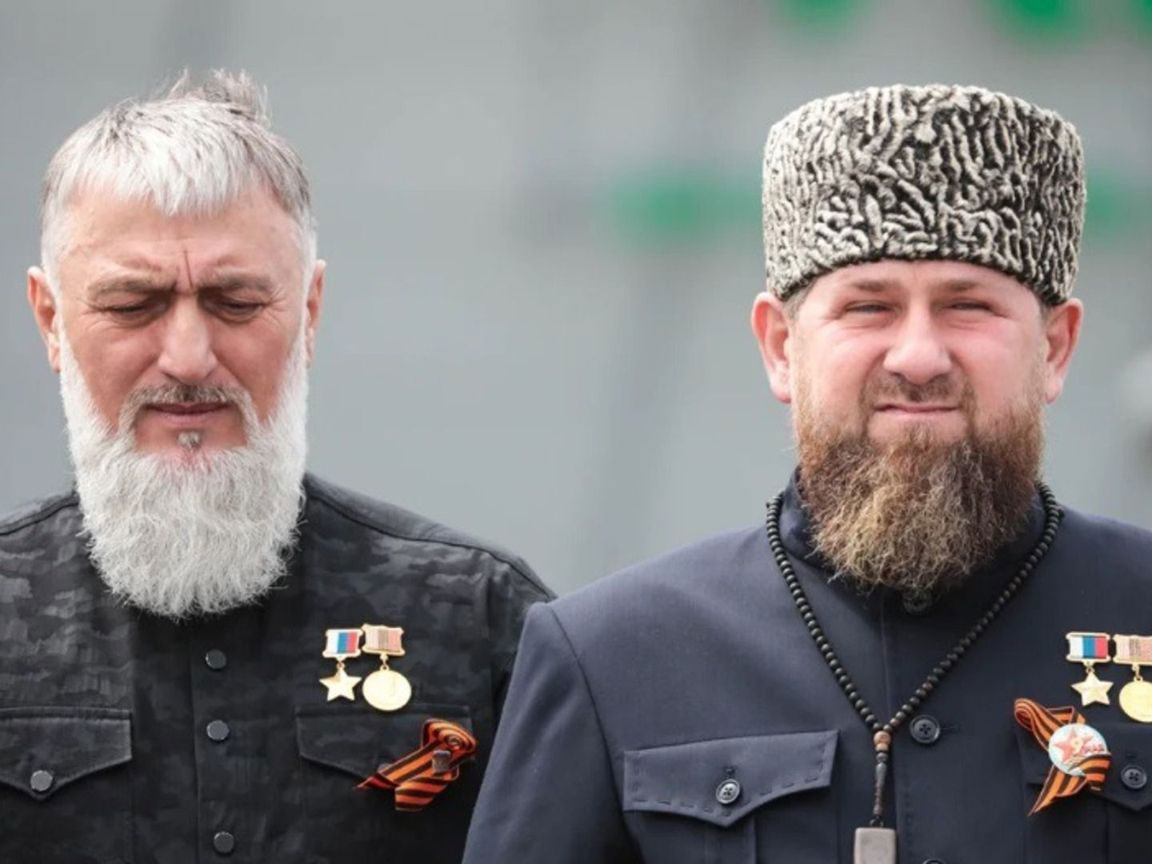
Therefore, their direct use on the military front was never seriously considered as direct, only for indirectly restraining their own troops from retreating, as the NKVD blocking detachments did during the Second World War. They cope with this successfully, unlike the second internal function. As the rebellion of Yevgeny Prigozhin and then the riot at the Makhachkala airport showed, Chechen units in the event of a truly dangerous situation in society take a wait-and-see position, preferring to first assess the strength of the parties before engaging in clashes. Judging by the active promotion of the figure of young Adam Kadyrov, until recently one of the scenarios for the future of Chechnya was considered to be the transfer of actual control into the hands of Adam Delimkhanov, who could act as the guardian of the minor Adam Kadyrov. This idea was close to Ramzan Kadyrov, but the rapid strengthening in 2024 of the former commander of the Akhmat battalion Apti Alaudinov to an influential position in the Ministry of Defense of the Russian Federation and his receipt of the status of a trusted person of the President of the Russian Federation, indicate that the Kremlin has adopted a different scenario for the transfer of power in Chechnya, contrary to the wishes of Ramzan Kadyrov. The latest news speaks of the poor condition of Ramzan Kadyrov, who is clearly holding on only due to medication.
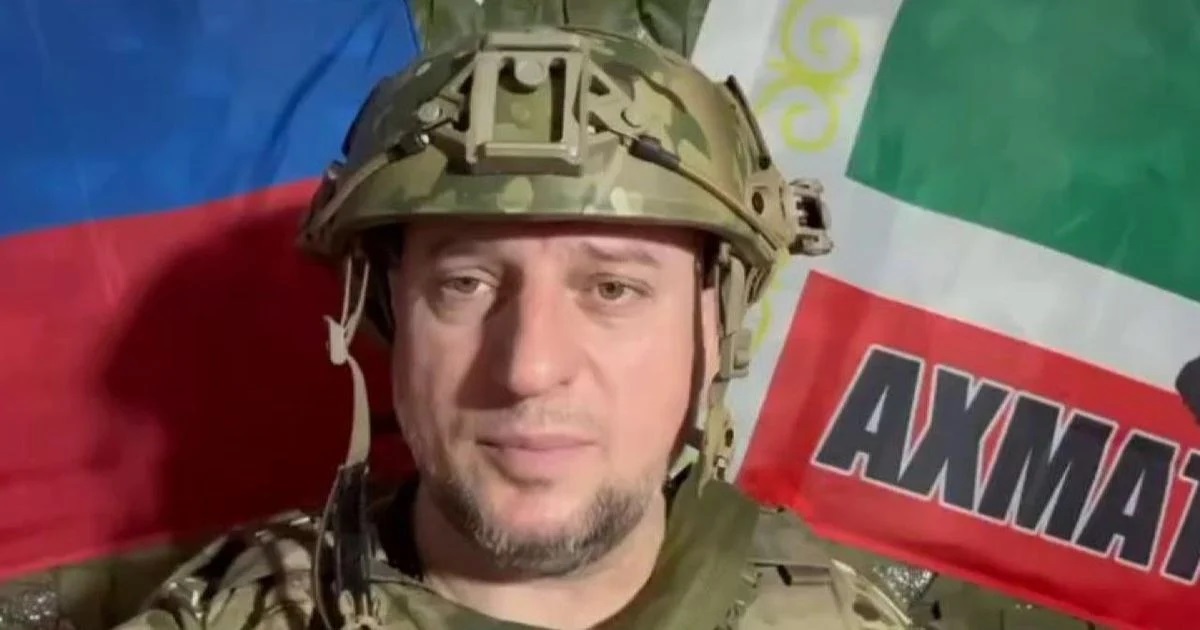
This version is also supported by the recent conflict between the authorities of the republics of Dagestan and Chechnya, when a drunken Minister of Emergency Situations of Chechnya was detained at a federal post on the border with Dagestan and then forcibly taken away from there by paramilitary Chechen detachments. For the first time in the modern history of the Russian Federation, Ramzan Kadyrov’s open accusation of Dagestan’s security forces was met with a public accusation from the head of Dagestan, Sergei Melikov, clearly supported by Moscow. Thus, the indisputable authority of the “outrageous” Ramzan Kadyrov was questioned for the first time. Putin’s visit to Chechnya was also an attempt to whitewash Alaudinov, who, having recently taken up his post in the new Kremlin reshuffle, came under attack from the Z-public during the retreat in Kursk. His feverish attempts to restore his reputation by throwing in false news about the situation in the Kursk region only worsened his situation. But the Kremlin continues to make him the main media figure who must pull the successes of the war, if any, to his side against the backdrop of mass arrests and purges in the Russian Defense Ministry. In this situation, Alaudinov works as a lightning rod, who suddenly found himself in an emergency.
Another contender for the role of successor was for some time considered Magomed Daudov (nicknamed “Lord”) – the second person in the republic, the chairman of the Chechen parliament. However, his biography speaks more about the role of a “guardian of the regime”, who successfully performs the role of force in suppressing the opposition in physical and informational terms. At the end of 2023, a quarrel occurred between Daudov and Kadyrov over the Akhmat football club. Ramzan Kadyrov accused Magomed Daudov, who supervised the club, of the fact that because of him the team could fly out of the football league and look extremely weak. If the situation is not corrected, Kadyrov promised to remove Daudov from his post and send him to serve with the Akhmat battalion in Ukraine, under the leadership of commander Apti Alaudinov. At the beginning of April 13, 2024, Akhmat was defeated by the Baltika team at the championship in Grozny, but Kadyrov has not yet fulfilled his promise. Adam Delimkhanov was named by Kadyrov as his potential successor back in 2009. As a deputy of the State Duma of the Russian Federation for several convocations in a row, he has represented the interests of the Chechen Republic at the federal level for many years. After talk of Kadyrov’s serious illness in the fall of 2023, the candidacy of a successor was again discussed. However, since 2009, some changes have occurred that reflect Kadyrov’s uncertainty that a successor will be able to maintain the status quo of his regime. Despite the fading of the topic of the disease (pancreatic necrosis), in reality it has not gone away. The treatment he is receiving allows Ramzan Kadyrov to remain cheerful in public and will work in his favor for some time. However, his absence from Vladimir Putin’s inauguration in March 2024 was a very telling sign.
The transition period for the Kadyrov clan is very dangerous due to the many conflicts with the teips that suffered from his policies and due to his use of collective responsibility practices. Any changes will be immediately used by both suppressed competitors and external forces in the person of the Ichkerian diaspora. Especially considering some accidental synchronization of statements by Ramzan Kadyrov and Akhmed Zakayev (supported by Khodorkovsky) regarding Chechen claims to the entire North Caucasus. Therefore, any real configurations of power in Chechnya are today discussed in the most closed mode and are surrounded by fake news in the information space in order to veil the real state of affairs.
Major changes are also brewing in Ingushetia, where new forces have become active against the backdrop of the upcoming change of government. Chechen oligarch of the federal level Mikhail Gutseriev is trying to put his protégés in the highest positions of the republic, from among the Chechen clan of Batalkhadzhintsy (the main family name is Belkharoev), which is now partially recognized as extremist. Until May 2024, he planned to take this post himself, but changed his policy, since the Kremlin placed its bets on the current leader Makhmud-Ali Kalimatov. Gutseriev met with Kalimatov and the Belkharoev clan, with whom he agreed on integration into the new government and amnesty for the Batalkhadzhins with the whitewashing of their reputation in exchange for contracts and financial benefits. The problem is that the Belkharoev clan, as too pro-Chechen, is perceived in Ingush society as negative, alien, striving for conflicts over land. Their return to power could provoke riots like those of 2018, which cost the political career of Yunus-bek Yevkurov, who went into the military, and the organizers of the rallies, who received huge prison sentences.
Ten years ago, Dagestan was a difficult region where internal resistance never ceased. However, after the war in Syria began in 2015, most of the active underground either voluntarily went to Syria or was liquidated under the pretext of fighting terrorism. This applies to the entire North Caucasus region, where armed resistance to the authorities ceased in 2015, although recently the situation has again changed for the worse for the authorities. Any opposition, even the most harmless, is impossible in the North Caucasus today, since local authorities actively use the labeling of enemies as “accomplices of terrorists” with subsequent destruction or illegal torture. A striking example of this is the escape from the family of young girls who were forced by violence into a forced wedding or female circumcision, which is typical of Chechnya and Dagestan, where rural societies today have degenerated to the worst medieval practices. For example, in 2022, four sisters from Dagestan fled through Georgia to Europe with a big scandal at the Georgian border. Human rights defenders and opposition-minded activists were then threatened by local authorities, who initiate terrorism cases against such people, and any attempts to hide could lead to the physical elimination of such people.
The low level of economic development and the expansion of marginal religious practices in individual families have led to a general decline in the cultural level of the region. Against this background, the process of “urbanization” began, due to which the mountainous regions of Dagestan are actively emptying. The same process leads to a very rapid reduction in the cultural and linguistic diversity of Dagestan, the “Babylon of languages”, where each mountain village traditionally had its own special language. The reduction is both in favor of the Russian language and in favor of 2-3 large indigenous languages of Dagestan, such as Avar, Lezgin and Lak.
In recent years, the federal authorities have been paying much attention to the region as a key logistics point Russia-Iran-India-Persian Gulf. First of all, such care is expressed in the complete subordination of local politics to the central authorities, due to the appointment of federal officials on the ground. Vladimir Putin’s visit to Derbent after the rebellion of Yevgeny Prigozhin in 2023 was made with the aim of strengthening these trends. The redirection of budget flows to political groups in southern Dagestan after this trip led to a redistribution of roles within influential Dagestan clans, a process that is currently taking place at all levels. There is a redistribution of budget flows from one group to another, which previously occupied a marginal place, including due to the projection of separatist ideas of Lezgin statehood by influential groups in southern Dagestan in the 1990s.
The new head Sergei Melikov failed to resolve old economic and social problems. The Republic of Dagestan is still subsidized and one of the poorest in the region. There are high rates of corruption, low levels of healthcare, problems with garbage and sewage, and drug trafficking. Unlike Chechnya, old problems with paying gas bills to Gazprom structures have not been resolved in Dagestan, and Gazprom is proposing to give up its assets in favor of a local operator. The problem with the underground has not yet been fully resolved. As in other subsidized republics of the North Caucasus, poor life and unemployment led in 2022 to a large-scale voluntary mobilization of residents of the Republic of Dagestan for the war in Ukraine in order to resolve their own material problems. Despite the fact that a significant percentage of war participants are residents of Dagestan, this fact does not indicate loyalty to the federal authorities. Very often, they overlook the numerous protest rallies that have taken place in Dagestan since the beginning of the war, which were harshly dispersed by local authorities. As well as pre-war rallies, for example, against the introduction of a tax on heavy trucks. This generally coincides with the general neutral or negative attitude of the residents of the North Caucasus, who are frankly alien to the slogan of the “Russian world”, understood as Russian nationalist (which it is), opposing the Caucasus.
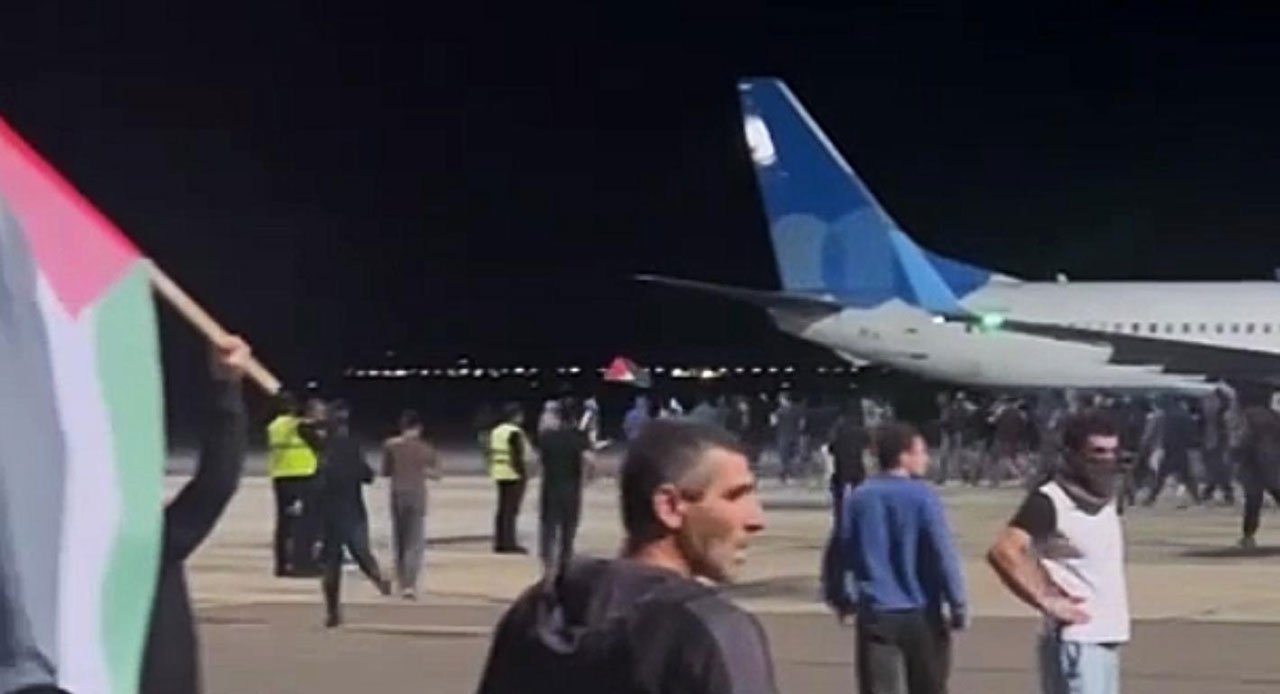
Separately, we note the situation with the anti-Semitic demonstrations at the Dagestan airport in the fall of 2023, which are directly related to the attempts of the old clans to regain power in the region by discrediting Melikov. Attempts that went beyond the planned and controlled situation. The majority of the participants in the riot were young people from the Salafi movement of Dagestan, radically religious. The most likely beneficiaries in this situation were representatives of the Makhachkala oligarchs, the Magomedov brothers, who were convicted during the redistribution of property in the Novorossiysk port and the Derbent oligarch, Senator Suleiman Kerimov.
This is hinted at by the authorities’ refusal to prosecute the riot participants and the short sentences given to active participants in the crowd. The riot at the airport was a reflection of the internal struggle of an influential group that took advantage of the emotionally tense situation, but did not achieve an advantage in one direction or another and settled on the status quo. Nevertheless, Kerimov was able to take over some of the management of budget flows in Derbent, which allowed him to somewhat improve the depressing financial situation. In 2024, the owner of the airport in Makhachkala became Kerimov’s 21-year-old son, Said Kerimov.
Federal authorities have been trying to combat the spread of Salafism, which is close to Wahhabism but different from it, for many years. Torture, pressure, pogroms and searches, squeezing out representatives to Syria were used, but all to no avail. Dagestan turned out to be completely covered by an underground network of Salafi branches that spread their teachings in mosques and hold religious holidays and religious events. Despite the Kremlin’s attempts to link Salafism with Western influence, following the example of ISIS, the authorities today are afraid to openly enter into conflict with the illegal community, since the Salafis have great sympathy in Dagestani society and the movement itself tries to avoid direct conflicts with the authorities. On the other hand, the Salafi leaders in exile in 2023 openly advocated the creation of a theocratic state in the North Caucasus, which is already evident in some cases, as happened during the terrorist attack in Dagestan on June 23, 2024. Despite attempts to explain it by internal clan squabbles, it is obvious that the attacks on the Orthodox Church and synagogue carried an ideological charge that connects the participants with the Salafi movement. It is important that this news turned out to be one of the most alarming for Russian society. Moreover, the persecution of businesses and the entourage of the popular Dagestani wrestler Khabib Nurmagomedov by the authorities turned out to be connected with these events, although it is presented exclusively as an economic story. In fact, this recognizes the connection between the influence of Salafism and media personalities popular with young people, from among the fighters. The Kremlin tried to use them for its propaganda, but realized that it was losing.
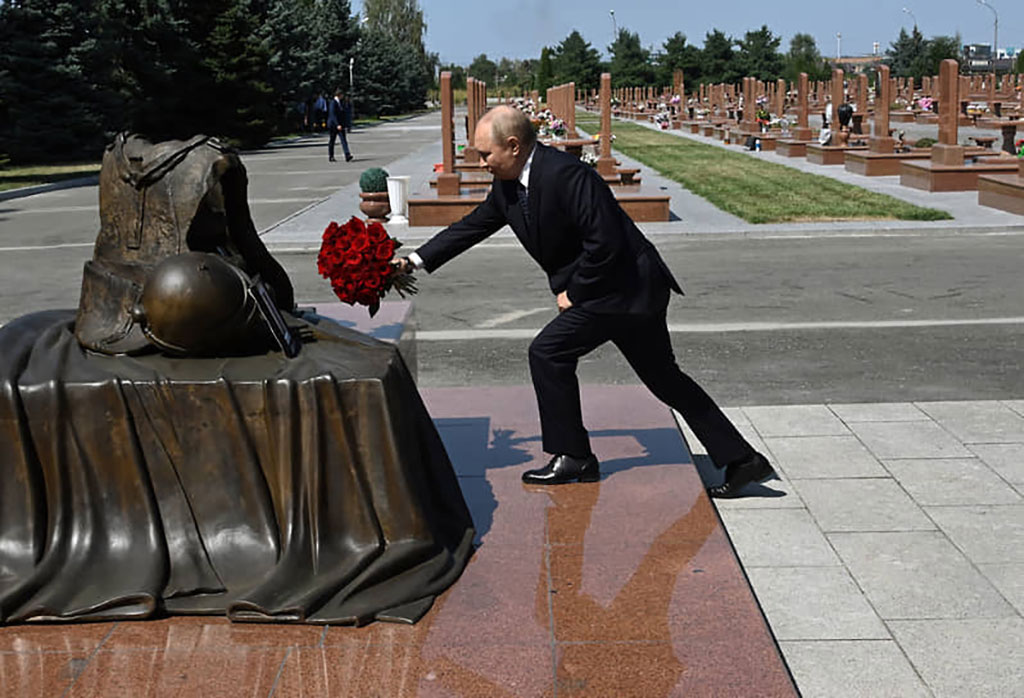
It should be noted separately that Putin’s visits to Nalchik (Kabardino-Balkaria Republic) and North Ossetia-Alania (Beslan) on the same trip were more likely part of a hastily put together script. This is especially true for the mourning events in Beslan related to the terrorist takeover of the school in 2004. Putin, who ignored this memorial and the Beslan Mothers’ Society for most of the time, suddenly visited them a few weeks before the official mourning date. Given the use of rhetoric with a narrative about “terrorists”, this trip turned out to be an unsuccessful attempt to link the images of Islamic terrorists and the Ukrainian Armed Forces into one whole in the media, as if there was no difference. In terms of media, it was more of a failure, given the mass of unresolved questions over the past 20 years regarding the Beslan terrorist attack itself and the role of the FSB in it. Putin also visited Nalchik. He checked apple and pear orchards and tried hard to pretend that Russia was living in peacetime.
Behind the scenes, the issue of security in the republic, the fight against the Islamic underground and unwanted Circassian organizations that are seeking independence for the Circassian people from abroad remained. It is no coincidence that at the end of July 2024, four major cultural and political organizations of the Circassian people abroad were included by Rosfinmonitoring of the Russian Federation in the list of terrorists and extremists: the Circassian Committee (Congress), the United Circassia Council Foundation, the Free Circassia Movement, and the Georgian Circassian Cultural Center. Thus, the Russian authorities are trying to combat the influence of organizations representing national minorities of the Russian Federation at the international level and participating in congresses of the Peoples of Russia, where issues of potential disintegration of the Russian Federation are discussed.
Talking about the news related to the Krasnodar Territory, the loudest came from the Russian oligarch Oleg Deripaska, who at a forum in Japan declared the need to end the war in Ukraine. On August 9, he said that the war in Ukraine was insane and called for it to be stopped. Immediately upon returning to Russia, he had to urgently publicly change his position, which resulted in him organizing mass humanitarian support actions for residents of the Kursk region. In turn, sources report that the Kremlin was not happy with this statement and the story is far from over.
As for the Cossacks, the story of the strengthening of the Terek Cossacks at the all-Russian level and in matters of the war in Ukraine continues. In August 2024, Vladimir Putin approved Vladimir Savchenko as ataman of the Terek Cossack Society – Pyatigorsk colleague Vitaly Kuznetsov, who now heads the All-Russian Cossack Society. Kuznetsov became the author of the strategy for the maximum implementation of Cossack societies in the structures of the local “police” in the Russian army on the war front and in the occupation zones. Thus, according to his statement, by October 2024, the registration of Cossack societies “in the new Russian territories” will begin. According to him, in this way the Cossacks will be able to carry out the tasks defined by the strategy of state policy towards the Russian Cossacks for 2021-2030. The ataman also emphasized that leaders have already been identified who are ready to lead the primary Cossack societies. Thus, the Kremlin completely replaced the leaders of the Cossack societies, who before the war in Ukraine were certainly natives of the Kuban Cossack army. However, after the latter failed to cope with the task of mobilizing the Cossacks, continuing to play “historical reconstructions”, a decision was made in Moscow to transfer the management of the structures into the hands of the previously marginal and small Terek Cossack army, which turned out to be better prepared for the realities of wartime. However, in general, the scale of the Terek Cossacks does not allow us to talk about any significant masses of volunteers who could be used for mobilization due to the small number of Cossack detachments, which do not exceed 50,000 people in total, most of whom are already at the front. Probably for this reason, a decision was made to use the Cossacks to consolidate their positions in the occupied territories in order to suppress partisan movements.