
Since our last major study in the spring of 2024, the socio-political situation in Georgia has become even more tense. Its current political landscape continues to be a confrontation between two equally powerful forces, which has entered the acute phase of the election campaign, characterized by loud populist statements and accusations from competitors.
On the one hand, there is the Georgian Dream party, created and supported by its honorary chairman and unofficial sponsor Bidzina Ivanishvili, which received a slight advantage in favor of a constitutional majority in the last elections. The political doctrine of the Georgian Dream is “national sovereignty” with elements of traditional values, similar in content to the Russian or Hungarian version. The party relies mainly on “budget workers”, “security officials”, older men and rural residents, also older. One of the most radical groups of its support is traditionalists, men aged 30-60. Their emergence is largely due to the acute social and economic problem inherent in Georgia. This generation of men grew up in a criminal narrative that assumes that physical work is not a worthy thing for a man. This thinking led them either to participate in criminal schemes in Georgia and/or emigrate, or to the outflow of women who are married to them and are ready for physical labor into emigration. The long-term separation of families due to emigration leads to conflicts, the breakdown of ties and the radicalization of men who perceive this situation as humiliating. This leads to an aggressive attitude of this part of men towards women who have left for Europe and an appeal to traditional rhetoric, which is reproduced by the ruling party.
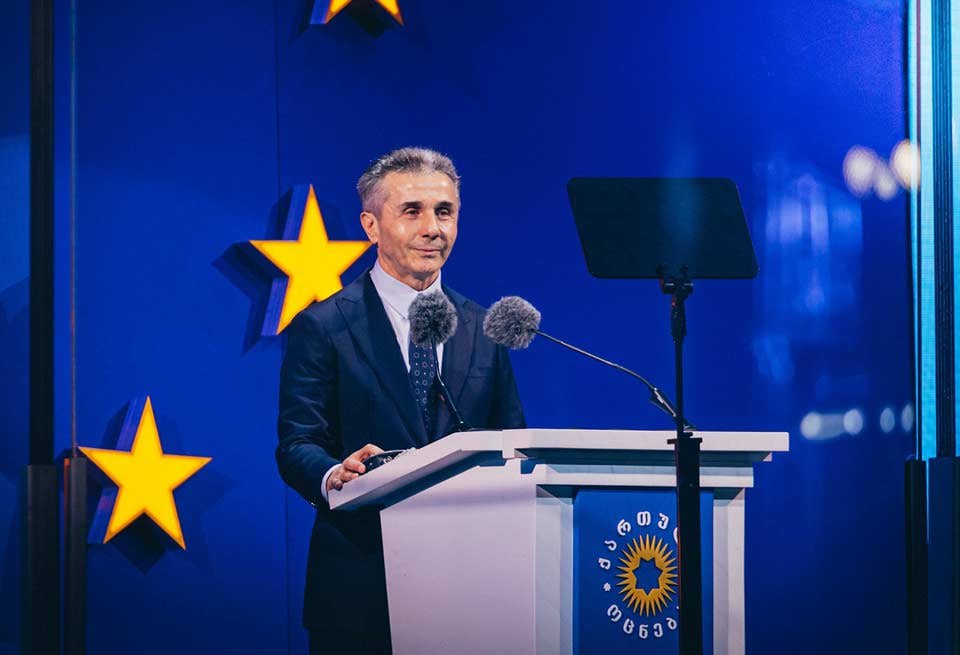
The closer the elections, the more populist and harsh the statements of the “Georgian Dream” become, sometimes turning into an outright show, as in the case of the installation of bulletproof glass for Bidzina Ivanishvili’s speech with programmatic statements in Mtskheta in mid-August 2024. This was an imitation of Donald Trump’s behavior model, so close in spirit and style to Ivanishvili himself. And if in Trump’s case this measure is justified, then in the Georgian case it is nothing more than political PR. At this speech, the ruling party made several statements in which it outlined an authoritarian agenda for the country in case of victory. In addition to the standard populist statements about the mythical “party of war and peace” and the fight against LGBT, for the first time a direct threat was made against political competitors. Ivanishvili promised, in case of victory with a constitutional majority, to initiate legal proceedings against Mikheil Saakashvili’s main opposition party, the United National Movement, and their satellites, with the aim of declaring them unconstitutional on the basis of unleashing the 2008 war. Thus, the creation of a direct or fictitious (as in the Russian Federation) one-party system was directly announced. In 2024, the Russian Foreign Ministry actively played along with this rhetoric of the authorities, throwing in two statements about an allegedly planned violent coup after the 2024 elections under the leadership of Western intelligence services. However, Mikheil Saakashvili’s rhetoric only fuels this conspiracy theory, while on the other hand, nothing prevented the Georgian Dream from bringing these scenarios to life, which rather speaks of populist statements necessary to whip up a “narrative of fear of war”. A speculative question about restoring the country’s territorial integrity was raised separately, which we will discuss below. Also in April 2024, the authorities adopted the scandalous law “On Foreign Agents”, which caused large-scale rallies in the country. Despite crowds of thousands of people and clashes with the police, the rallies did not bring results and the law came into force on August 1, 2024. By autumn, the list of “foreign agents” will be voluntarily or forcibly compiled, although most NGOs have refused to comply with the law’s requirements and are currently challenging it in court. In turn, the adoption of the law and the Georgian authorities’ crude rhetoric towards the leaders of the US and EU countries have already led to the suspension of the EU candidate status, some support programs, military exercises, etc.
On the other hand, the Georgian Dream is opposed by a scattering of 29 parties, most of which have joined 4 different opposition blocs, most of which do not have their own great political weight and are constantly in conflict with each other. Among them, there are also openly pro-Russian ones, such as businessman Mamuka Papia’s Solidarity for Peace, but they do not have any serious influence. However, even among the opposition parties, only 5-6 have a chance to pass the 5% barrier in the upcoming elections. Judging by the sociological studies of July 2024 and August 2024, the Georgian Dream party, if it does not gain a constitutional majority of votes, is clearly in the lead. Moreover, if you look closely at the poll results, you can see that this victory is given to the party solely due to the absence of the “Against All” column, which includes up to a third of respondents. This characterizes the general political field of the country, in which voters do not trust anyone at all, they have no favorites on either side. There is a classic crisis of confidence in the country’s political system. The list of opposition leaders includes the old United National Movement, Saakashvili’s most recognizable party, as well as Akhali, Girchi – More Freedom, and the Labor Party, most of whom are former members of the United National Movement who broke away in previous years.
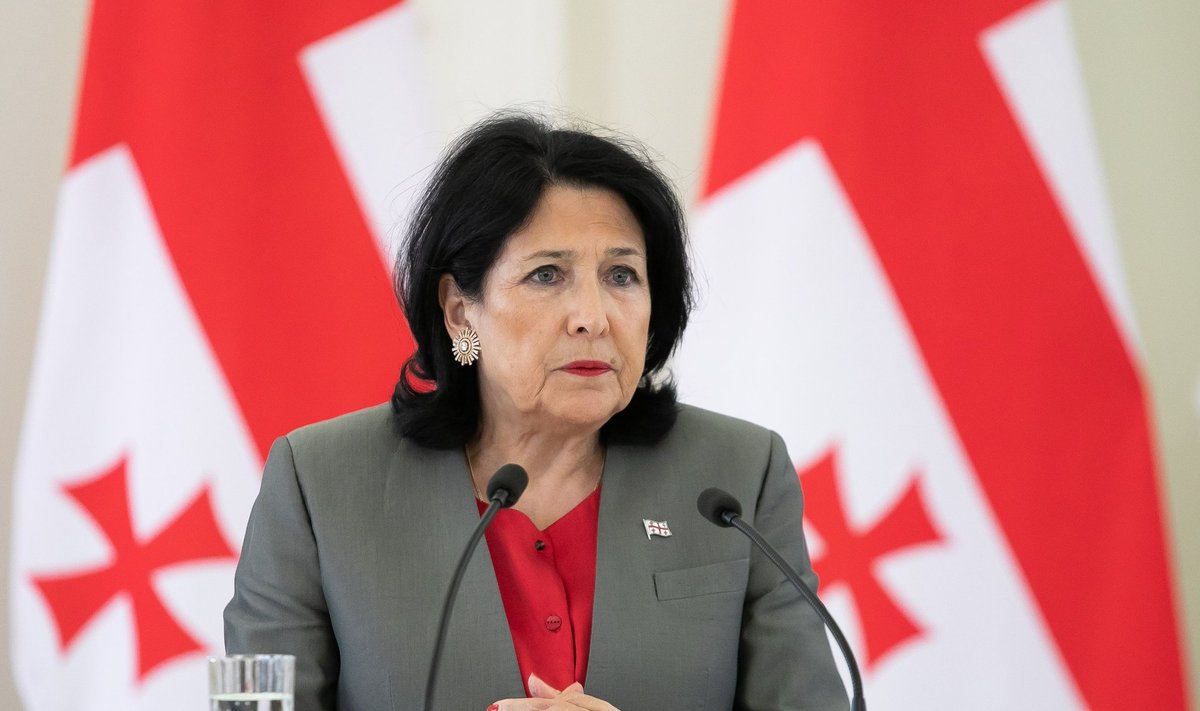
Unfortunately, the situation in opposition circles is depressing, as personality conflicts continue to split parties into parts and paralyze the effectiveness of the election campaign. This situation is also affected by the excessive financial imbalance in terms of support for the election campaign. As before, the absolute leader in donations is Georgian Dream, while other parties lag far behind. The peculiarity of this financing is that the ruling party has fewer donors, but their average payments are significantly higher. In the opposition, on the contrary, financing occurs through many small contributions. This rather suggests that the ruling party is financed by large businessmen and officials, while the opposition is financed by public funds. The uniqueness of the political situation is that political pessimism prevails in modern Georgian society and in reality, neither side has much popular support. For Georgian society today, there are no political figures who could rely on popular support. Some exceptions can be made for Salome Zurabishvili, who in recent years has acquired the image of the only figure capable of openly opposing Bidzina Ivanishvili’s policies with some results, but her age plays a negative role in her perception by the sole opposition leader. Therefore, various political rallies held in the country are emphatically anti-political, popular. They are aimed exclusively at disagreement with specific laws or actions of politicians, no matter pro-government or opposition. The main figure of the opposition movement in recent years has been President Salome Zurabishvili (from the Georgian diaspora in France), who won her post in 2018 as an independent candidate, but with the support of the ruling party. Salome Zurabishvili’s conflict with the Georgian Dream began in 2023, after she supported protesters who opposed the adoption of the law on foreign influence. Since then, she has been fundamentally opposed to the current ruling party, pardoned protesters and met with European and American politicians, despite a direct ban from the Georgian parliament. The result of this conflict was an attempt by the Georgian Dream to impeach the president in October 2023, which was unsuccessful, as the party did not receive the necessary majority of votes. In turn, Salome Zurabishvili often uses the right to veto laws adopted by the Georgian Dream, which is overcome by the party with a majority of votes. Both sides of this political conflict are in a kind of impasse due to the impossibility of eliminating each other by legal means. Due to such principledness, Salome Zurabishvili’s candidacy acquired the image of a potential united opposition candidate in some opposition circles in 2024, but the opposition still does not have a clear understanding of the strategy of political struggle. The main ideas of these party groups boil down to supporting the country’s European course, but with different understandings of this concept. Moreover, Salome Zurabishvili’s programmatic statement in 2024 completely copies her 2009-2012 program, directed against Mikheil Saakashvili.
In 2021, one of the radical supporters of the liberal path and participant in the anti-government protests, Elene Khoshtaria, left the opposition party European Georgia and founded her own political movement, Droa! At the same time, former Prime Minister Giorgi Gakharia founded his own party, For Georgia, who has a reputation in opposition circles as a pro-Russian politician, based only on the flexibility of his approach to Georgia’s potential relations with its neighbors, close to the ruling party. However, despite all efforts, according to polls, these new parties do not even pass the 5% barrier among the opposition parties of Georgia by 2024, so they are trying to unite in a bloc with the ENB with varying success. As for the ruling party Georgian Dream, in 2024 Irakli Garibashvili was replaced as Prime Minister by Irakli Kobakhidze, who has served as the chairman of Georgian Dream since 2021. Irakli joined the party on the eve of the change of power in 2012 under the influence of his father Gia Kobakhidze, a former vice-speaker of the ruling party under Eduard Shevardnadze, who lost his post during the years of Mikheil Saakashvili’s rule and harbored a grudge against the UNM. Experts characterize Irakli Kobakhidze, like the speaker of parliament Shalva Papuashvili, as functionaries incapable of dialogue, using ready-made communication templates. Thus, in 2024, Bidzina Ivanishvili carried out a castling of young politicians close to him within the system in order to more effectively fight in the upcoming elections. This is largely due to the personal interest of the “owner of Georgia”, as Ivanishvili is called in the opposition press, which is not far from the truth, since the “Georgian Dream” is indirectly financed by his personal funds. Ivanishvili returned to politics with the slogan of supporting the country’s European course, but his actual actions indicate the opposite. The law “On Foreign Influence”, the wording of which will lead to administrative repressions against political competitors, the media and NGOs, attempts to publicly break society, to show his role as the “master”, speak of Bidzina Ivanishvili’s uncertainty before the elections and his inability to compromise. Together with the law “On Foreign Agents”, a law was adopted on the simplified transfer of funds from offshore zones to Georgia, which all experts associate exclusively with Bidzina Ivanishvili’s personal interest in transferring assets to a safe zone with authorities under his control.
All this appears to be the oligarch Ivanishvili’s reaction to the demands of the European Union to carry out “deoligarchization” in Georgia, associated with the accompanying publications of reports on the corrupt role of the “owner of Georgia” in the country’s political life. Bidzina Ivanishvili perceives this as a threat and is trying to secure his assets and positions in Georgia, but at the same time does not want to completely sever ties with the world and come under the control of the Russian dictatorship, where in this case he could be threatened with the “deprivatization” of assets, characteristic of the current Russian regime, with their transfer into the hands of Vladimir Putin’s entourage. Moreover, the too active pro-Russian position of the official Georgian authorities threatens to exacerbate public relations. At the moment, the position of Ivanishvili and the Georgian authorities under his control is more reminiscent of an attempt to bargain for the most favorable conditions for themselves, as has already happened with the assignment of the EU candidate status with the exception of a number of mandatory conditions. Bidzina Ivanishvili, who came to power from the opposition in 2012, having an independent source of his own financing, is trying to apply the same role to the current opposition, which he is trying to deprive of sources of income and show society that without Western support his competitors do not have real power and sympathy in society.
However, some experts do not rule out collusion between Bidzina Ivanishvili and Russia in order to negotiate favorable terms. In the spring of 2024, the Georgian authorities began mass polls of the population regarding amendments to the country’s Constitution in order to ban LGBT propaganda. There is a high probability that in the event of victory in the elections with a constitutional majority, the initiation of amendments to the Constitution under this indirect pretext will be used by the country’s authorities to resolve much more serious and painful issues of territorial integrity and membership in international structures.
The most painful issue for Russia today is NATO membership, which is included in the country’s goals in the Constitution, as is EU membership. The second is not viewed as critically as the first. Bidzina Ivanishvili could have received a guarantee of resolving the territorial dispute with Abkhazia and South Ossetia in one form or another in exchange for changes to the country’s Constitution, and therefore the topic of resolving the territorial issue, including for the benefit of “our Abkhaz and Ossetian brothers”, constantly appears in his rhetoric. However, many doubt that this issue even exists in real plans, since the authorities’ rhetoric is very reminiscent of similar pre-election statements in 2019 about resolving the territorial dispute with Azerbaijan around the David Gareji Monastery Complex in the southeast of the country. The issue of border delimitation there disappeared from the agenda immediately after the elections, although it was very acute during the process.
If we consider the existing versions on the issue of the reasons for including “territorial” rhetoric in the program statements of the “Georgian Dream”, they come down to three versions: the resolution of territorial disputes through the creation of a confederation, similar to Bosnia and Herzegovina (a theory much discussed in the media of Abkhazia and Ossetia) with its subsequent inclusion in the Union State of Russia-Belarus; the resolution of disputes through the return of Abkhazia and South Ossetia to Georgia through federalization (in exchange for abandoning NATO); the “Kosovo scenario”, when Georgia recognizes the independence of at least Abkhazia (South Ossetia is either returned to Georgia or joins the confederation – this scenario is often discussed in the Georgian media); everything remains as is, but in fact, Georgian businessmen gain access to real estate in Abkhazia and South Ossetia and begin a creeping migration with the return of Georgian refugees to the purchased lands and houses (a scenario also discussed in the Georgian and Abkhaz media). In the latter case, experts believe that Bidzina Ivanishvili will receive a share in international China-Russia transportation via the port in Anaklia, huge financial bonuses in the event of unblocking transport hubs through disputed territories, and assistance in maintaining authoritarian power. Experts admit that this is a long-term strategy that does not mean real solutions to the territorial issue. The Georgian Dream has too many problems in Georgia itself, the solution of which requires more attention and effort today. It is possible that we are talking about the creation of some Russian-Georgian corporate structures that will jointly develop infrastructure projects at the first stage, such as a transport highway through South Ossetia or unblocking railways from Abkhazia to Georgia and further to Turkey. Experts believe that signs of such a conspiracy include a change in the leadership in the security agencies associated with NATO projects in the spring of 2024, with replacement by people more loyal to the authorities, especially in the Foreign Intelligence Service of Georgia. Moreover, like other Caucasian neighbors, Georgia is actively involved in organizing and controlling parallel import flows that are currently coming from Turkey and Iran to Russia, and such a situation will only increase the income of the main recipients of profits from the transportation of goods, which includes the business structures of Bidzina Ivanishvili.
An equally important fact of the events taking place in the country’s political life in 2024 is the collective national psychology. Georgian society, which grew up in the conditions of total criminalization of the 1990s and the first half of the 2000s, is still imbued with the ideas of romantic banditry. Its important feature is the authority of the “elder”, a kind of “stock exchange leader”, who cannot be betrayed, since everyone is doing one “noble deed” for the common good, albeit morally unacceptable. Such psychology, which has sprouted at the level of public administration, is characterized by the formation of a group of “their own”, in which loyalty to Bidzina Ivanishvili, as a “senior”, is of colossal importance. Hence the harsh, rude rhetoric of representatives of the Georgian authorities in response to quite fair statements from the EU and the USA, as well as in relation to protesters, as a defensive reaction of the group for the “elder”.
The peculiarity of the upcoming 2024 elections is that the ruling party has problems with the electorate. In the past, the conflict with the pro-European part of Georgian society did not prevent the Georgian Dream from receiving the majority, since it was supported by supporters of the pro-Russian path, traditional values and national sovereignty. Moreover, scandals in opposition circles prevented them from taking advantage of the situation and winning the trust of the part of society rejected by the authorities. By 2024, the Georgian Dream had even more radically turned supporters of the country’s pro-European course against itself, despite weak attempts to formally follow the European course. This time, the opposition forces tried to mobilize, and after the split, they formed new movements that will try to attract pro-European youth to their side with the support of Salome Zurabishvili. In the spring, six opposition parties united with the goal of nominating a single candidate for the upcoming elections. These included Akhali; Girchi – More Freedom; “Droa”; “United National Movement”; “Lelo – for Georgia” and “Strategy Agmashenebeli”, most of them are new and still little known, but behind them are famous people and the political power of the UNM, as the central core of the union. They already occupy all the main places after the ruling party, judging by sociological surveys. Despite the continuous internal conflicts, they have a chance to pull votes away from the ruling party so as not to allow it to receive a constitutional majority. In the current situation, this looks like a maximum program. In this case, the internal political crisis will move to the walls of Parliament, where the parties will have to make concessions to solve political problems, which can calm down the excessive activity of the ruling party.
However, the biggest intrigue of the elections lies in the support of the main electorate of the “Georgian Dream”, the traditional rural population and the elderly. In the spring of 2024, the Georgian authorities deregistered the “Conservative Party” of the pro-Kremlin ultra-conservative movement Alt-Info, and before that, they blocked their bank accounts, which received funding from Moscow. Alt-Info began in 2017 as a website and movement founded by Konstantin Morgoshia, which broadcast Russian narratives, promoted homophobia and violence, and in 2021 it was registered as a party, Moscow’s backup option in case the Georgian Dream escaped its influence. Later, its members, along with some of the Georgian clergy, were involved in conservative rallies and pogroms of LGBT festivals, blockades of cinemas showing films from international film festivals, and the burning of EU flags. For a long time, the Georgian government turned a blind eye to them, but since late 2023, it has felt some kind of threat. Attempts by Alt-Info representatives to organize a rally against the ban on the creation of a party, for which they traditionally gathered older men, ended in vain. Given the high level of influence this movement has on the minds of the key electorate of the ruling party, as well as their support for the protesters against the law “On Foreign Influence” in April-May 2024 (which is a paradox in itself), the autumn elections may prove unpredictable for the Georgian Dream. Therefore, Bidzina Ivanishvili is trying feverishly and persistently to implement the laws he needs, which, according to Irakli Garibashvili, can be repealed later, if necessary. The ban on political competition will definitely be on the menu of these elections.