
It is an inside analysis of East European Council on the situation inside Socialist party of Republic of Moldova in front of Presidential and Parliamentary elections. Who are the main leaders in the party? What are the Russian interests? How Dodon reacts upon Russian attitude to him and can previous President play his own game? Answers on this questions you can find in out inside text
On March 23, 2024, an extraordinary 19th congress of the Party of Socialists of the Republic of Moldova took place in Chisinau, where the former president of the country, Igor Dodon, again became the chairman. Over the past years, the party has undergone significant changes, both publicly and behind the scenes.
The Party of Socialists, created in 1997, entered parliament for the first time following the 2014 elections, then in 2019 and in early elections in 2021. The largest number of deputies in the PSRM was in the 2019-2021 legislature – 35 seats in the 101-seat parliament. In the early elections of 2021, the Party of Socialists participated in the Bloc of Communists and Socialists, which received a total of 32 parliamentary seats (22 from PSRM and 10 from PCRM).
The Socialist Party was not a ruling party in the full sense of the word, but it twice participated in the creation of ruling coalitions – from June to November 2019 together with the right-wing bloc ACUM (Maia Sandu’s government), and from November 2019 to November 2020 – together with the Democratic Party (Ion Chicu’s government). In November 2020, a minority government was established in Moldova, that is, consisting only of representatives of the Party of Socialists and a number of formally independent figures. From December 31, 2020 to August 6, 2021, the country had a temporary government consisting of approximately the same representatives, but under the leadership of Acting Prime Minister Aureliu Ciocoi.
This personnel crisis ended after early parliamentary elections on July 11, 2021, when the Action and Solidarity party, which supports the current president Maya Sandu, won 63 seats in the parliament and single-handedly appointed the government. From the summer of 2021, the Party of Socialists again became the opposition party it was before the summer of 2019.
Let us recall that Igor Dodon, having lost the presidential elections to Maia Sandu in November 2020, returned to the chair of the chairman of the Socialist Party in December of the same year (by law, the head of state cannot be the head of a political party). In the early parliamentary elections of 2021, Dodon was first on the list of socialists and second after Vladimir Voronin on the general election list of the Bloc of Communists and Socialists.
Igor Dodon became a member of parliament, but already in October he abandoned his mandate, and in December 2021 he resigned as chairman of the Socialist Party, becoming its “honorary chairman”. The position of party chairman was abolished, and a “collegial leadership” was established in its place, consisting of an Executive Committee of five people, the head of which also becomes the Executive Secretary of the PSRM.
At this stage of the party’s development it is worth special attention. Moscow was behind this unexpected “reform” of the Socialist Party. She was dissatisfied with the results of the 2020 presidential elections, but even more so with certain steps of Dodon in 2019-2020. In particular, the Russian leadership hoped that after the resignation of Maia Sandu’s government in November 2019, President Igor Dodon would sign a decree dissolving parliament (more on this below).
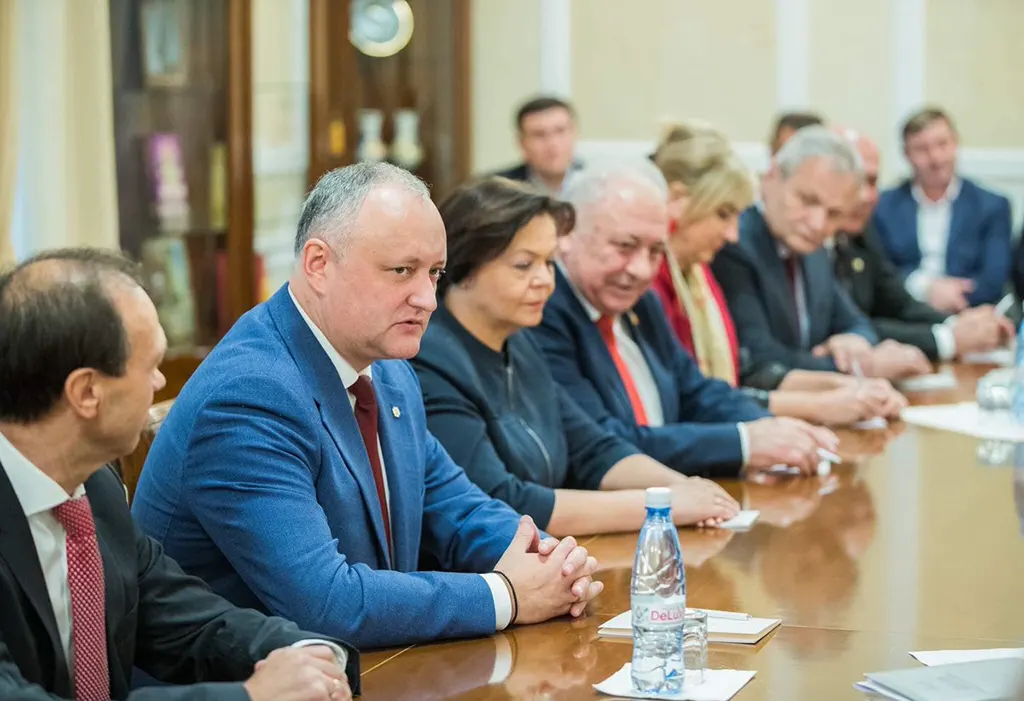
Sandu’s government was the “brainchild” of a compromise unprecedented in the history of Moldova between left and right forces – the Party of Socialists and the right ACUM bloc. It was well known in Moldovan political and media circles that this coalition was made possible thanks to an agreement between Russia, represented by Deputy Head of the Kremlin Administration Dmitry Kozak, and the United States, represented by the most influential diplomat in Chisinau, American Ambassador Dereck J. Hogan.
It was Hogan who is credited with the decisive conversation with the oligarch and informal leader of the Democratic Party, Vladimir Plahotniuc, who personified the “captured state” and was perceived in the West as a serious obstacle to European integration, although Moldova under the leadership of the PDM has advanced along this path. After a brief conversation with the American ambassador, Plahotniuc, as well as another oligarch, Ilan Shor, hastily left Moldova in June 2019 and have not returned since then.
For Russia, Plahotniuc’s removal was a matter of principle, since he was the key figure who prevented the creation of a center-left coalition (the Communist Party and the Democratic Party) that was potentially loyal to Moscow following the parliamentary elections in December 2010. Then Sergei Naryshkin, at that time the Chairman of the State Duma, even specially flew to Chisinau to “bless” this coalition, but he had to return to Moscow empty-handed.
Thus, in the summer of 2019, a situation arose when the removal of Plahotniuc as a political figure became the common position of Russia and the United States. At the same time, Igor Dodon’s nomination of Maia Sandu for the post of Prime Minister of Moldova was perceived on the right flank as the result of the efforts of Dmitry Kozak, who has been involved in the Moldovan issue for a long time – just remember the famous “Kozak Memorandum”, the signing of which was disrupted literally at the last moment on the night from 24 to 25 November 2003.
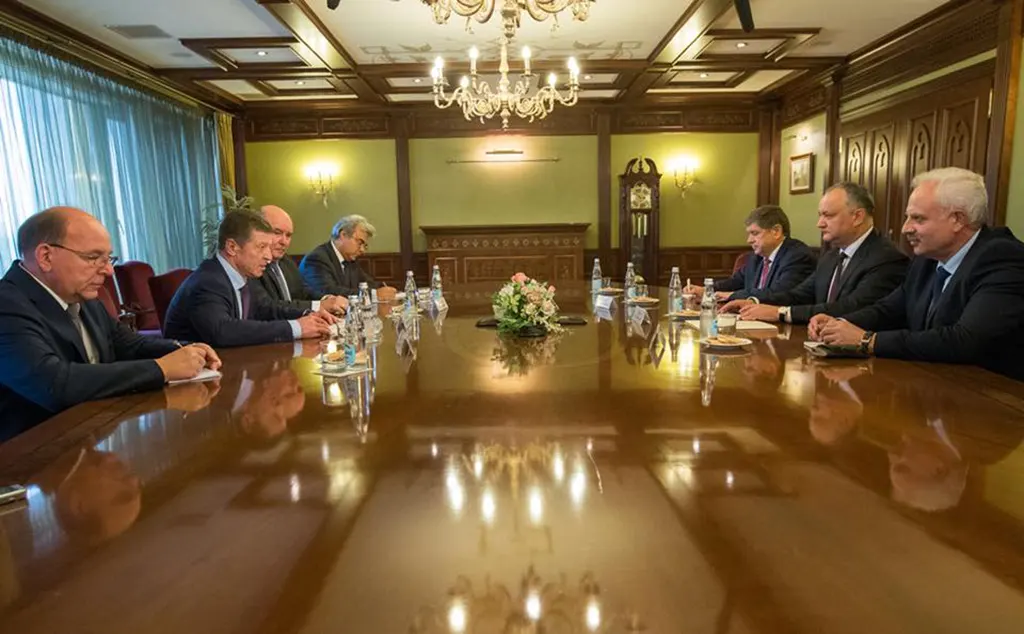
Returning to the question of Moscow’s dissatisfaction with the policies of Igor Dodon, it should be noted that in November 2019, immediately after the resignation of the government of Maia Sandu due to great disagreements between the right and left, the Russian leadership seriously expected that President Dodon would sign a decree dissolving parliament and holding early parliamentary elections. Russia hoped, firstly, to finally oust the Democratic Party from the political life of Moldova (after the flight of Plahotniuc, the real boss and “wallet” of the PDM, the rapid decline of this party was a matter of time). Secondly, Moscow has found quite acceptable interlocutors in the right-wing ACUM bloc, despite deep geopolitical differences. In other words, the Kremlin, represented by Kozak, was working to create a more or less stable two-party system – the Socialist Party and the ACUM bloc – based on the results of early parliamentary elections, and the resignation of the Sandu government seemed to Russia the most convenient moment for the practical implementation of this plan. However, Igor Dodon’s decision to create a coalition with the Democratic Party in November 2019 was an unpleasant surprise for Moscow. In fact, Dodon not only did not dissolve the parliament, which Russia expected of him, but also allowed the toxic Democratic Party to prolong its political existence.
Russia’s second major complaint against Dodon was, obviously, the misuse of financial resources allocated, in particular, to the Socialist Party. My sources claim that Moscow had serious reasons to believe that a significant amount of funding was nevertheless ineffective and led to the defeat of Dodon and the PSRM precisely because an impressive part of the funds was not directed to strengthening the party, its regional structures and media resources, but for Dodon’s personal and family needs. Moreover, the details of the financing of the PSRM, revealed later, show that it was truly generous. In any case, on the scale of Moldova, this money was enough to conduct an election campaign that was more effective than it actually was.
Indirect confirmation of the version of Moscow’s dissatisfaction with Dodon’s behavior is the fact that Russia “sent” a very weak team of political strategists to the presidential elections in 2020. As one Moscow political scientist familiar with the situation said about this, “this is a very budget option; it was decided not to send anyone more serious.”
On the other hand, circles in Moscow, close to the special services and at the same time considered patrons of the Transnistrian Sheriff company, took up arms against Dodon. According to my sources in the Party of Socialists, Dodon allowed himself a number of public attacks against the oligarchs from Tiraspol, for which, at their order, he received harsh criticism from the “sink tanks” of the FSB – for example, propagandists Armen Gasparyan and Alexey Martynov.
Very eloquent evidence that Moscow did not intend to rely only on Igor Dodon is the fact that even after the defeat of the Party of Socialists in the parliamentary elections on July 11, 2021, contacts between the top leadership of the Russian Federation and Moldova continued. The same Dmitry Kozak quite unexpectedly visited Chisinau in August 2021 and held negotiations with Maia Sandu. “The conversation was very constructive, in a friendly manner we agreed on cooperation and the start of dialogue at the interdepartmental level literally from tomorrow…” said the deputy head of the Kremlin Administration.
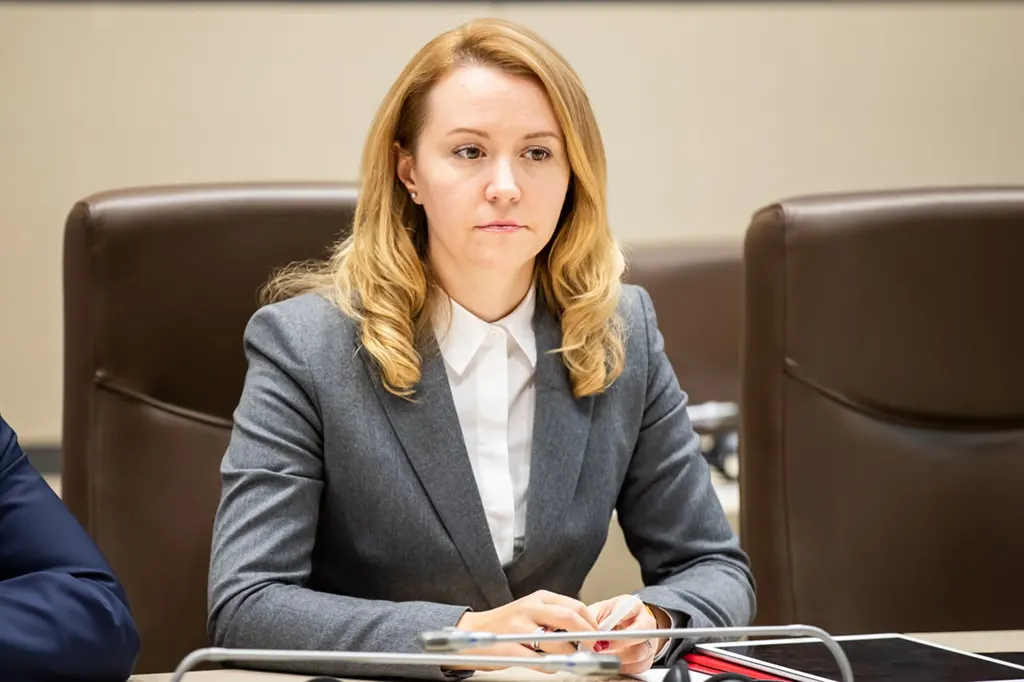
By the way, the right-wing opposition still reproaches Sanda for being “blessed” by Putin’s man twice – in June 2019 and August 2021. At the same time, the very close dialogue between Moscow and the right-wing leadership of Moldova rebounded on Dodon even after he left the presidency and went into the opposition. My sources in the Socialist Party claim that the idea of abolishing the post of PSRM chairman belongs specifically to Moscow. To better understand this particular aspect, it is necessary to take a closer look at another figure in the party. We are talking about Olga Cebotari [1] , a native of Moldova, a graduate of the Peoples’ Friendship University of Russia (RUDN) and the Diplomatic Academy of the Russian Ministry of Foreign Affairs. It is known that there are no random people in the Diplomatic Academy; they get there only under the patronage of the Foreign Ministry, the Kremlin Administration or law enforcement agencies. The unexpected move of the previously unknown 28-year-old Chebotar from Moscow directly to the post of Deputy Prime Minister (!) for reintegration in November 2020 surprised even the then members of the Cabinet of Ministers.
And the rapid growth of her influence in the Socialist Party, in turn, surprised the old-timers of the party. Without any experience in basic party work, she was already elected to the Republican Council of the PSRM in January 2021, as a deputy prime minister. When the government in Moldova changed in the summer of 2021 and the socialists went into opposition, Cebotari began to quickly strengthen her position in the party, and already in January 2022 she became a member of the Executive Council, a new “collegial” body. In addition to her, 4 more people were selected there, one of whom, Vlad Batryncha, became the executive secretary. At the same time, Cebotari herself began to head the international relations department of the PSRM.
Already in the spring of 2022, it became clear that the arrival of Olga Chebotar to the party leadership (and earlier to the post of Deputy Prime Minister for Reintegration) was not accidental. And it was absolutely obvious that her appointment and promotion were lobbied by Russia. Firstly, from the very beginning of Russia’s military aggression against Ukraine, Chebotar in her interviews categorically refused not only to condemn the war, but even to simply call it a war. It still follows Russia’s advantageous line of neutrality and the desire to “maintain a balance between East and West.”
Secondly, according to our inside information, Chebotar has actually closed the financial flows from Moscow, as well as the main communication channels. It got to the point that some PSRM “veterans” themselves went to Moscow and expressed dissatisfaction with the fact that “this Cebotari” allows herself to lead those who have served the party for at least 10 years, starting from the grassroots level.
Moreover, according to my information, Dodon himself was forced to reckon with his yesterday’s subordinate, whom he once nominated for the post of Deputy Prime Minister. In this regard, it is also appropriate to retell one episode that took place in April 2023. At the next congress of the PSRM, Igor Dodon was unexpectedly (!) nominated for the position of executive secretary. Moreover, this nomination was made directly during a public speech by Vlad Batryncha, who was precisely the secretary. According to my interlocutors, this “initiative” came not only from Batrynchi, but also from Chebotari.
Their goal was to make a supposed “gift” to Dodon, who wanted to return to full leadership of the party, seeing its serious problems (more on this below). In fact, with this step they only wanted to block his activities. The explanation is as follows: having become the executive secretary, Dodon receives official powers to conduct business, but according to the charter (changed in 2021 at the instigation of Moscow), he is obliged to coordinate them with the Executive Committee. This is precisely what is blocked by Olga Chebotar, who allows herself to publicly tell Dodon that “she is not interested in this” and she “does not intend to carry out his initiatives.” But he cannot do anything about it, since, as noted above, it is backed by certain circles in Moscow who have access to finance and are capable of opening and, accordingly, closing the doors that the socialists need.
Additionally, it is necessary to consider the problem of criminal prosecution of Igor Dodon by the current authorities of Moldova. Regardless of how well-founded the accusations against him are, another factor is at play. According to my information, Dodon’s arrest on May 24, 2022, on the day of Maia Sandu’s 50th birthday (“a gift to Maia,” as the Moldovan press wrote then), was sanctioned by Moscow. It was from Russia that they made it clear to Chisinau that they would not object to criminal cases against Dodon. But Moscow had its own goal: to demonstrate to him that his ambitions would be severely suppressed and he should “keep quiet.”
This was precisely the period when quite serious internal conflicts took place in the party between the so-called “Dodon’s people” and the Batrynchi group, to which Olga Chebotari belongs. It should be noted that Vlad Batrincea, holding the post of executive secretary of the PSRM, was unable to either rally people around him or show the charisma so necessary in politics. As my informed interlocutor notes, Batryncha is a typical party careerist who prefers the cozy chair of the vice-speaker of parliament from the opposition, where he can make non-binding statements, simply “fixing” the opposition status and offering nothing but criticism (even if fair and justified) to the authorities. On the other hand, Batryncha was not independent in his activities when he held the position of executive secretary. He was also forced to maintain his contacts with Moscow through Olga Chebotar. In general, the Party of Socialists remains an exclusively pro-Russian force, but in the broad sense of the word, that is, it is also trying to improve relations with Moscow’s satellites, such as Hungary, Serbia, Belarus, as well as with China and North Korea.
The return of Igor Dodon to the post of chairman of the Party of Socialists on March 23, 2024 looks clearly belated, at least from the point of view that both its members and ordinary citizens are disappointed in the party. While Dodon was in the capacity of “honorary chairman” and then “blocked” Executive Secretary, 6 people left the parliamentary faction of socialists – this is a very significant loss, if we remember that the Bloc of Communists and Socialists consists of 10 communists and 22 socialists. That is, the PSRM actually remained in parliament with 16 people. This is the weakest representation since the party first came to parliament following the 2014 elections (then there were 25 deputies).
At the same time, something should be said about Moscow’s epiphany. Her experiment to change the composition and structure of the leadership of the Party of Socialists obviously failed, so they decided to agree to the return of Dodon to a leadership position in order to try to keep the clearly failing project called “PSRM” afloat. Zinaida Greceanii, the former speaker of parliament, former prime minister and one-time chairman of the Socialist Party, now the new “honorary chairman,” was unable to help save the “face” of the party. She is respected by both party members and her external partners, but she did not have enough influence and firmness to at least prevent six deputies from leaving the parliamentary faction.
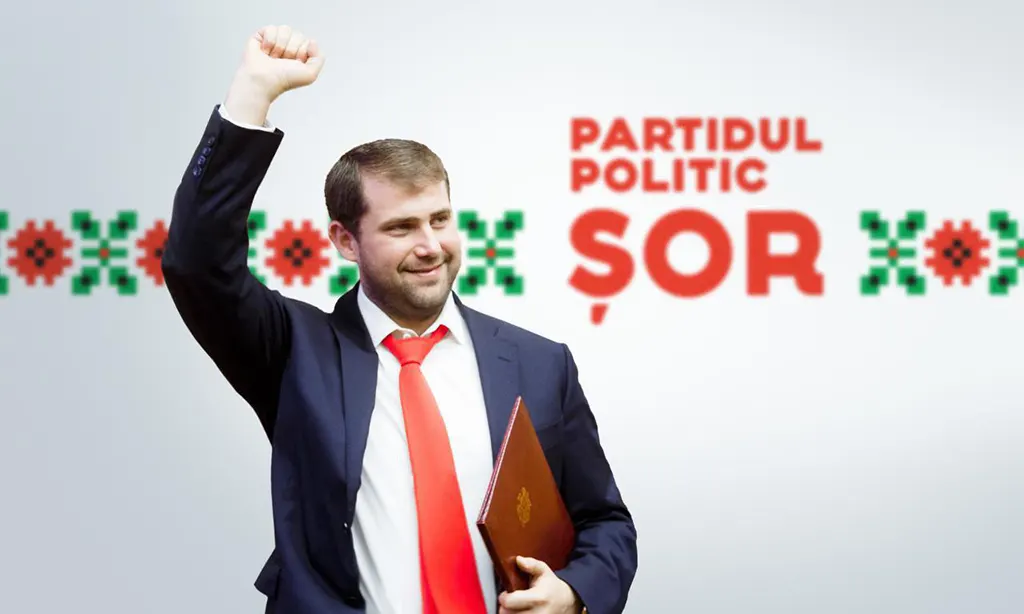
Even despite the lack of special activity of the Party of Socialists in the public and media space, Moscow realized that relying only on Ilan Shor, who is now flying from Israel to Russia, would be short-sighted, especially considering the criminal cases he has, which will lead to immediate arrest in event of his arrival in Moldova. My interlocutors say that Moscow considers Shor “useful” but does not trust him, despite the attempts of Mountain Jews to pave the way for him into the highest offices of Moscow. The most that Shor managed was to organize a meeting of the loyal Bashkan of Gagauzia, Evgenia Gutsul, with Putin “on the sidelines” of the youth festival in Sochi. Moscow agreed to this to demonstrate support for Gagauzia as the “correct” (pro-Russian) region of Moldova, as opposed to the “wrong” central authorities in Chisinau.
If we talk more broadly about the left opposition segment of Moldovan politics, then at this stage (as, in general, before) there is no consolidation there and is not expected. Speaking more narrowly about the Shor Party and the Socialist Party, there are serious contradictions between them, despite the support once given by Shor deputies when voting for the minority government of Ion Chicu in November 2020. For example, Shor deputies accuse the socialists of softness, lack of initiative, and most importantly, of having secret agreements with Sandu on the PSRM’s refusal to take active actions against the authorities.
These assertions are not without foundation. Over the past year, the socialists have not been able to hold a single large-scale protest event, while the Shor Party regularly gathers numerous rallies, despite all sorts of obstacles from the authorities. In addition, in 2023, I received certain signals about the existence of agreements between Dodon and the Sandu administration, or at least about their desire to agree on joint actions against Shor, whom the Moldovan authorities consider not just toxic, but an instrument of a “hybrid war of Russia against Moldova” .
There is just over six months left before the next presidential elections in the Republic of Moldova, and one of the most important issues is the possibility of finding a single left-wing candidate capable of challenging Maia Sandu. There is currently no other obvious candidate in the Party of Socialists other than Igor Dodon, but there may be other solutions
[1] For Olga Chebotar’s track record, see the link: https://ru.wikipedia.org/wiki/%D0%A7%D0%B5%D0%B1%D0%BE%D1%82%D0%B0%D1%80%D1%8C,_%D0%9E%D0%BB%D1%8C%D0%B3%D0%B0_%D0%93%D0%B5%D0%BD%D0%BD%D0%B0%D0%B4%D0%B8%D0%B5%D0%B2%D0%BD%D0%B0