
Presidential elections will be held in Romania on November 24. The most likely scenario assumes that the first round will not reveal a winner, so the second round will take place on December 8. Meanwhile, parliamentary elections will be held on December 1.
The head of state is elected for a term of 5 years (before the 2003 reform – for 4 years), both chambers of the parliament – the Senate and the Chamber of Deputies – for 4 years. This year, the electoral cycles have coincided, so the president and parliamentarians will be elected almost simultaneously.
Romania is a mixed presidential-parliamentary republic, close to the French model. Parliament and the government play a significant role, but the figure of the president is not nominal, so the elections of the head of state traditionally attract more public attention than parliamentary ones.
The current head of state, Klaus Iohannis, is completing his second five-year term and no longer has the right to run for office. The following candidates are applying for the highest post in Romania (in the order of their position on the ballot):
- Elena Lasconi – “Union of Salvation of Romania” (Elena Lasconi – Unirea Salvați România);
- George Simion – “Alliance for the unification of Romanians” (George Simion – Alianța pentru Unirea Românilor);
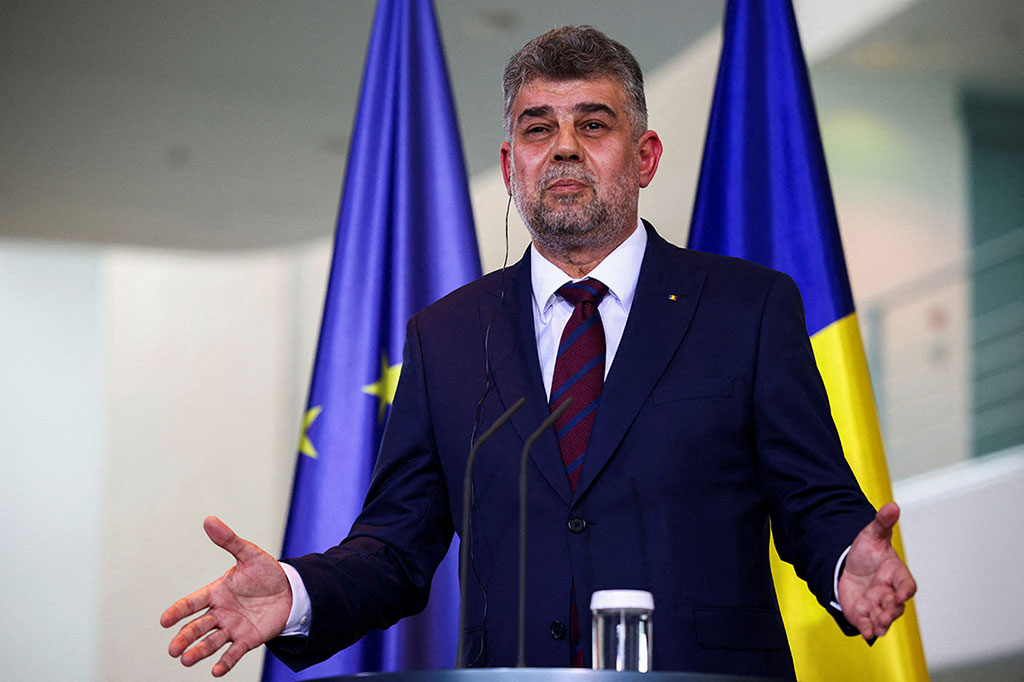
- Marcel Ciolacu – Social Democratic Party (Marcel Ciolacu – Partidul Social Democrat);
- Nicolae Ciucă – Partidul Național Liberal;
- Hunor Kelemen – Democratic Union of Hungarians in Romania (Hunor Kelemen – Uniunea Democrată Maghiară din România);
- Mircea Geoană – independent candidate (Mircea Geoană);
- Anna Birchall – independent candidate (Ana Birchall);
- Alexandra Beatrice Bertalan-Păcuraru – “Alternative for national dignity” (Alexandra Beatrice Bertalan-Păcuraru – Alternativa pentru Demnitate Națională);
- Sebastian-Constantin Popescu – Party “New Romania” (Sebastian-Constantin Popescu – Partidul Noua Românie);
- Ludovic Orban – “Strength of the Right” (Ludovic Orban – Forța Dreptei);
- Călin Georgescu – independent candidate (Călin Georgescu);
- Christian Diaconescu – independent candidate (Cristian Diaconescu);
- Cristian-Vasile Terheș – National Conservative Party of Romania (Cristian-Vasile Terheș – Partidul Național Conservator Român);
- Silviu Predoiu – Party “League of National Action” (Silviu Predoiu – Partidul Liga Aktionei Naționale).
From this list, the following candidates have the most likely chances of reaching the second round:
Marcel Čolaku, the current prime minister, chairman of the Social Democratic Party, according to polls, he has 29% of those who have decided to vote.
Nicolae Chuke, chairman of the Senate, chairman of the pro-presidential National Liberal Party, 19% of those who decided.
George Simion, leader of the Alliance for the Reunification of Romanians, gets 17%.
In fourth place is Elena Laskony with 16%.
On the fifth line of the rating is the former Minister of Foreign Affairs, former Speaker of the Senate and former Deputy Secretary General of NATO Mircea Joane with 9% of those who decided.
The sharpest fight, according to tradition, will take place between the Social Democratic Party and the National Liberal Party, that is, between Marcel Čolaku and Nicolae Chuke, respectively. In order to understand the reasons for their long-standing antagonism, it is necessary to delve into history. This will allow us, among other things, to estimate the approximate consequences of the results of not only the presidential but also the parliamentary elections, where the SDP and the NLP remain the leading, but far from the only, political forces.
The Social Democratic Party was created in 1990 and was then called the National Salvation Front. Its backbone was made up of people from the Communist Party of Romania who opposed the dictator Nicolae Ceaușescu during the revolution in December 1989.
Meanwhile, my Romanian interlocutors from among political scientists, diplomats and journalists at different times asserted the same thing: the events of 1989 were not a “people’s revolution”, but an intra-party coup led by people who were dissatisfied with Ceausescu’s policies or were “pushed” by them to secondary roles.
The main role in the removal of Ceausescu was played by one of the prominent functionaries of the Communist Party, Ion Iliescu, who later became the first president of post-communist Romania. His biography is typical for party apparatchiks of the USSR and the entire socialist camp: he first advanced through the youth organization of the CPR (Romanian Komsomol), then went up the party career ladder. Ceausescu always saw Iliescu as a dangerous competitor, so he tried to send him further away from Bucharest, to the regional committees of the CPR.
It was personal motives that prevailed when Ceausescu’s party opposition sided with the protesters in December 1989, which ultimately led to the overthrow of Nicolae and Elena Ceausescu’s treasury. Ion Iliescu quickly rose to become the leader of the protest movement (National Salvation Front), became acting president, and in 1992, in the first free elections, he became the head of state.
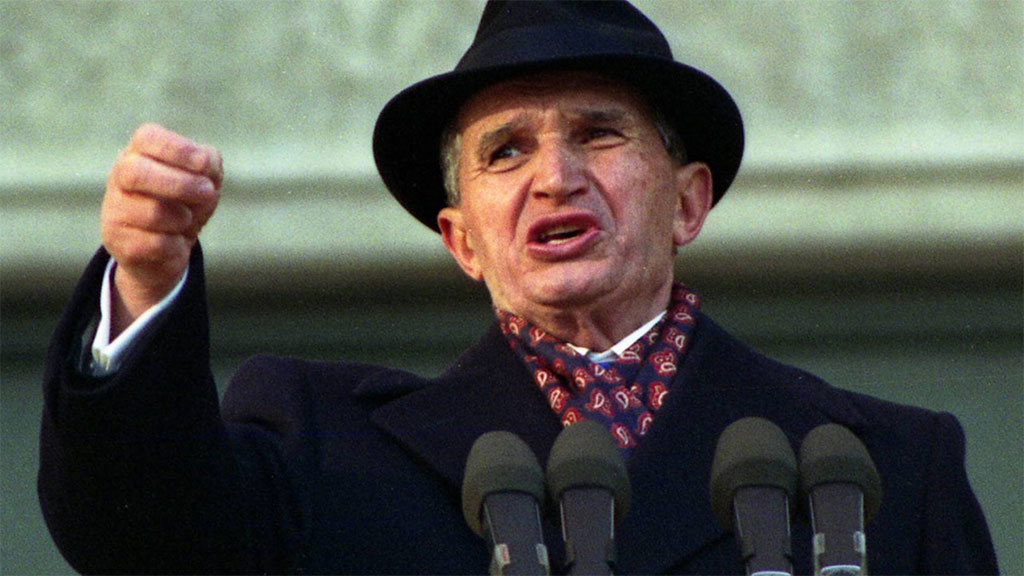
Many in Romania consider Iliescu a Moscow man. During the Soviet years, he studied at Moscow State University and speaks Russian fluently. He was well acquainted with Gorbachev and even, as evidenced by declassified archives of the Ministry of Foreign Affairs of Poland, he wanted to ask the Soviet Secretary General to send troops to help the protesters (that is, to overthrow Ceausescu). Moreover, even his allies in the opposition, who subsequently regularly reminded him of his ties to Moscow, opposed Iliescu’s initiative.
In addition, in the fall and winter of 1989, hundreds, if not thousands, of suspicious “tourists” from the Soviet Union arrived in Romania, who were rightly believed to be KGB agents directed against Ceausescu, who pursued an essentially “dissident” foreign policy for the USSR (he became close to France and USA, in 1968 refused to send troops to suppress the “Prague Spring”, established close ties with Yugoslavia, Albania and China, with whom the USSR had very bad relations; he sent the Romanian Olympic team to the 1984 Summer Games in Los Angeles despite the boycott from the socialist camp). These “tourists” from the KGB managed to be expelled from Romania only by the fall of 1990.
Therefore, the Romanians then considered, and now continue to consider Iliescu himself, an agent of the KGB. Today, he does not hold any official positions and despite his advanced age (94 years old), he still influences the Social Democratic Party of Romania, which he founded, which continues to be the most influential political force in the country.
Another indirect sign of Iliescu’s (and thus, SDP) close ties with Moscow was the sensational interview he gave to Putin’s TASS agency in December 2019, although for many years before that he refused to speak with any representatives of the national and foreign press. In this interview, Ion Iliescu, in particular, complained about the strained relations between Russia and Romania and expressed confidence in the need to improve them.
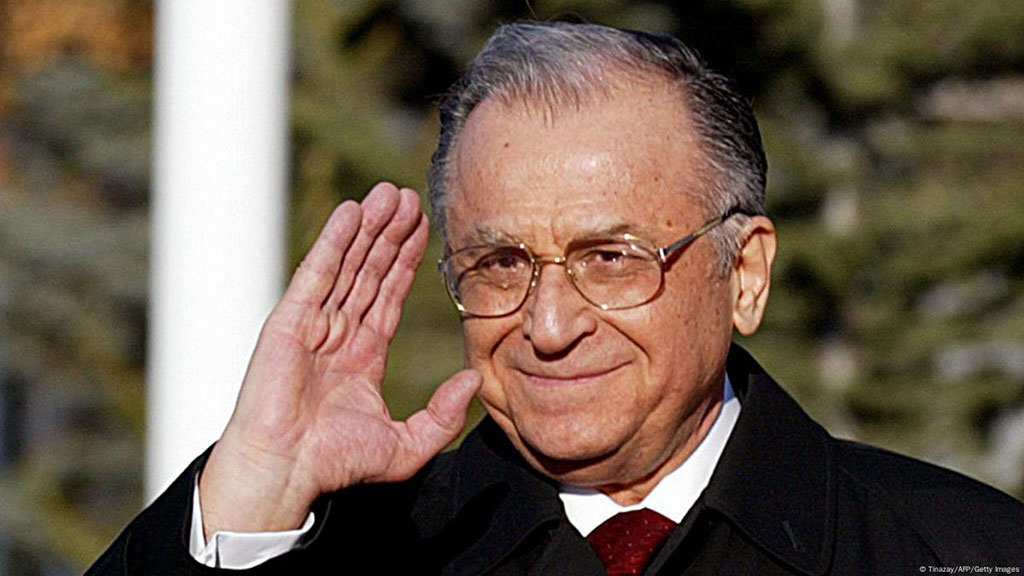
Today, the chairman of the Social Democratic Party and the Prime Minister of Romania, Marcel Ciolacu, is not perceived as a Moscow man, despite the shadow of Ion Iliescu over him. Nevertheless, it is necessary to understand that the social democrats of Romania are primarily concerned with their own party and corporate interests, and its Europeanness in foreign policy is rather following the mainstream and the desire to maintain access to impressive financial assistance from the EU.
Čolaku’s main rival, the speaker of the Senate Nicolae Chuke from the NLP, takes a more conservative position, similar to the German Christian Democrats. In general, the National Liberal Party is perceived as more pro-American and pro-NATO. Last but not least, the NLP enjoys the support of the Romanian diaspora abroad, including those from Moldova who have Romanian passports and live in EU countries, the USA and Canada.
In particular, the current president Klaus Iohannis, who is completing his 10-year tenure in this post, is perceived by his opponents in Romania as the “president of the diaspora”, since both of his victories in the 2014 and 2019 elections were achieved precisely thanks to the majority of votes received at the expense of Romanians abroad , including people from Moldova. It is possible that the same situation may repeat itself in the current elections (especially in the second round on December 8), as Romanians in Europe and America reject candidates from the Social Democratic Party, still calling it “Moscow’s arm.”
By nature, the Social Democratic Party of Romania is a typical oligarchic party, that is, it represents the interests of a conglomerate of various financial and industrial regional and central groups. Therefore, by the way, it is not surprising that the Romanian Social Democrats have developed excellent relations with the disgraced Democratic Party of Moldova and personally with its former boss, the shadow master of Moldova in 2013-2019, oligarch Vladimir Plahotniuk.
It is also not surprising that party and state officials from the SDP were involved in corruption scandals related to the activities of the Russian oil company Lukoil in Romania. In connection with this, it is necessary to quote a large material entitled Kremlin Playbook 2, compiled by the American Center for Strategic and International Studies on the example of the Czech Republic, Romania and Montenegro.
American experts, referring to their interlocutors in Romania, for example, pointed out that Russian oligarchs began to show interest in this country back in 1998, and Lukoil was the “pioneer”. In addition, Viktor Ponta (former prime minister from the Social Democratic Party) and well-known oligarch Dinu Patrichiu (died in 2014) are called lobbyists of this company.
On the other hand, the former president of Moldova, Igor Dodon, is the best man of the former minister of foreign affairs, the former minister of justice of Romania, Titus Korletsianu, the current vice-chairman of the SDP. Given Igor Dodon’s connections in Moscow, it can be safely assumed that he lobbies or previously lobbied for the interests of the Romanian social democrats at the level of the Russian ruling elite.
For all the reasons indicated, a significant part of the population of Romania refers to the SDP with skepticism. Social Democrats are mostly popular in the poorer eastern (Zaprutskaya Moldova) and southern (Muntenia, Oltenia) counties of Romania, while in Transylvania and the capital region, national liberals and other right-wing conservative forces are more popular. Polls show that the SDP retains its leadership and can take at least 30% of the votes in the parliamentary elections on December 1, 2024.
However, according to the results of the upcoming elections, the second place may come not from the National Liberal Party (more than 13% of voters), but from the right-wing populist Alliance for the Unification of Romanians (potentially 21% of votes), which advocates the unification of Romania and Moldova (actually for the absorption of Moldova ).
Here it is necessary to explain that the radical demands for the unification of the two countries objectively play into the hands of Moscow, since, first of all, they fuel the fears of “Romanization” in Moldova and especially in the Transnistrian region. For more than 30 years, the propaganda of Moscow, Tiraspol and agents of Moscow in Chisinau scared the inhabitants of both banks of the Dniester with the “coming of the Romanians”, despite the fact that such an item is absent from the agenda of both national liberals and social democrats.
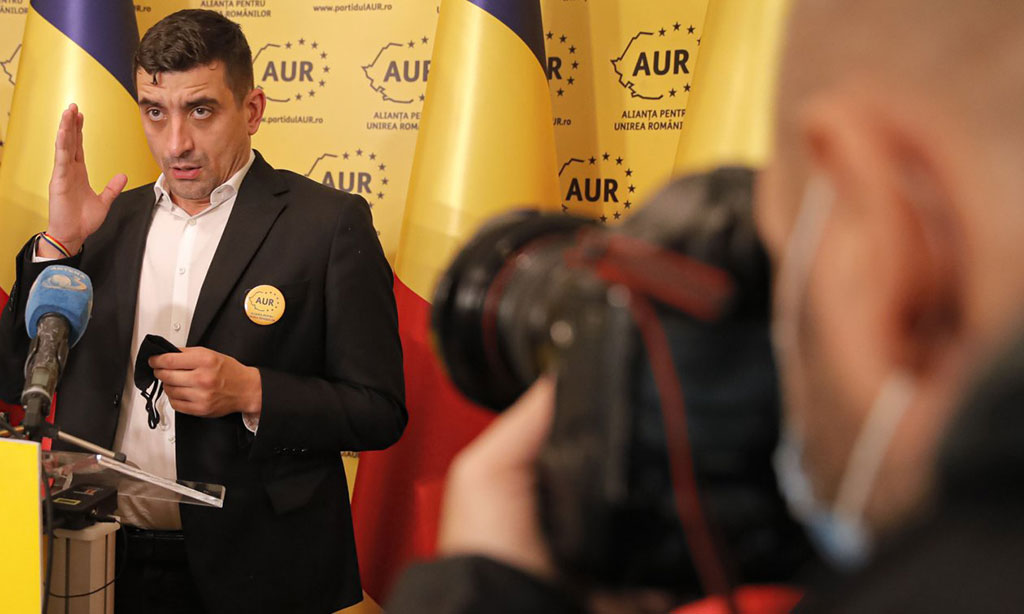
First, the demand for unification with Moldova creates foreign policy tension for Romania, which Moscow can accuse of “expansion” and “threat to Russian citizens.” This risk factor is especially relevant now, against the background of Moscow’s attempts to open a “second front” against Ukraine in Transnistria, so the calls of the “Alliance for the Unification of Romanians” to absorb Moldova are perceived by many as playing along with Moscow’s strategy to destabilize the region.
However, “Alliance” and Simion himself are very popular in Romania. This is mainly explained by their Romanian nationalism (at least 15-20% of the country’s population always advocated the absorption of Moldova), Euroscepticism (similar to “Alternative for Germany”), anti-oligarchic, anti-immigrant and conservative rhetoric. Among other things, Simeon’s “Alliance” regularly criticizes NATO and the EU for the “unfair treatment” of Romania as a “junior partner”, although Romania is a key flank of the USA and NATO in the Balkans and the Black Sea and is a very large recipient of EU financial aid.
On the other hand, the high ratings of the populist “Alliance” are also explained by the fact that Romanians are a very religious Orthodox people, especially in the provinces. Many European values, such as the protection of sexual minorities, are foreign to these people, and by this criterion, Romanians sympathize significantly with Russia. At the same time, the current Romanian government declares that it has no confirmation of the information that Simion and the “Alliance” are working for Moscow, as it is openly asserted in Ukraine and Moldova, which banned Simion from entering these countries.
But there is also a third aspect: the same part of the population (15-20%), which advocates the absorption of the Republic of Moldova, simultaneously has “views” on part of the territory of Ukraine. Let me remind you that in June 1940, on the basis of a secret protocol to the Molotov-Ribbentrop Pact, Moscow demanded that Bucharest return the territories of the former Russian Empire, which were taken under Romanian control in January 1918 and became part of Romania in March of the same year. We were talking about Northern Bukovina (now Chernivtsi Oblast of Ukraine) and Bessarabia (the Republic of Moldova plus part of Odesa Oblast across the Dniester). On June 28, 1940, the Red Army entered this territory unimpeded, immediately after the departure of the Romanian troops.
Even in the Soviet years, Romanian nationalists did not hide their desire to eliminate the consequences of Stalin’s policy. Already in 1989-1991, the forces that advocated unification with Romania intensified in Soviet Moldova, and after the collapse of the USSR and the emergence of the independent Republic of Moldova, such sentiments intensified in Romania as well. It is necessary to understand that Romanian nationalism presupposes not only the absorption of Moldova, but also the return of Northern Bukovina and Southern Bessarabia, that is, the restoration of Romania’s eastern border before 1940.
As I have already noted, such an item is not on the agenda of the Social Democratic Party and the National Liberal Party, but all governments and all political forces of Romania after 1991 secretly encouraged irredentism in relation to Moldova, as well as the Chernivtsi region and the south of Odessa region. This was expressed, first of all, in encouraging the issuance of Romanian passports (according to the law, those whose ancestors lived between the Dniester and the Prut before June 28, 1940 can apply for Romanian citizenship). Currently, the number of residents of Moldova who have received Romanian citizenship is from 445 thousand (for the period 1991-2014) to almost 500 thousand (from 1991 to 2024). In addition, more than 700 thousand (!) people are waiting for the decision of the competent authorities on obtaining Romanian citizenship.
Secondly, this is an active program to attract applicants from Moldova and Romanian-populated regions of Ukraine (for example, Chernivtsi) to study in Romanian universities (only for Moldova, at least 5,000 budget places per year), as well as help with didactic materials, techniques, equipment, etc.
Moreover, after the annexation of Crimea by Russia in 2014 and especially after the start of military aggression against Ukraine in 2022, among Romanian and Moldovan nationalists, voices began to be heard in support of the secession of Chernivtsi and the south of Odesa region from Ukraine in the event of its military defeat. On the other hand, neither Romanian nor Moldovan nationalists have forgotten that during the armed conflict in Transnistria in 1992, UNA-UNSO fighters fought on the side of the Tiraspol separatists.
Of course, such sentiments in the Romanian political establishment at the moment are considered rather marginal, but if the aforementioned “Alliance for the Unification of Romanians” receives a significant number of votes in the parliamentary elections, and George Simion makes it to the second round of the presidential elections, it will mean that Romanian irredentism has received a second wind, and Ukraine will have a very difficult time, especially given the victory of Donald Trump in the US elections.
An approximate schedule based on the results of the two presidential and parliamentary elections in Romania may be as follows:
From 30% to 40% of the mandates in the Senate and the Chamber of Deputies will be given to social democrats, who traditionally have little interest in Ukrainian affairs and are only interested in preventing Romania and Moldova from being drawn into the war.
From 15% to 20% of mandates in both chambers can be obtained by national liberals and about the same amount by nationalists from the “Alliance for the Unification of Romania”. If none of the three political forces gains the majority needed to form a government, the party that took the first place (most likely, the SDP) will have to negotiate entirely with the other forces. For example, with the Democratic Union of Hungarians. In this case, the “Alliance for the Unification of Romanians” will be marginalized and will not receive portfolios in the government.
However, the scenario of a large coalition between the SDP and the NLP, which, despite external disagreements, demonstrate the ability to get along in the field of power is not excluded. After all, now the president from the NLP and the speaker of the Senate from the same party interact quite constructively with the prime minister from the SDP. It has come to the point that representatives of third political forces (for example, the “Union for the Salvation of Romania” in the person of candidate Elena Lascona) accuse the National Liberals of being puppets of the Social Democrats and deceiving their right-wing electorate.
As for the presidential election, there are two main scenarios.
First: Marcel Čolaku from SDP and Nikolae Chuke from NLP enter the second round. In this case, the Romanian diaspora will again prefer Chuke to prevent the “Moscow candidate” from the SDP from winning. However, the same Hungarians can vote for the Social Democrat, which is also quite a lot. The fact that President Yohannis of the NLP is leaving office and is practically invisible in this campaign, unlike the Social Democrats, can work against Chuke.
George Simeon’s electorate will be confused because the NLP candidate is not satisfied with his bid for NATO, the USA and Western capital in Romania, and the SDP candidate with the reputation of the oligarchic party. In this case, the nationalists can simply ignore the second round, which will play into the hands of the NLP candidate, since the diaspora voting for him is much more active than the voters in Romania itself.
Second scenario: Marcel Čolaku and George Simion enter the second round. This is the most comfortable scenario for the SDP, since the diaspora will not allow the election of the “man of Moscow” Simion and prefer the lesser evil in the face of the mainstream Cholak. Voters in Romania itself will split into two groups: Bucharest and Transylvania, as well as the middle class and wealthy strata in other regions will choose a social democrat in order not to have problems with the European Union (since Simion can become the Romanian counterpart of Viktor Orban). Simply put, the majority of the population of Romania will choose stability and predictability.
The political schedule in Romania after two electoral campaigns will not undergo any serious changes, unless the absolutely incredible happens and the nationalists from the “Alliance for the Unification of Romania” win. As for Ukraine, its relations with Romania will remain on the same track: moderate support “without fanaticism”, efforts to prevent Moldova and Romania itself from being drawn into the war, and the continuation of slow “passport expansion” in Moldova, Chernivtsi and parts of Odesa region.