
One of the important conditions for the integrity of the Russian political regime is a stable situation in the Caucasus.
First, it is important from the point of view of security. As long as there are no regional conflicts, radical manifestations of the struggle of opposition groups, religious demonstrations or terrorist acts, the Caucasus does not distract Russian power resources, which are focused on the war against Ukraine. In addition, the demonstrative order in the region is one of the hallmarks of the “successes” of Vladimir Putin’s presidency, so he does not want to lose it.
Secondly, the Caucasus occupies a strategic role in Russia’s geopolitical plans, since key north-south trade routes should pass there. They will ensure the flow of goods from Russia to the markets of the countries of the so-called “Global South” and vice versa, including dual-use goods that are very important for the “Russian military machine.” The implementation of such plans requires favorable security conditions.
Until recently, it seemed that the control mechanisms chosen by the Kremlin in the region were working effectively, but an unexpected “black swan” has appeared, which can destabilize the situation if the Russian authorities do not manage to settle the problem.
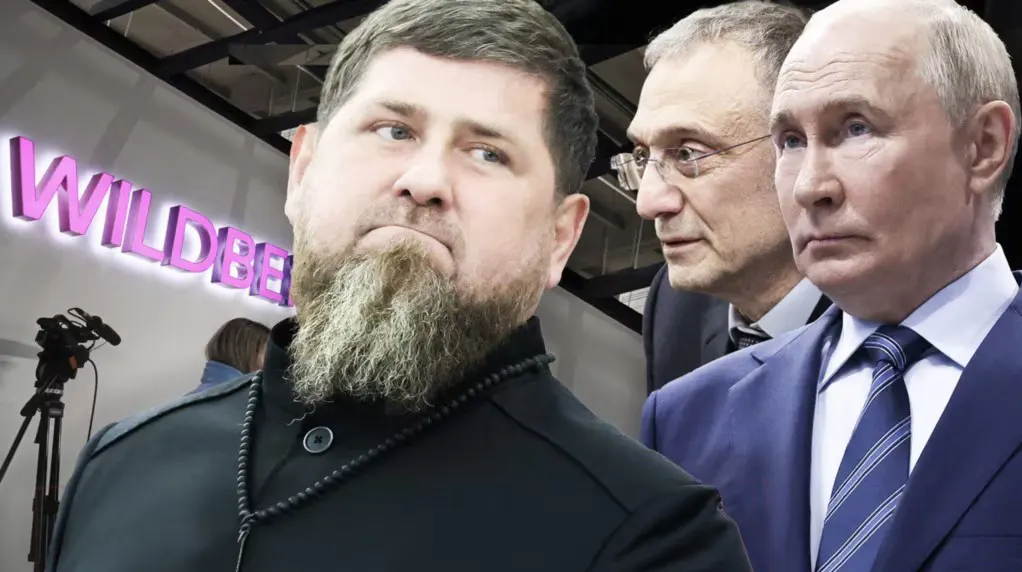
The trigger was the conflict around the huge Wildberries trading platform, which turned into a shooting and a conflict in the style of gangsters of the 90s.
Briefly: the owners of the project, the Bakalchuk family, divorced, which affected the future of the successful business. The wife chose her own path – she joined the merger with the much smaller Russ company. From an economic point of view, it is not clear and not profitable, but from a political point of view – thanks to the efforts of the “gray cardinal” of the new agreement Suleiman Kerimov, it received agreement at the highest level with the resolution of Vladimir Putin. He was convinced that after the restructuring, the company would become the most influential marketplace in the world, although in practice, global plans hide a banal redistribution of assets.
The man was not satisfied with such a swindle and asked Ramzan Kadyrov for help, which created significant problems.
The leader of Chechnya decided that he had the right to a part of the business and went directly to Suleiman Kerimov. In September, there was a shooting that killed guards from Ingushetia.
The agreement was not broken, and Kadyrov did not achieve his goal. He found nothing better than to announce that he would announce “bloody revenge” on the people who allegedly wanted to kill him, and of course Kerimov’s name was mentioned among them.
What do such threats from Kadyrov mean and what is behind this situation?
First, Kadyrov met a strong opponent in the form of Kerimov. The latter enjoys the support of the president’s administration, in particular the head of Anton Vaino. Kerimov informally promotes the development of Russia’s business ties with Azerbaijan, so he is in good standing with Putin as well. Behind him are influential circles from the banking sphere – Herman Gref and Andriy Kostin, as well as representatives of big business and security forces.
Secondly, Kadyrov realized that he is losing the war for Wildberries and he needs to accept it or go for a bid increase. He chose the second, feeling his own impunity. Kadyrov’s statements about “blood revenge” should be regarded as a warning rather than a real beginning of implementation. He wants Kerimov to compromise and give him a share in the deal, or for a profitable compromise to be brought down from above – from the Kremlin. Kadyrov realizes that Moscow does not want an escalation in the Caucasus and is trying to take advantage of this.
Will Kadyrov be able to achieve his goals?
This situation does not look like a guaranteed win for him. Although State Duma deputies Bekhan Barahoev and Rizvan Kurbanov showed fear and publicly voiced their own non-involvement in any cases against Kadyrov, Kerimov is unlikely to stop before such threats.
Most likely, Kerimov did not even consider the option of eliminating Kadyrov and this is all a PR campaign from the leader of Chechnya. However, Kerimov is clearly ready to go to the winning end of the case and is convinced of his abilities. He was publicly supported by the head of Dagestan, Serhii Melikov, which turns the business conflict into a regional confrontation – Chechnya against Dagestan.
In addition, the killing of security guards from Ingushetia during the storming of the company’s office created the conditions for the growth of popular discontent in another Caucasian republic. There is already a prejudiced attitude towards Chechnya, even after disputes over borders, which were accompanied by mass protests a few years ago.
Thus, the Chechen leader “adds fuel to the fire” and creates conditions for the conflict to rise to a higher level – a confrontation between the elites of Chechnya and the elites of Dagestan and Ingushetia.
In this story, the company of the Bakalchuks already plays a secondary role and acts only as a pretext. In practice, everything is much more serious and we are talking about the identification of key groups of influence in the Caucasus and the redistribution of federal financial resources in the region. Kadyrov does not like the fact that the Kremlin is making a big bet on the development of Dagestan in its strategy, and he is afraid of becoming a secondary figure in Putin’s plans for the Caucasus. That is why, for him, it is a struggle for his own survival: both in the literal sense of the word (given the existing health problems), and figuratively (a demonstration of weakness will hit his hardware positions).
Everything is going to the point that the Kremlin will have to intervene in solving the problem. Otherwise, political destabilization may begin in the Caucasus.