
During March and April 2025, the long-standing contradictions in the relations between Moscow, Sukhumi and Tbilisi intensified. Russia and Abkhazia agreed to start direct air communication, despite Georgia’s protests. From May 1, Moscow plans to open regular flights to Sukhumi – the first in 32 years. Georgia appealed to the International Civil Aviation Organization (ICAO) with a request to prohibit Russian airlines from flying to the Abkhaz airport, insisting that the operation of the Sukhumi airport without its permission violates the Chicago Convention. Nevertheless, Sukhumi announced that the flights would start as scheduled, once again offering Tbilisi to abandon the confrontation and sign an agreement on the non-use of force.
It is noticeable that the Kremlin achieved its goal with the re-elections in Abkhazia and is again returning to a position of strength, turning Abkhazia into a new northern bridgehead of its influence in the Caucasus. On March 14, the Ministry of Foreign Affairs of the Russian Federation canceled the recommendation to refrain from traveling to Abkhazia, effectively lifting the restrictions imposed earlier in order to blackmail the Abkhazian society before the elections. The Georgian leadership, for its part, limited itself to diplomatic notes and appeals to international authorities, avoiding drastic steps, which is part of the policy of neutrality and “non-irritation of Moscow”, which the “Georgian Dream” actively adheres to in recent years. Western observers reproached the ruling party for excessive softness – for example, in the USA they said that Tbilisi risks isolating the country from the West by getting closer to Russia and China at the cost of democratic principles, but without much success.
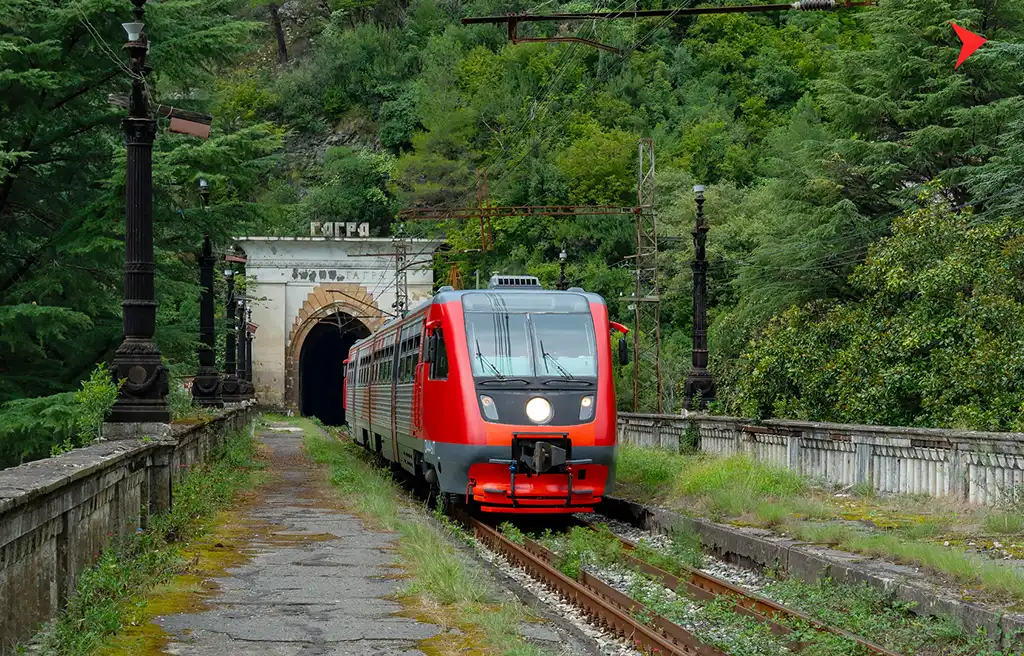
In the spring of 2025, discussions of transport corridors in the South Caucasus revived again. On the one hand, Moscow and Sukhumi took a step towards railway integration – on February 27, the Russian electric train “Lastochka” made its first test flight from Sochi to Sukhumi. Before that, trains only went to Hagra, and the extension of the route to the capital of Abkhazia became a significant step towards the restoration of the Soviet highway. As in the case of the airport, Moscow announced the opening date of regular routes on May 1. Against this background, the idea of a full-scale restoration of the railway corridor through Abkhazia up to the connection with Armenia was again voiced in the Russian media. High-ranking speakers in Moscow simultaneously talked about the benefits of unblocking this road, which looked like coordinated pressure on Georgia. Tbilisi, however, resolutely rejects such initiatives, fearing loss of control and legitimization of separatism. In connection with these events, rumors about a kind of mediating role of the former Prosecutor General of Georgia Otar Partskhaladze and the leader of the Georgian pro-Russian party “Solidarity for the World” Mamuka Pipia in negotiations on the topic of unblocking communications look especially interesting. At the end of March, Pipiya told the media that Partskhaladze had accepted the invitation of the Russian authorities to take part in the festive events on May 9 in Moscow, where he was supposed to hold secret talks. In 2023, Otar Partskhaladze, who was under US sanctions for working for the FSB of the Russian Federation and undermining democracy in Georgia, was stripped of his Georgian citizenship by the former president of the country, Salome Zurabishvili. After that, he returned to Russia, where he has citizenship, and changed his surname to Romanov. Under this new status, he conducts his secret negotiations.
There is another side to this story that is not obvious. Mamuka Pipiya is the leader of the little-known pro-Russian party “Solidarity for the sake of the world”, a Russian businessman who is considered the son of a criminal authority, a thief in law Tamaz Pipiya (known in the world of thieves as Tamaz Sukhumsky). In December 2024, he became widely known in the mass media thanks to pro-Russian propaganda statements that in the autumn-winter 2024 rallies in Tbilisi, the main role was played by relocators, and all of them were Russian, Ukrainian, Belarusian and even Moldovan. On April 23, 2025, there was news that behind the phone pranks directed against the reputation of Salome Zurabishvili and the former ombudsman of Georgia, Ucha Nanukashvili, there was also Mamuka Pipia, who was trying to enter the power circles of Georgia. According to unconfirmed data, Pipiya is working on the promotion of the issue of unblocking the Abkhazia-Georgia communication routes together with Otar Romanov. However, their status today does not appear to be high enough to resolve such issues, unless there are figures of a serious rank behind them, which has not yet been confirmed. This may be a private initiative, similar to the ideas of the Russian-Georgian Business Council, which unsuccessfully promoted the idea of unblocking roads through South Ossetia in previous years. Then these ideas played more of an informational pre-election role with the aim of strengthening the image of “Georgian Dream” as the only party capable of making major changes in the country’s unification.
In this regard, it is important to note that representatives of the criminal world still seriously influence politics in the region, although Moscow is trying to monopolize their management. For example, it is known that representatives of the so-called “Tbilisi clan” Zakhary Kalashov (the successor of Aslan Usoyan “Grandfather Hasan”) took a direct part in the events surrounding Wildberries. The youngest authoritative thief Mindiya Gorgadze (Lavas-Ogly), who is in constant contact with Bidzina Ivanishvili, presumably belongs to him. Against the background of the current events, sources note that this “clan” has significantly strengthened. In Russia, they came into conflict with Ramzan Kadyrov’s team, which we will mention in a separate article devoted to Chechnya. In Georgia, however, they managed to push the Sukhum clan out of the field of interest, which was reflected in the public display of the murder of Levan Dzhangveladze in Tbilisi in April 2025, who was suspected in the liquidation of Yaponchik and Ded Hasan, former influential leaders of the Tbilisi clan. Against this background, some experts predict a possible escalation of the clan struggle, but it is noteworthy that both the Georgian and Russian authorities act as patrons of the “Tbilisi clan”. Moscow is trying to make it unique, subordinate and manageable, which would allow it to regulate criminal relations in the region in its favor, without actually having the opportunity to liquidate them. This same feature helps the parties to conduct secret negotiations.
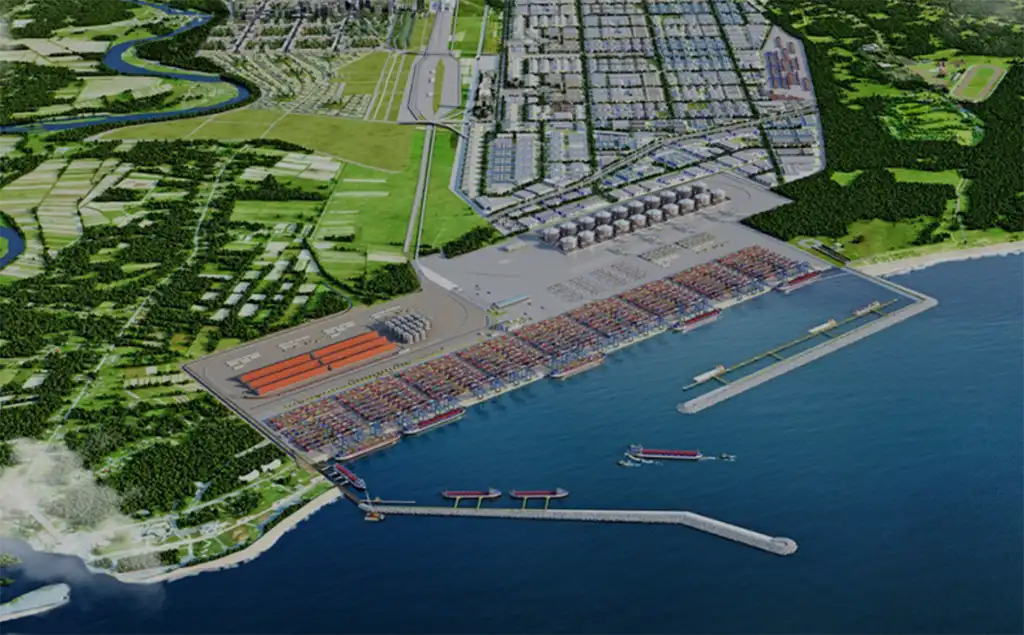
The topic of unblocking communications in the region is also connected with the construction project by Georgia of the deep-water port “Anaklia” on the Black Sea coast, not far from the border with Abkhazia. This strategic project, which was stalled for a long time due to political differences, found a new partner in China. In April, memorandums were signed in Tbilisi with one of the largest Chinese corporations, and it is reported that the port will be implemented with the participation of the Sino-Singaporean China Communications Construction Company. Anaklia is seen as a key element of Georgian-Chinese cooperation, designed to strengthen Georgia’s position in the region regardless of Russian routes. The Georgian authorities have directly stated that the renewal of the project is a priority of the government. At the same time, the West expressed concern. In early April, members of the US Helsinki Commission actually accused Tbilisi of “surrendering Anaklia to China” and deviating from the pro-Western course. For Russia, China’s participation is undesirable, but not as acute a scenario as if the port were built by Western countries. Although Beijing is increasing its influence, it does not challenge Moscow’s direct control over Abkhazia. Thus, in the spring of 2025, a kind of “transport schedule” was drawn up – Russia is advancing its land corridor through Abkhazia, and Georgia is betting on a sea port with Chinese help. On the one hand, it seems that both projects compete, raise rates in the region and can change the balance of economic influence in the Caucasus. However, if you take a closer look at the economic indicators, it turns out that the transportation of Chinese goods through the Trans-Siberian highway remains the priority and most profitable for Beijing and Moscow. In such a scenario, the project of connecting the Trans-Siberian route with ports in Abkhazia acquires realistic features. Moreover, the port of Novorossiysk is under sanctions, and Abkhazia still remains a “gray zone” in international law. The main question in this story is simple – if China decides on such a transport deal, will Georgia be involved in these processes with its port in Anaklia, which is the only one capable of replacing Novorossiysk in this part of the Black Sea in terms of receiving large-scale containers, or will Moscow and Beijing decide to build analogues of Anaklia on the territory of Abkhazia. The latter is technically possible and has been repeatedly discussed in Moscow in the past.
As for the internal situation in Abkhazia as a whole, in February 2025, the candidate from the Bzhaniya team, Badra Gunba, who was openly supported by Moscow, won the extraordinary election. The Kremlin clearly drew conclusions from last fall’s failure, and simultaneously with the promotion of its protégé, the suppression of dissenters began. In March, it became known about Russia’s unprecedented steps against the Abkhaz opposition. Authoritative journalist Inal Khashig was included in the list of “foreign agents” by the Ministry of Justice of the Russian Federation, a number of oppositionists retained their Russian citizenship (among them MP Kan Kvarchia and public figure Levan Mikaa), and the famous conductor Baras Kuzhba was banned from entering Russia for 10 years. All these figures are opponents of Bzhaniya and critics of the investment agreement. Thus, Moscow made it clear that there will be no room for those who broke the deal. Despite all these pressure measures, while calm has been established in Abkhazia, the Parliament and the new president, loyal to Moscow, are in no hurry to introduce a new law on real estate, although the subject of the return of the investment agreement is, according to rumors, relevant in behind-the-scenes discussions. Nevertheless, the pressure of specific persons and the “proven methods” of the Kremlin testify that the issue of ownership of the Abkhazian land is not closed, but only postponed until a convenient moment.
It is obvious that all these complex questions are the result of the actions of the new Kremlin curator of Abkhazia, Sergei Kyriyenko, not without the informal influence of Vladislav Surkov. Reports are circulating in the media that the disgraced ideologue of the Kremlin almost permanently lives in one of the residences in Abkhazia. For a long time, Surkov was considered the “gray cardinal” of Abkhaz politics, overseeing the region on behalf of the Administration of the President of the Russian Federation. After his departure, this role was performed by Deputy Head of AP Dmytro Kozak, and in 2025 Sergey Kyryenko became the new curator. It was Kyriyenko who publicly announced the launch of flights to Sukhumi from May 1, and he actively intervened in Abkhazia’s internal political processes in the midst of the election campaign.
Kiriyenko’s actions during the spring 2025 elections indicate the continuation of “Surkov’s” methods of manual control. The Kremlin uses informational pressure and elite connections to control the outcome of events.
Thus, by April 2025, Abkhazia found itself in a situation of colossal pressure from Russia, both in terms of infrastructure construction and the “Union and Integration Agreement”, as well as information. Any attempts to loosen this grip are met with a harsh reaction. In Tbilisi, what is happening is called “creeping annexation”, however, there are no real levers of influence on what is happening on the Georgian side. The Kremlin has significantly strengthened its grip – due to the change of elites, transport and military expansion, legislative pressure. Abkhazian leaders are maneuvering between the demands of Moscow and the sentiments of their own society, which does not want a complete loss of independence. On the one hand, Georgia is trying to avoid a direct confrontation with Russia, on the other hand, it is trying not to miss the support of the West and to implement alternative development projects through commercial ties with China. Every step of one of the parties meets the opposition of the other – whether it is the opening of flights, the law on real estate or the construction of a port. So far, Russia has successfully imposed its agenda, actually integrating Abkhazia more deeply, turning it into a northern outpost of its influence in the Caucasus against the background of losing positions in Armenia and Azerbaijan. However, there is still a source of resistance – both within Abkhazia itself and in Georgian society – that calls for hope that the status quo is not yet final. The political situation in the region is still in flux and will actively develop in the near future.