
In March-April 2025, one of the central topics surrounding Chechnya was another rumor about the deterioration of Ramzan Kadyrov’s health and his possible resignation. These conversations began back in 2023, when in September several sources announced that Kadyrov had fallen into a coma due to severe kidney disease. Kadyrov himself then hastened to refute them, publishing a video from the Central Clinical Hospital, where he visited his sick uncle. The head of Chechnya looked weakened, but assured that he was alive and well. Later, independent publications found out that Kadyrov may be diagnosed with pancreonecrosis (necrosis of the pancreas), which requires regular treatment. According to Novaya Gazeta Evropa, since 2019, Kadyrov undergoes scheduled medical procedures twice an hour in Moscow, and his health condition periodically deteriorates sharply. Officially, this information has not been confirmed, and the Chechen authorities preferred not to comment on it.

After the New Year holidays from 2024 to 2025, Ramzan Kadyrov again disappeared for a long time from the public space, which fueled rumors about his illness. At the end of January 2025, the Minister of National Policy and Information of Chechnya, Akhmed Dudayev, issued a statement refuting the reports of the disappearance of the head of the republic from the public sphere, calling them intrusions from “detractors and provocateurs.” Dudayev assured that since the beginning of the year, Kadyrov has actively started carrying out his activities and keeps all matters under his personal control. The head of Chechnya did take a leave of absence and temporarily transferred his powers to the Prime Minister, Magomed Daudov, but Chechen officials ritually emphasized that he regularly appears at events.
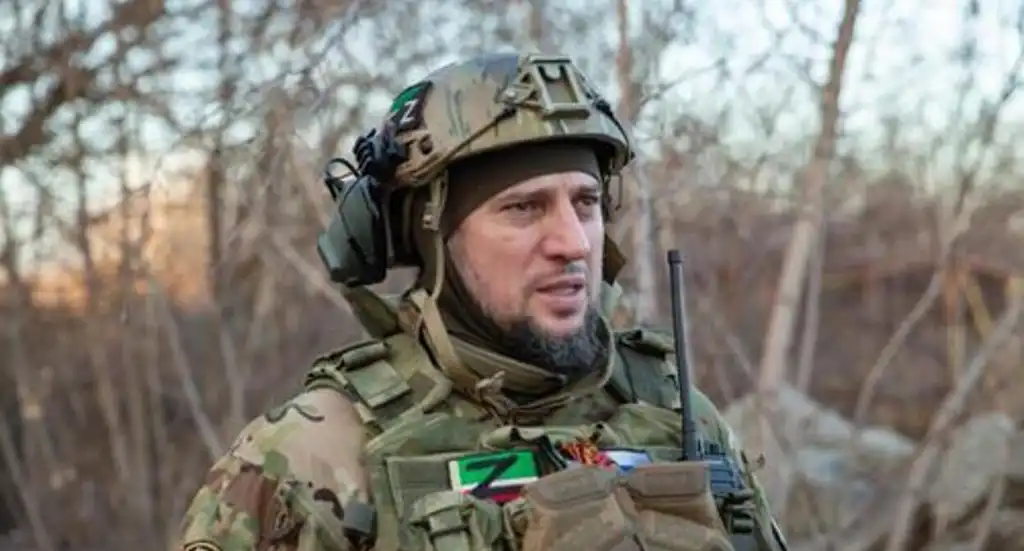
However, the authorities themselves indirectly confirmed health problems by sending Ramzan Kadyrov on a long vacation. At this time, the discussion of his possible resignation due to health reasons continued on the sidelines. Back in April 2024, there were reports that the Kremlin was looking for a replacement for the head of Chechnya, considering the candidacy of Special Forces commander Apta Alaudinov, who is close to the Kremlin. Kadyrov did not publicly comment on such conversations, but every time he tried to demonstrate that he was in line. The situation was repeated in the spring of 2025. Instead of direct statements, the refuted Chechen leader himself limited himself to appearing in public and on social networks, while his entourage mocked the rumors on his behalf. As a result, by the beginning of April, the topic of Kadyrov’s health somewhat receded into the background, although the question of how long he would be able to remain at the head of the republic still remained open.
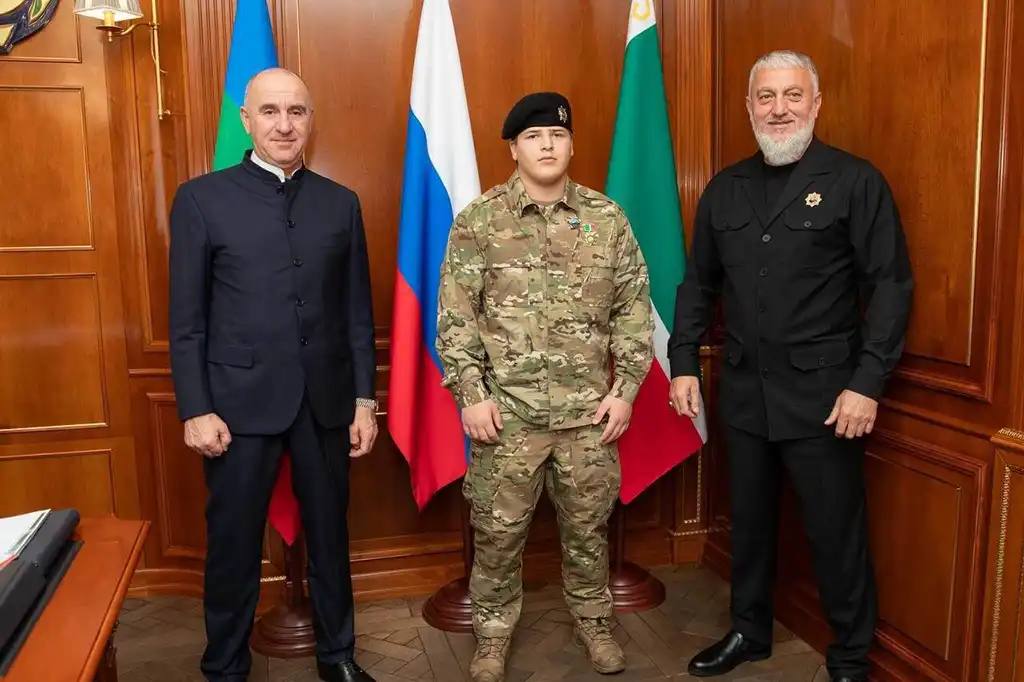
According to various sources, the campaign to glorify Ramzan Kadyrov’s son, Adam, coincides in time with the aggravation of rumors about his father’s illness. There is an opinion that the federal authorities themselves recommended Kadyrov Sr. to distract the public’s attention with Adam’s scandalous antics and his endless rewards. By 2025, this situation has reached the level of frank absurdity and is ridiculed by society. Nevertheless, Adam Kadyrov has already firmly entered the ranks of public figures of the republic, despite his young age. In Chechen society and political circles, he is increasingly considered as a possible successor to his father, albeit in a more distant perspective, given the need for him to reach adulthood. Any new official status or Adam’s medal is a signal that the Kadyrov clan intends to retain power in the region.
In the spring of 2025, the financial and economic side of the Chechen leadership attracted the attention of the press. In particular, the issues of targeted spending of funds and foreign activity of Kadyrov’s entourage. Federal authorities at the official level did not publicly announce any checks on the budget of Chechnya, but independent investigations shed light on very non-trivial items of expenses and assets of the Chechen elite outside of Russia.
One of these investigations, conducted by the “Important Histories” publication together with the OCCRP, revealed that Ramzan Kadyrov’s cousin Shahrudda Edilgiriev is buying up elite real estate in the United Arab Emirates through controlled persons. According to the Dubai Unlocked data leak, Shahruddy became the owner of four luxury villas in Dubai with a total value of more than $20 million. Moreover, one of these residences was used by Kadyrov himself since the mid-2010s as an unofficial residence or even the Chechen embassy in the Middle East. It was at this villa that emissaries of Grozny stayed in previous years. For example, Kadyrov’s special representative in the Arab countries, Turko Daudov, held meetings with Middle Eastern politicians and businessmen here. It is not by chance that the countries of the Persian Gulf refused to impose sanctions against Russia after the start of the war in 2022, including thanks to the behind-the-scenes work of Chechen diplomacy.
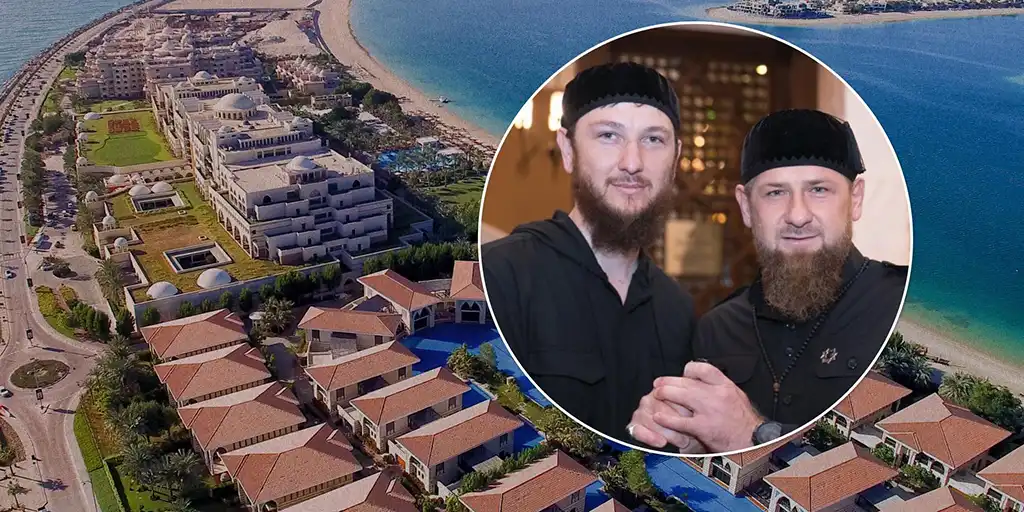
Kadyrov’s close ties with the Gulf monarchies are also confirmed by other facts. His personal plane flew to the region at least 14 times in 2021-2022, the head of Chechnya accompanied Putin on trips to the Emirates. Kadyrov calls UAE President Sheikh Muhammad Al-Nahyan his “dear brother”. Thanks to such friendship, a joint Chechen-Emirati foundation named after Sheikh Zayed was created in Grozny to support entrepreneurship. According to official information, this fund plans to invest about $300 million in business projects in Chechnya over 10 years. The auditor’s report of the fund indicated that only in 2024, about 3 billion rubles were invested in the Russian economy, at least half of which went to projects in Chechnya. It also turned out that in 2023, the 20-year-old daughter of Ramzan Kadyrov, Tabarif (Tabaryk), founded the multi-disciplinary company IRS Group, which works in areas from real estate to retail trade. On the day of the establishment of this company, an agreement was signed on its financing by the same Sheikh Zayed Foundation. In the first hour of operation, the company’s revenue amounted to 203 million rubles. at measly expenses, which can testify to the receipt of large preferential infusions. It became very noticeable how the business activity of the family of the head of Chechnya became directly connected with capital from the countries of the Persian Gulf. Thus, there is a two-way movement of funds. On the one hand, a significant share of Chechnya’s budget is formed at the expense of federal funds, on the other hand, Chechnya itself receives financial support from Kadyrov’s Middle Eastern allies, which by 2025 has become annoying to the Kremlin, which suspects Kadyrov of a double game.
The reaction of the official Chechen authorities to the disclosure of such facts was, as expected, reduced to silence. In the republic itself, the topics of financial reporting are not discussed openly, but at the federal level there is a growing understanding that the unique situation of Chechnya requires attention. So far, there are no high-profile statements on this topic, but the very fact of the appearance of detailed investigations into the wealth of Kadyrov’s entourage abroad indicates the growing interest of the public and the media in how exactly the huge funds coming to the republic from the Russian budget are being spent. And high-ranking people are clearly behind these investigations.
Behind the external facade of ostentatious unity in the Chechen establishment hides a tense behind-the-scenes struggle of interests, which intensified in the spring of 2025. In Moscow political circles, the topic of Kadyrov’s potential resignation is increasingly being discussed. Moreover, the initiative comes from a part of the old-school security forces, who remember Kadyrov Jr.’s participation in the separatist movement during the First Chechen War. These influential groups in the power structures probably see Kadyrov’s protracted rule as a risk factor and are lobbying for the renewal of power in the republic. From their point of view, the health of the Chechen leader and the management risks associated with it, this convenient proposal will convince Putin to change the leader.
Probably, the emergence of these conversations was influenced by the participation of the “Kadyrov clan” in the demand for the division of the Wildberries business in 2024, where Chechen representatives played the role of “watchers” or “roofs” for the business. The redistribution of big business resulted in a major public scandal, which led to an open conflict of interests between Kadyrov and Putin’s influential entourage from the Dagestani and Ingush clans, in particular Suleiman Kerimov and Sergey Melikov. Kerimov plays a very serious role in the organization of parallel imports through Azerbaijan and Iran, which in current conditions significantly strengthens his position. Kadyrov’s public threats against Melikov and Kerimov, which were taken seriously in the past, were publicly “repulsed” this time, which significantly hurt Kadyrov’s reputation in the whole of Russia. So he was shown for the first time that his influence has limits.

Later, it turned out that the biggest role in the events surrounding Wildberries was played by the criminal structures of the “Tbilisi clan” in the person of its leader Zakariy Kalashov (Zakro Molodoy), who in 2025 is considered the leader of the underworld of Russia (and now Georgia). The traces of this collision became noticeable in Adam Delymkhanov’s statements regarding the Mirzoyan brothers, whom he called “some Yezidis.” Considering that Yezidi and Kurdish ethnic self-consciousness plays a decisive strengthening role in the “Tbilisi clan”, this sounded like an open insult and a challenge to the entire clan. Thus, the “Kadyrov clan” openly opposed the main criminal structure of Russia and Georgia, which the Kremlin is currently trying to take under control and leave as the only such structure in the country against the background of the inability to completely get rid of it.
Ramzan Kadyrov and his immediate entourage are clearly preparing for any development of events. According to a number of mass media, Kadyrov is conducting behind-the-scenes negotiations on security guarantees for his family and assets in the event of leaving office. He strives to protect his legacy by appointing his relatives to key positions in the republic. Such a strategy serves as insurance against the emergence of a successor from outside. In the spring of 2025, such an arrangement of forces is already evident – Kadyrov’s closest relatives occupy important positions, from government to business, and any potential successor will have to reckon with them.
There are almost no alternative centers of power left in Chechnya itself. The opposition is either physically destroyed or forced to emigrate. The real struggle for Chechen heritage is unfolding between different groups of influence within the regime. On the one hand, this is the conditional “Kadyrov clan”, which includes close relatives (Delymkhanov, Daudov, Edilgirievy, etc.) and verified security forces of the Akhmat special forces type. On the other hand, possible figures acceptable to the Kremlin, but not from the family. For example, the mentioned commander Apta Alaudinov, a hero of Russia and secretary of the Security Council of Chechnya, who theoretically could lead the republic as a compromise figure. In the spring of 2025, none of these parties will prevail. Kadyrov is still at the helm, and Moscow is taking a wait-and-see position, watching closely. The balance of power is largely supported by the personal position of Vladimir Putin. According to available data, the President of Russia is still inclined to preserve the status quo and is not ready to radically change the situation in Chechnya without extreme necessity. On the other hand, Putin is unlikely to prevent the change of the head of Chechnya if it matures objectively due to the state of Kadyrov’s health or because of an intra-clan conflict. In this case, the Kremlin will try to ensure controlled transit and prevent destabilization.
For now, the status quo is such that Kadyrov remains in his post, refutes rumors about his illness, and Chechen officials unanimously assure him of his irreplaceability. However, the growing publicity of his successors and increased attention to the financial affairs of Chechnya testify that the era of Kadyrov’s undivided rule is gradually approaching a turning point, and the alignment of forces in the republic is already underway.