
Apathy. This word can be used to describe the general mood in Georgian society, including its official part. Officials do not want to discuss plans, make any decisions, at least somehow affecting international relations. However, it cannot be said that the situation has reached an impasse.
In last year’s study of the situation in the South Caucasus, we pointed out that the processes of political erosion here are directly related to the personal interests of Bidzina Ivanishvili and the state’s desire for a conservative non-aligned ideology, similar to Azerbaijan’s or Hungary’s, taking into account their specifics, of course.
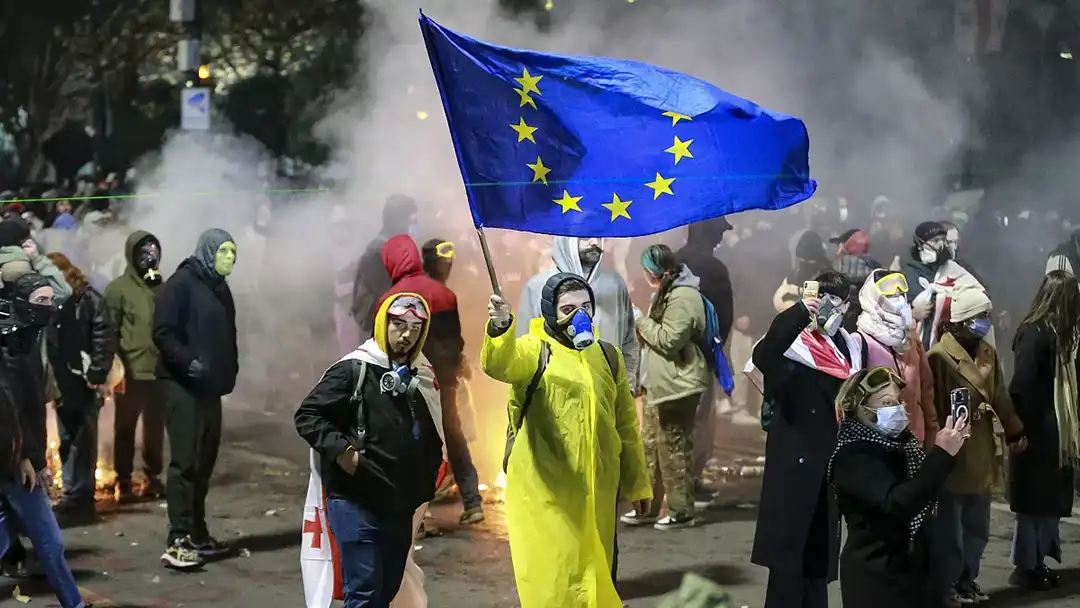
Mass rallies after the autumn 2024 elections in Georgia gradually decreased to local ones, but did not stop. Their main driver continues to be the students who gather around the Parliament and the offices of the central state mass media, such as the “Imedy” TV channel. The authorities, in response, are conducting a campaign of public selective punishment of the participants of the first and most active rallies with the aim of intimidating society, sending a signal that there will be no dialogue. The pressure on independent media increased. The artificially created bankruptcy situation has already led to the shutdown of the large TV channel “Mtavary Archy”, and after the arrest of the editor Mzia Amaglobela, the work of “Batumeleba” and “Netgazeta” was stopped. Fresh amendments to the laws announced by the party in power so far only concern restrictions on financing offline mass media from foreign sources, but online platforms are also preparing to fall under the scope of this law in the future. On the other hand, active work is being done to block independent funds supporting protesters and strikers in order to block financial support for the opposition. The accounts of the Nanuka Foundation, the Tbilisi Human Rights House, and Prosperity Georgia of former Prime Minister Nika Gilaura, who actively helped cover fines and pay for idle business, were forcibly blocked. As they close, protesters are charged with violating administrative law, usually for blocking roads, with huge fines, which further aggravates the situation. In these actions, there is a tendency to use political methods that have long been used by all of Georgia’s neighbors in the region in order to suppress the democratic movement in society. The authorities again spoke about banning opposition political movements against the background of their cooperation with the EU during the preparation of the statement condemning the Georgian authorities. The ban on opposition parties from participating in municipal elections and in the political life of the country in general is discussed, and the commission to investigate the actions of the former parties in power during the 2008 war continues to work. It is headed by the odious former Minister of Justice Thea Tsulukyani, under whom the archive of the Ministry of Internal Affairs, containing the most valuable information about the Soviet period of history, was actually completely closed. He is also one of the main initiators of the legal proceedings against former President Mikheil Saakashvili.
Another typical feature of the authoritarian approach manifested in Georgia in recent months is the desire to strengthen the economy, announcements of various large infrastructure constructions, renovations. The construction of a new airport in Tbilisi has already been announced, large-scale reconstruction of the city (partially postponed for 2026-2027), reconstruction of the Tbilisi metro, where there is now a choice between Czech, Chinese and Kazakh (actually Russian) contractors. West-East and North-South road networks, bypasses – most of the construction is already underway or planned with the support of Chinese companies. There are exceptions – the Belgian company Jan de Null started building a deep-water port in Anaklia as a result of the competition. China-Singapore consortium China Communications Construction Company Limited (China) & China Harbor Investment Pte. Ltd. will invest in the port, as the only one that expressed such an intention. “Georgian Dream” seeks to divert attention from politics to the economy, compensating for the loss of freedoms with the potential development typical of this type of authoritarian rule.
In general, the situation in Georgia today can be assessed with the word “waiting for negotiations”. The “Georgian Dream” party was saved from a one-party dictatorship by the opposition party “For Georgia” of ex-prime minister Giorgi Gakharia, which does not recognize the legitimacy of the Parliament, but does not revoke the mandates, while the mandates of all other opposition representatives were canceled after the handover. And this despite the open harassment of Gakhary and public clashes with representatives of the ruling party. With the support of Ivanishvili, “Georgian Dream” prepared well for the US elections in the fall of 2024, when it bet on Trump and in advance began duplicating his rhetoric, which was well studied during his first term. Thus, the “Georgian Dream” today uses exactly the same narrative as the entire traditionalist and libertarian movement in the world, to which the US authorities are also joining today.
The most likely version of what is happening, based on trends and local estimates, is connected with Bidzina Ivanishvila’s demand to lift sanctions from the main part of her frozen assets. Georgia became a spare safe for him, which he adjusted in such a way as to exclude the possibility of external influence as much as possible. To achieve his goal, he is counting on the support of Trump and his team, but events show that these negotiations are not going so smoothly.
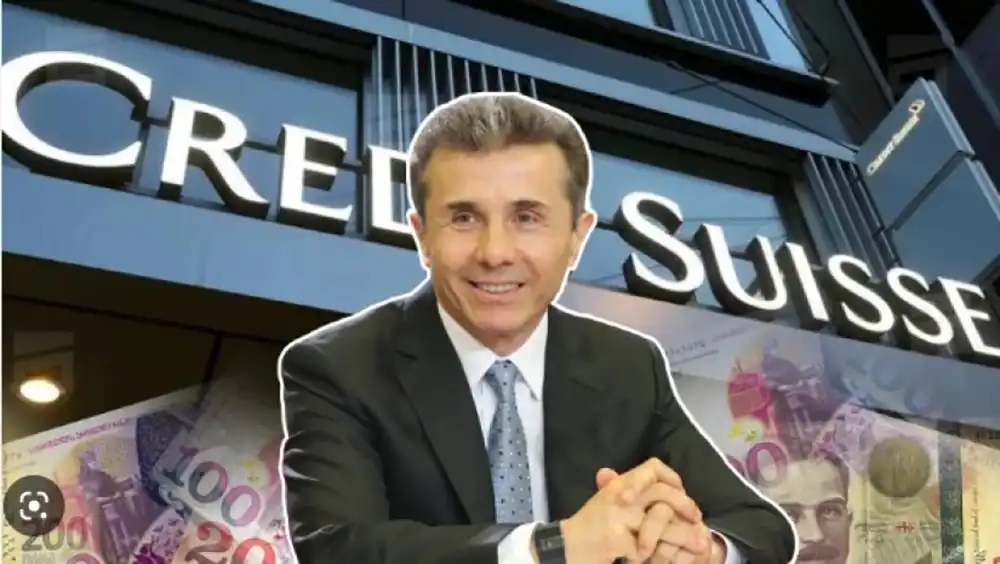
First, Georgia is not in the field of US attention now, remaining on the far periphery of third-level issues. This is evidenced by the absence of the country from the agenda of the White House, and the failure of former President Salome Zurabishvili’s attempts to draw attention to the problem, despite participation in Trump’s inauguration and direct negotiations. However, she still managed to complicate the potential deal that Ivanishvili was counting on, since instead of opening negotiations, he got the seizure of the second part of his children’s accounts in Western banks, after which he started new lawsuits on this issue. Subsequently, the Swiss bank Julius Baer, where most of Ivanishvili’s funds were transferred after the seizure of Credit Suisse accounts, including funds from hedge funds, also threatened to arrest and freeze his accounts. With such signals, the Trump administration sends a signal to Ivanishvili that not all good cards are in his hands and he will not get what he wants as easily as he initially wanted, since the stakes have been raised.
Secondly, the Georgian government bets on its position as a transit region by directly involving China in projects, which for the US administration today is the target and enemy number 1. By handing out contracts to Chinese companies for the construction of large infrastructure projects in the country, including those initially initiated by American businessmen in the past, Ivanishvili makes them hostages of a political bargain. Today, almost all tenders in Georgia are won by Chinese companies with which the two countries have established strategic relations and direct connections, although European companies also take part in them, as already mentioned above. Considering the aggressive reaction of the Trump administration to Chinese projects in Greenland and other parts of the world, the strategy of involving Chinese investors in Georgia can potentially lead to conflict. However, it is doubtful that Ivanishvili valued his Chinese comrades too much, whom he perceives only as a card for blackmail in the game.
Thirdly, the laws adopted in the country, aimed at strengthening control over civil society, NGOs and the opposition, work today as well as they did, for example, in Russia before the start of the war in Ukraine. That is, they are applied point by point, individually, exclusively for the purpose of demonstrative public “exchequer” of individual individuals with the aim of intimidating society. This is directly hinted at by the reluctance of the authorities to resort to mass fines and punishments of a large number of people and organizations that openly and in principle do not comply with the requirements of the new laws on foreign agents and NGOs today. The Georgian authorities went to a certain masking of their intentions and openly introduced amendments designed to bring the law on foreign agents closer to the American version of FARA, in order to avoid public criticism about borrowing its content from Russia. However, changing the form does not change the practice. Mass application of the law to non-observant opposition part of the society has been put on hold in anticipation of potential agreements that can make the laws themselves meaningless.
Why is this being done and what does Ivanishvili expect from the negotiations?
The potential lifting of sanctions returns him to the familiar and convenient format of life, when he was outside politics, remaining a “gray cardinal”, periodically adjusting the country’s power contours for the purposes of his own security. He does not like politics and publicity. Only the unprecedented sanctions pressure forced him to start radical changes in the country. A potential agreement with a favorable schedule for Ivanishvili can lead to the improvement of relations with the USA and some rollback of repressions, freezing of some of the new laws, but not their cancellation. Moreover, there is no need to make a strong pushback, since the USA itself is actively destroying NGOs and mass media, around which there were disputes and conflicts six months ago. But the additional sanctions imposed by Trump on Ivanishvili’s accounts already after the elections and the threat of increased sanctions forced him to move to an even more defensive position. Hence the mass import into Georgia of personal collections of antiques and works of art, which by their scale significantly distorted the indicators of imports into Georgia in January 2025. On the other hand, there is an open campaign to fulfill pre-election promises regarding the persecution of the opposition – long sentences for Mikheil Saakashvili are ending, attacks on opposition representatives continue, and court cases against media representatives and protesters are ongoing. Society lives in fear and uncertainty, which is necessary for the authorities to keep the situation in the direction they need.
Potential negotiations depend on how soon Trump is able or not to solve the more global tasks of his policy – to end the war in Ukraine and the conflicts in the Middle East. The meeting of the US and Georgian ambassadors Robin Dunnigan and Maka Bochorishvili in March 2025 in Tbilisi, the first after the elections, can be considered an indirect sign that the White House has begun to prepare the issue of Georgia for the agenda. Taking into account that the Georgian government did not officially recognize it earlier, this can be considered the first signal for the beginning of talks about the deal, but they may not start very soon.
As for the Russian footprint in Georgian politics today, it cannot be said that it is visible. “Georgian Dream” continues to adhere to the same position of neutrality while not encouraging any interference in its affairs by any parties, be it the EU, the USA or Russia. At the same time, the fear of provoking Russia into aggression by any action remains in the power structures, which leads to frank self-censorship and reluctance to help in any way projects that the Russian authorities consider undesirable for themselves. In 2025, “Georgian Dream” openly declared that it did not intend to restore diplomatic relations with the Russian Federation, and no negotiations on this matter took place. Of course, listening to the rhetoric of the Russian authorities, it may seem that they are bent on improving relations with Georgia and as if they are conducting negotiations, but there is not a single sign confirming such a trend in reality. Most of all, these rumors remind the Kremlin of another self-deception regarding the essence of Georgian power, which is not ready to step over the most painful for society issues of relations with Russia. Even the talks about the status of Abkhazia and South Ossetia, potential trade routes through these regions, which were actively discussed before the 2024 elections, have now come to naught.
As we pointed out in the 2024 study, the second variant of the development of events won, in which Russia moved to new geopolitical positions in the South Caucasus, passing through the unrecognized republics of Georgia. Russia is entrenching itself in Abkhazia and South Ossetia soberly assessing its inability to keep the South Caucasus in its sphere of influence, where today there is a unique situation of conflict between its authorities or historical misunderstanding with all three states of the region. Apparently, Moscow understands that sooner or later the USA and Georgia will agree on one or another terms and try to gain a foothold where they can so as not to lose influence in the Black Sea.
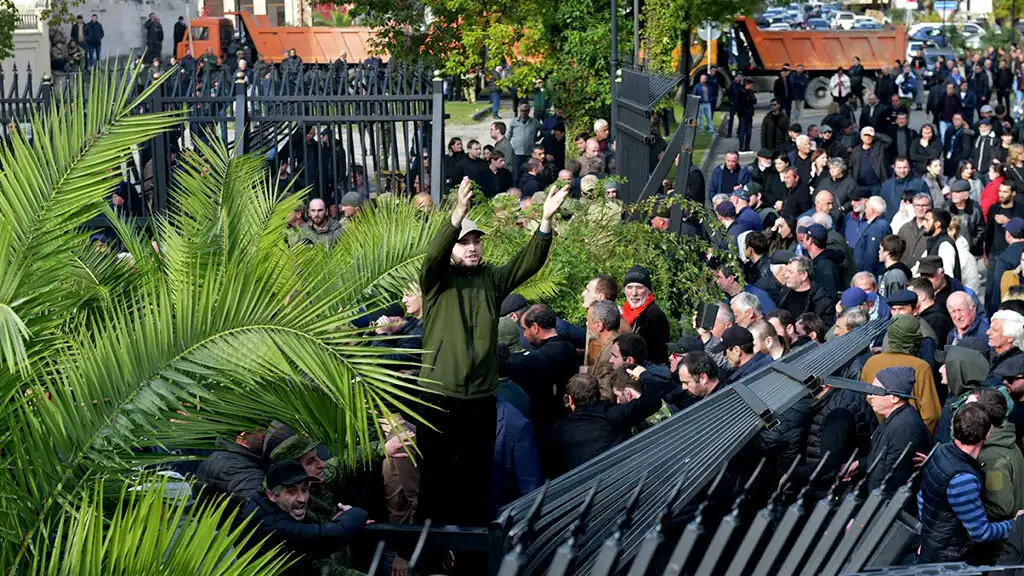
The events that happened in Abkhazia in 2025 only confirm this fact. It would seem that the conflict with the change of power by street democracy, which is classic for local politics, failed this time. Former president Aslan Bzhania, fully supported by Moscow, lost power because he too openly supported the private interests of Russian oligarchs, represented by Tkachev, Patrushev’s children, and some lesser-known representatives. The same thing happened with the curators from the Kremlin – Kozak and Nurgaliyev, who lost their reputation among the Abkhaz elites due to excessive pressure in an attempt to pass the law that Tkachev wanted. The gradual loosening of restrictions on the sale of land to foreigners, together with demands to once again completely lift the ban on the sale of coastal land to Russian businessmen, unleashed a wave of resistance, common for Abkhazia, which ended with Bzhaniya’s early presidential term. Usually this leads to a reshuffle of the authorities and the opposition with a complete exchange of their rhetoric – the opposition begins to do the same thing as the previous government, and the former government changes its narratives to those typical for the opposition. At the same time, both branches always try to move away from the accused in the direction of Russia, since Abkhazia is still totally dependent on its northern neighbor economically. This time everything was different.
At first, a movement was activated in Abkhazia for the introduction of changes to the Constitution, which could significantly renew the country’s power contours, strengthening different branches of power. This demand arose out of general indignation at the constantly recurring political scenario, when the power of the next president goes too far and the street overthrows him. It was proposed to balance the branches of power so that the new presidents would not have the right to freely dispose of the Abkhazian lands in favor of Russian oligarchs or Georgian business, and that the parliament would have the power to influence him, instead of the street. This situation forced the Kremlin to act in previously unusual scenarios.
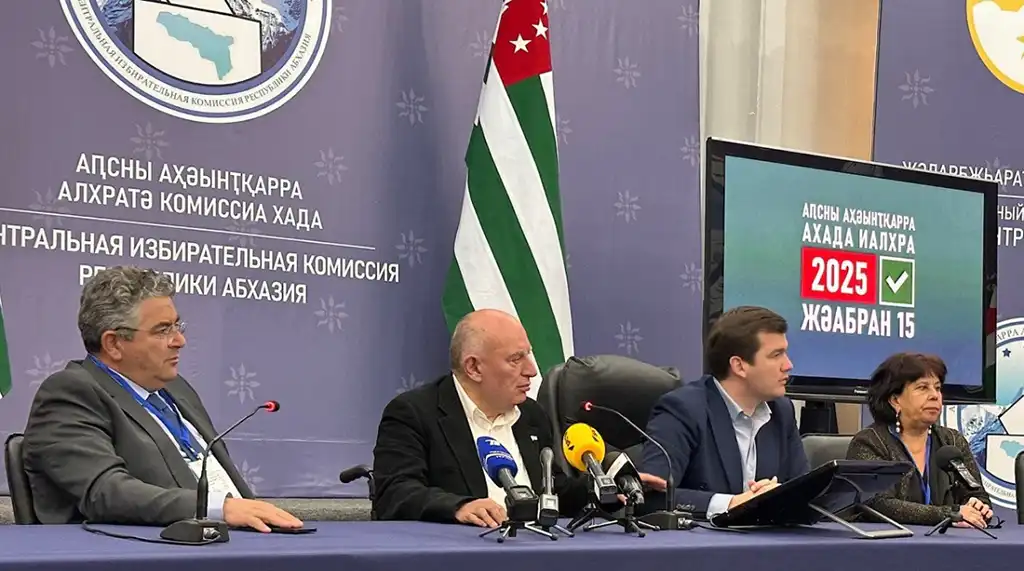
A new curator, Sergey Kyryenko, who replaced the Partushev-Kozak-Nurgaliev group, joined the case. It was a new region for him, but he used old methods. Despite Kiriyenko’s agreement with the fact that the oligarchs privately overstepped the mark, it was decided to “punish” the Abkhazian society for its excessive desire for independence. For this purpose, public media and financial resources were directed to support the candidacy of the pro-Kremlin candidate, the former vice-premier in the team of the exiled Bzhaniya – Badru Gunba. In turn, his main competitor Adgur Ardzinba, who had a strong background connected with the family of the first president, honored in society, was subjected to aggressive attacks. The Kremlin pulled out a classic technique that it has always used in relation to Abkhazia – the Turkish trail. In the reality of modern Abkhazia, Turkey at this stage does not play such a significant role as to really influence local politics. However, this mythical influence every time becomes a subject for persecution of those who do not like it. In the early elections of 2025, this Turkish narrative became a method of open struggle with an electorate uncomfortable for the Kremlin. In particular, under the pretext of Turkish influence, the extensive Abkhaz diaspora of Turkey, as well as some of its representatives who wished to personally come to Abkhazia to vote, were excluded from the Abkhaz elections. The Russian FSB intercepted them at the border in Sochi, canceled their visas and forbade them from entering the country.
In response to this situation, after the 1st round of voting, which ended in a tie, the Ardzinba group began to act against the most loyal pro-Moscow Armenian diaspora in Abkhazia, which led to open conflicts and increased inter-ethnic tension. Of course, the Armenian community of Sochi, which received Abkhaz documents, was also used to vote for the candidate needed by Moscow, but the situation itself caused an ambiguous reaction in society. The topic of inter-ethnic conflicts is perceived acutely by the Abkhaz society today, and this ultimately affected Ardzinb’s rating, tilting the scales in favor of the pro-Kremlin Gunb in the second round of elections by a small margin. Immediately after the end of the elections, Russia began unprecedented pressure on the opposition media in Abkhazia, for the first time recognizing Abkhaz journalists as foreign agents, which goes beyond the standard practice of applying this type of repression. Formally, for the first time, Russia adopted restrictive measures against citizens of another country, albeit unrecognized, with or without Russian passports. This list included popular opposition journalists Chegemskaya Pravda editor Inal Khashig, the editor of the old Nuzhnaya gazeta newspaper Izid Chania, the author of the AIASHARA Telegram channel Nizfa Arshba. It is noteworthy that against this background, a number of criminal cases were initiated in Russia itself in relation to the discrediting of the Supreme Court of the Russian Federation in relation to the events of the Russian-Georgian war of 2008, which in itself is a unique legal experiment that speaks of the deep erosion of law in the country. At the same time, a number of Russian-speaking journalists in Georgia were declared foreign agents, for example, Nikolai Lefshits with his popular network of independent Russian-language information channels of the same name in Telegram. Against the background of general pressure on society, connected with border checks, refusals to enter Russia, economic pressure, all of this together characterizes a significant increase in Russia’s attention and pressure on Abkhazian society. It shows the contours of those changes that form a new line of Russian influence in the South Caucasus, which has moved much further north than before.
In 2025, the agendas of Abkhazia and South Ossetia diverged significantly. A relatively stable period has been established in South Ossetia, but the talks of the beginning of 2024 about a possible agreement with Georgia on integration with the support of Russia, in exchange for retaining and expanding the influence of the Kremlin in Georgia, continue to be periodically discussed in the public field. Thus, the Georgian diaspora of Russia is trying to promote a topic so important to its economic interests with the goal of lobbying for the integration project.
As for the situation in the North Caucasus, it is quite stable today, unlike in previous years. The Russian authorities pay great attention to force security in the region, which does not allow us to talk about any freedom of expression of oppositional opinions. The Chechen issue was temporarily out of the spotlight, although it continues to be a significant part of the military agenda in the Kursk and Belgorod regions. Kadyrov’s condition temporarily stabilized and is periodically supported by the introduction of videos about his supposedly excellent health into the media. In January 2025, he again disappeared from the field of vision, but in February he returned again with demonstrative videos about his excellent health. It is believed that Kadyrov’s health began to deteriorate again, which pushed him to secret negotiations with the heads of some of the Arab monarchies of the Persian Gulf about security guarantees for his family. Some insiders report that the FSB and Putin became aware of this, which released internal tension and mistrust, including in relation to Kadyrov’s entourage, including his protégé in the State Duma, Adam Delymkhanov.
This conflict was synchronized with the general growing tendency for the Kadyrovs to lose their authority in the region due to their rivalry with the oligarchs from Dagestan – the Kerimov clan, which is responsible for relations with Baku. Against the background of the plane crash with the Azerbaijani plane, Ilham Aliyev’s statement that he considers Kadyrov’s apology and compensation announced at the end of February to be overdue is particularly noteworthy. The Kremlin changed the main figures of its influence not only in Abkhazia, but also in the South Caucasus. Valentyna Matviyenko, like Surkov, came to reconcile with Aliyev, who had not previously worked particularly with the region. Thus, Moscow not only changed the figures of influence in the region with the expansion of their powers, but also showed that these relations are no longer compatible with Kadyrov. However, Kerimov’s role in the region also decreased after he was unable to resolve the conflict with Baku and now he is engaged in an internal struggle with the Salafi movement. This is connected with increased attention to the activities of the Spiritual Administration of Muslims, the organization of the Hajj for all who wish at the expense of its funds, and the blocking of Telegram in Chechnya and Dagestan, designed to limit the communication of Salafi groups with foreign leaders.
In the Stavropol and Krasnodar regions, a major review of the relations between the federal center and large Cossack associations began. On the one hand, the authorities significantly increased the financing of both Cossack groups, no longer singling out any of the Cossack troops, as was the case earlier in relation to the Terek Cossacks. On the one hand, money was directed to the construction of modern bases for military training, on the other hand, salaries and financing of activities aimed at greater inclusion of Cossacks in propaganda activities were increased. Moscow decided not to go to the conflict. After being replaced by more effective commanders of the Kuban and Tersk Cossack troops, both of them are considered as future effective paramilitary units, which should receive modern military education and become attractive for volunteers to join them – both because of the image and because of high salaries. However, at the same time, the local authorities began to noticeably encroach on the Cossacks’ land rights. The recent trend of court cases shows that the courts satisfy almost all claims of farmers against the Cossacks. It can be said that there is a redistribution of real estate assets from the Cossacks to local businessmen and oligarchs, with the gradual transformation of the former exclusively into an official force without additional profits.
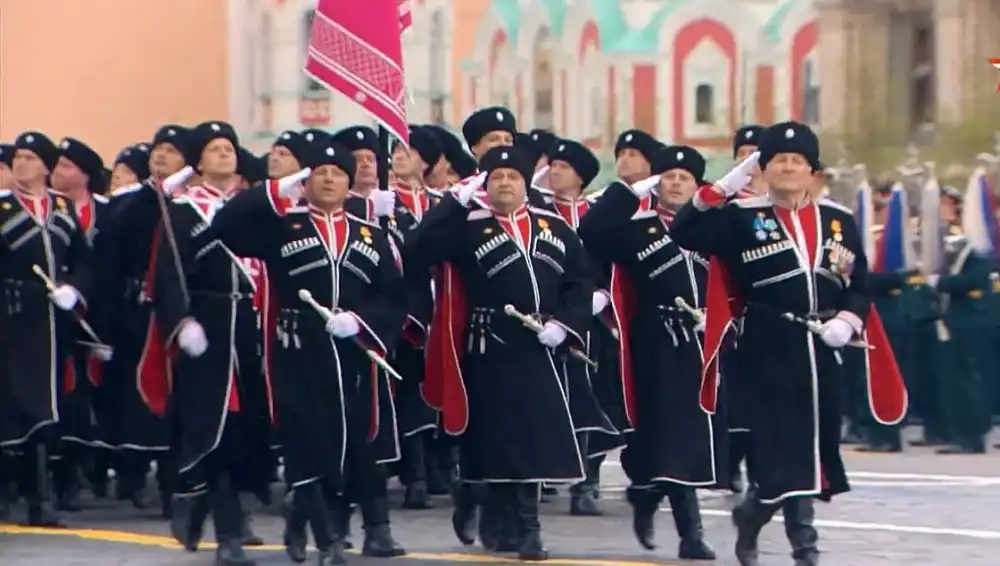
In the Krasnodar region, the Kovalchukov clan continued to hold a leading role. Despite attempts by competitors to use man-made disasters in the Black Sea and a number of socio-economic disturbances to replace Kovalchukov’s protégé – Governor Veniamin Kondratiev, after a long intrigue, Putin nevertheless re-approved him for a new term and thereby extended the rights of his close clan to this rich “homeland”.
In Karachay-Cherkessia, despite its entire criminal background, no major changes have taken place, the new young clan appointed by Moscow continues to rule effectively for the Kremlin. Here, the growth of radical Islamic influence is noticeable, which is reflected in the form of an increase in the level of terrorist danger and criminal cases of a religious extremist nature. Among other things, this process is associated with an extremely high level of drug addiction among the youth of the North Caucasus, especially in Chechnya and Dagestan against the background of the general lack of social prospects of the population.
At the moment, the Caucasus region is still going through the stages of major geopolitical changes with unpredictable results. Processes of transition to one or another geopolitical model are still taking place both on the Russian side and in the South Caucasus. Therefore, it speaks unequivocally about the crystallization of new balances of power here, it is early, the process is dynamic and requires close attention to details.