
Associative expert of the East European Council, Vitalii Shtybin
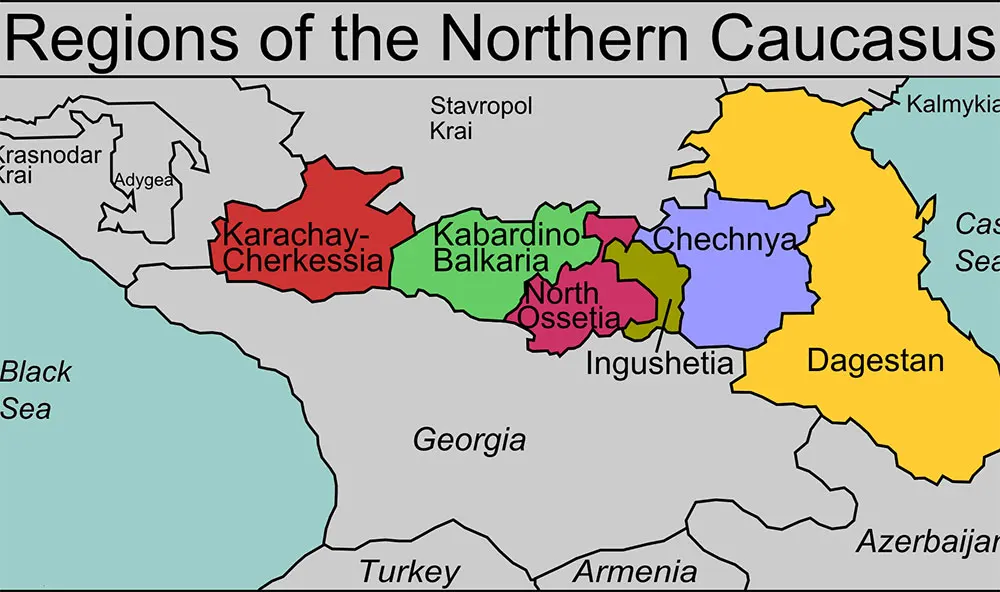
This analysis explains the real situation in the North Caucasus and sheds light on the main tendencies. What is the situation with Ramzan Kadyrov? What is the plan for political transit in Chechnya? Who will take on his functions? Which problems can Russia face in Dagestan, and what is the Kremlin’s strategy for this region? The answers to these questions can be found in a text by Vitalii Shtybin exclusively for the East European Council.
In recent weeks, news feeds dedicated to Russia’s internal politics have been filled with conspiracy theories about whether the leader of Chechnya, Ramzan Kadyrov, is alive. During this period, we saw only old videos. The mysterious movements of cars and planes of high-ranking Chechen officials, snippets of video recordings of various meetings and the endless throwing of contradictory news feeds into the network – all these things only aggravated the already confusing picture. And then, suddenly, after its culmination, the performance ended and fell silent. The news feeds switched to other events.
In order to understand the true state of affairs in Chechnya today, we need to look at two different scenarios, which, when carefully observed, turn out to be interdependent. Let’s try to evaluate them taking into account some conventions associated with the fact that the Chechen authorities very skillfully use the information field to create a contradictory picture when they want to hide very important processes of change in the region under the “muddy waters”.
SCENE ONE. LEADER IS DYING
Rumors about Ramzan Kadyrov’s serious illness began to spread in the media in early March 2023, mainly in Ukrainian sources. They reported the arrival of a famous doctor from the UAE in Grozny, specializing in complex cases of renal failure. It was not possible to confirm or refute them, since representatives of the UAE refused to comment on this case, which further fueled the public’s suspicions.
Gradually, this story developed more and more with the appearance of comments regarding the changed appearance of Ramzan Kadyrov, which could not be retouched or hidden. The rumors intensified even more in August, when not only the head of the republic disappeared from the public sphere, but also his close associates, citing vacation. Officially, this vacation was framed as a pilgrimage trip to Mecca, however, experts interpreted it as a visit to doctors in Saudi Arabia for a kidney transplant.
The peak of development of this story was the situation in the Moscow clinic under the Office of the Presidential Administration, where high-ranking Chechen officials began to appear in a separate fifth building. The movement of their cars was closely monitored by the media, as was Kadyrov’s personal plane. The absence of any denials in the first days only fueled rumors about Kadyrov’s condition worsening, allegedly after the rejection of a transplanted kidney.
However, a few days later, video recordings of Ramzan Kadyrov’s meetings with officials and his personal short speeches began to appear. The outcome of the story was a recording of his meeting with his “dying beloved uncle,” later President Putin, as well as a mysterious broadcast with the famous Russian media political figure Ksenia Sobchak. All these publications were intended to convince society that the leader was alive, completely healthy and there was nothing to fear for his life, everything would be as it was. But in this big performance, much turned out to be sewn with too much white thread.
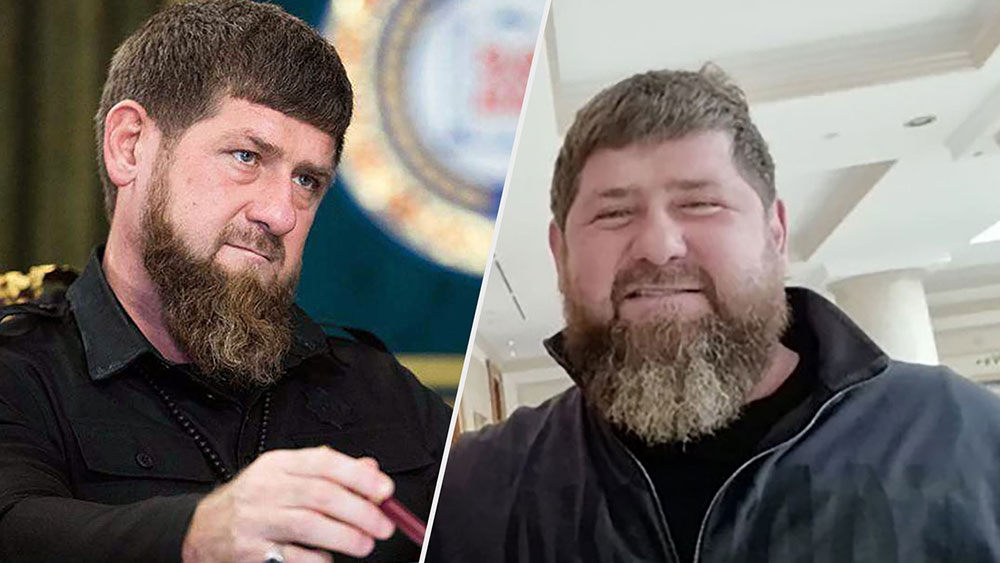
Many experts emphasize the truly unhealthy appearance of Ramzan Kadyrov, which cannot be hidden. Even in the most recent photographs, the excessive use of Photoshop is striking, when the face of the head of Chechnya turns out to be cleaner and smoother than the younger participants in the photo, despite the fact that the hands, as a rule, remain unretouched and reveal the true state of affairs. There is a strong belief that rumors circulating among the elites about serious kidney problems and unsuccessful transplants in Saudi Arabia are true. However, in such a situation, Ramzan Kadyrov can live for quite a long time, supported by serious medical support and the ability to hide the true state of affairs.
This version is organically woven into the conspiracy theory, according to which Kadyrov was allegedly poisoned, moreover, on the orders of Putin, who allegedly got rid of all influential figures in his entourage after Prigozhin’s rebellion. However, today all the facts indicate the opposite, and if such version has any basis, it is only as a reaction to the disappearance of the personal doctor of the Kadyrov clan, Elkhan Suleymanov, whose disappearance has been actively discussed by the media since September. The version about Kadyrov’s own paranoia, supported by poor health, is quite realistic, but the absence of any reliable sources classifies this version as a conspiracy theory.
What other evidence of the disease do we see? First of all, these are the videos, hastily recorded to refute this version. They are not only recorded late, but also contain too many crooked and hasty actions. So, an absurd story about a sick uncle, for whose sake some magnificent ceremonies were organized, although before that little was heard about his illness, just as today one does not hear about its consequences. Either uncle suddenly recovered, or he died secretly, if Kadyrov’s entourage suddenly lost interest in the meetings in the Moscow hospital. Further, the facts came to light that on September 22, the head of the Ministry of Emergency Situations, Alexander Kurenkov, arrived at the hospital to film meetings with Kadyrov, which allegedly took place in their offices. Among them is an unofficially published video, which was leaked online anyway, which recorded a meeting between Ramazan Kadyrov and the director of the National Guard Viktor Zolotov, where the inadequate condition and speech of the head of Chechnya are noticeable.
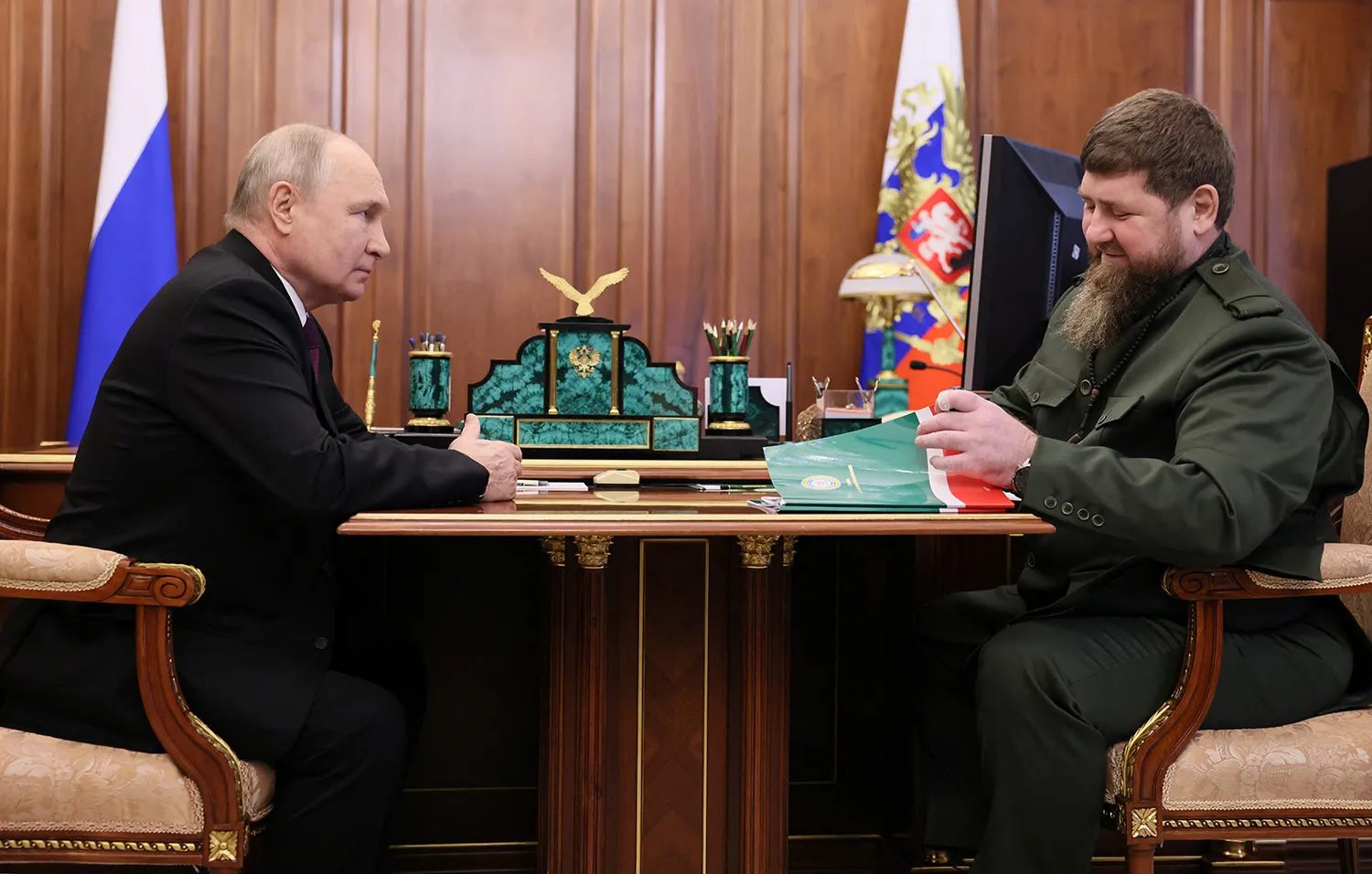
The final meeting with Putin on September 28, 2023 was supposed to dissuade doubters, but it’s extremely short format, long shot from the back, and mixed up sheets of paper on the table indicate otherwise. All this is a big and inept performance that was supposed to convince everyone that everything is fine with Chechnya. And judging by the participation of the head of state in it, the situation is very serious.
An additional compelling argument for this state of affairs were attempts to quickly and decisively divert the information field to the side using the most powerful and challenging arguments to the point of foul. We are talking about the publication of a scandalous video where the youngest son of the head of Chechnya, Adam Kadyrov, beats a Russian guy, Nikita Zhuravel, imprisoned in the Grozny pre-trial detention center, who is charged with insulting the feelings of believers for burning the Koran in the city of Volgograd. Zhuravel was demonstrably sent for conviction to Chechnya on the personal instructions of Putin, who was trying in every possible way to demonstrate the outlaw status of Chechnya in Russia, as a place to intimidate all dissenters. The situation with Zhuravel caused a flurry of discussion with polar assessments from complete approval to severe indignation. At a certain point, the well-known media person Ksenia Sobchak got involved in the situation and wrote a post saying that she phoned Ramzan Kadyrov and talked to him for a long time. As a result of the conversation, they allegedly agreed that, at her request, Adam Kadyrov’s actions would be given a legal assessment and Ramzan Kadyrov would honestly accept it. In a situation of outlaw status, this statement sounded meaningless, but that was not the main thing. Ramzan is a long-time friend of Ksenia and the use of her pseudo-liberal and pseudo-opposition status in the public sphere turned out to be in his favor. The main message in Ksenia’s post was not about the legal status of the victim of tyranny, but that “we talked for almost an hour, Ramzan is alive, healthy, not a neural network, he ate cashew nuts very energetically.” There was a reason for eating nuts, since they are contraindicated for people with kidney failure. That is, the information dumping was deliberate with the goal of convincing, first of all, the liberal and Western public of the leader’s health, but it turned out to be done too carefully and was nullified by the lack of video confirmation. Everything was based solely on the retelling of the conversation by Ksenia Sobchak herself, who has long been suspected of working for the Kremlin.
Thus, Kadyrov’s health agenda was officially closed, and attention was diverted to the side. Ramzan Kadyrov once again reinforced this information message with two high-profile news at once. Literally a week after the news of the beating of Nikita Zhuravel, on October 6, he publicly awarded his son Adam with the Order of the Hero of the Chechen Republic, which further aggravated the confrontation between nationalist Russians against him and Putin, as the guarantor of this state of affairs. The next day, October 7, at a large-scale celebration in Grozny in honor of Putin’s birthday, Ramzan Kadyrov personally spoke, like Tereshkova in the State Duma at the beginning of 2021, with a proposal to completely cancel the presidential elections in Russia in 2024, or limit himself to a single candidate. Thus, the information agenda about his health went into the shadows, and Ramzan Kadyrov played another historical role in turning Russia into a dictatorship.
We will talk below about what trends can be expected in Chechnya in connection with all this. First of all, we need to see another, less obvious side of Russia’s Caucasus policy, related to expectations from post-Kadyrov Chechnya.
BACK TO THE ORIGINS
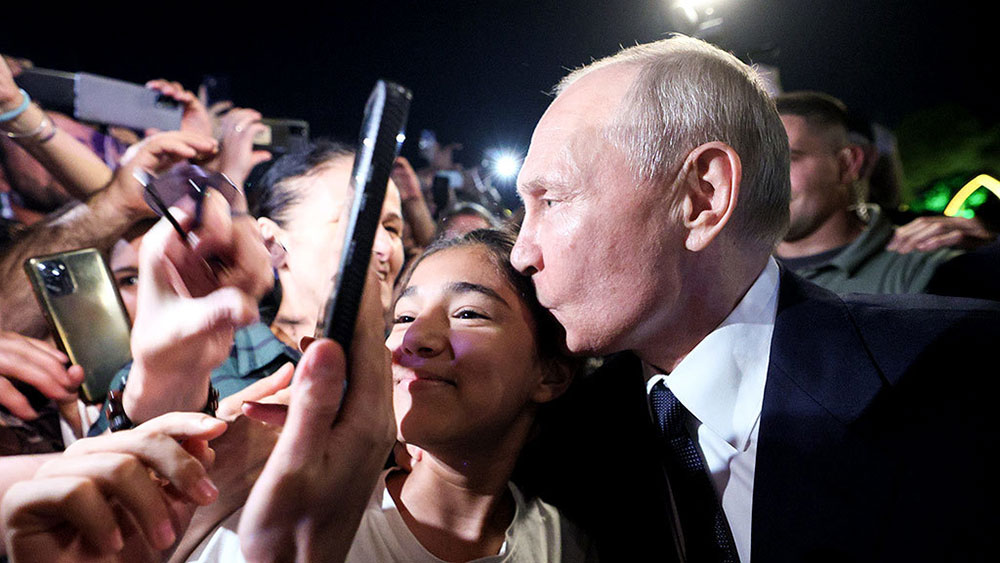
On June 28, 2023, Putin visited Dagestan for the first time in many years. The meeting was very unusual, with going out to the people, hugging and shaking hands, in the best traditions of the Soviet era. What happened that day that forced Putin to radically change the habits of recent years, when he even met with officials while sitting at a long table at his residence?
Experts believe that the reason for this is Prigozhin’s rebellion that took place the day before, which forced Putin to make an impulsive appearance in order to, on the one hand, support the image of the “people’s leader”, and on the other hand, to convince him of popular support. Of course, there is a very high degree of truth in this, otherwise this meeting would not have looked so unexpected and emotional. However, the subsequent attention to Dagestan and the flow of budget funds pouring in from above shows a much more complex picture.
There are two more important points in Putin’s visit to Dagestan. Firstly, the main location of the visit was the city of Derbent, which soon after received additional funding, including for the creation of a pseudo-myth about 5000 years of history. Some experts saw this as an attempt to hint to neighboring Azerbaijan about the strength of Russia’s position among the national minorities of the Dagestan peoples, who also live in the north of Azerbaijan. However, there is no evidence of this. But the internal struggle of the local elites quickly revealed itself.
For many years, the main groups of influence in Dagestan were people from Makhachkala, while the Derbent elite, represented by people from Lezgins, has been in a marginal position since the 90s, including due to separatist ideas in the early post-Soviet years. After Putin’s visit, the situation changed and many budget flows were redirected to the Derbent group, which caused untold indignation among the old elite in Makhachkala.
The reason is simple – Putin needed loyalty from the elite of the region in which his political career began. Back in August 1999, residents of Dagestan stopped the invasion of Basayev and Khattab’s groups from Chechnya, and the then FSB director Vladimir Putin led the analysis of this situation. This episode began his rise up the political ladder and the subordination of Chechnya to the federal center. In 2023, the cycle closed again in Dagestan, but its usual elite does not suit Putin due to its inability to restrain rebellious sentiments.
In the Western press there is a certain stereotype about Dagestan, created by the liberal Russian media in opposition, as a region that is most loyal to Moscow, where most soldiers come from for the war in Ukraine. Indeed, a large flow of volunteers and conscripts is coming from Dagestan to Putin’s army. But the reason for this lies in the total poverty and degradation of this republic, which, under Putin’s rule, has slipped to the level of handicraft production and religious obscurantism of the Afghan type, historically alien to the Muslims of the Caucasus. For local residents, any war is just an excuse to make money; no one here sincerely believes in the idea of fighting “for the Russian world,” which people understand as it really is. Dagestan is the only Caucasian republic in Russia that faced massive anti-war riots in the first months of the war and later against mobilization, with road closures and clashes with law enforcement agencies. Dagestan is characterized by social riots, such as the gas riot of 2022, the electric riot of 2023, or the major trucker riot of 2017 against additional tolls. And this is despite the most brutal methods of suppressing dissent, especially among young people, when 10 years ago anyone could be accused of “supporting terrorists and extremism” and, at best, put in prison for decades, and at worst, simply killed in the nearest forest. That is, the society here is quite turbulent by Russian standards and the federal authorities are trying to tame it with the help of a classic clash of internal elites from different ethnic groups.
There is also an important dimension to this situation related to neighboring Chechnya. Remembering the clash of 1999, as well as the long-standing land disputes between Dagestan and Chechnya, the federal authorities decided to again rely on Dagestan as opposed to Chechnya, which many neighbors in the Caucasus dislike very much for its special status and excessive kitsch with its own wealth in an impoverished region. It seems that Moscow understands that the political status of Chechnya after Kadyrov is unpredictable. Attempts to find an adequate way to transfer power have not yet been successful; too much is tied to the Kadyrov clan, which has oppressed competitors for too long and cruelly. There are many people who want to take the place of leader, both among their own and, especially, among other clans. This is also noticeable in the prominent figure of the younger Adam Kadyrov, who is probably being prepared for the role of successor under the temporary ruling Adam Delimkhanov, as his right hand, while he grows up. This is the eastern monarchy of the Saudi type in the flesh.
Moscow is well aware that any transition (and especially a monarchical one) is always a period of enormous risk. Ramzan Kadyrov’s statements about the Russian presidential elections in 2024 indicate the same thing. This means that «we must prepare for the worst-case scenario of increased instability in Chechnya». And Dagestan is destined for the same restraining role here, so that the unrest does not spread beyond the borders of Chechnya. The diligent rise of the former head of Ingushetia, Colonel-General Yunus-bek Yevkurov, who is playing an increasingly serious role in Russian foreign policy affairs in Muslim regions, where Ramzan Kadyrov was previously involved, also hints at this. At the same time, Ingushetia is subjugated in the most brutal way possible; participants in land protests against Chechnya there received the most severe sentences. Thus, Chechnya finds itself in the grip of regions completely subordinate to Moscow’s control.
GHOSTS OF THE PAST
What picture of the future of Chechnya can we see based on limited and scattered sources? It seems that the historical cycle is returning to the starting point of the beginning of the Putin era in Russia. 2024 will be a decisive year for all parties, who are actively preparing, trying to cover all options. Despite the apparent sole power of the Kadyrov clan, there is no clear consensus in society in its support. The most likely departure of Ramzan Kadyrov from the political scene due to illness, despite attempts to artificially maintain his condition, threatens his entire clan, which keeps Chechnya in fierce competition. The power of the Kadyrov clan exists on the basis of internal consensus, which assumes loyalty in exchange for some freedom of action. For example, many residents loyal to the regime refused to participate in military operations in Ukraine and local authorities had to make concessions, offering significant amounts of money and real estate in exchange for volunteer participation. Compensation occurs at the expense of the disloyal population, as well as relatives of opponents of the Kadyrov clan. Tension also exists in the struggle with other clan-families, whose harsh attitude has given rise to many opponents, who, among other things, think in the paradigm of blood feud. Most of them are located in a large diaspora, which today already looks like a parallel network of international Chechnya. Within it, there are also splits into groups (democrats/nationals), and a hybrid war is also being waged through numerous agents of Kadyrov himself, who for a long time and effectively built his structure of connections in the diaspora, and which, among other things, was actively used by the Russian authorities in Syria.
Despite the pro-Russian nature of the Chechen authorities, this is only an external image that exists for the sake of the system of distribution of budget funds and to maintain power at the expense of federal resources. The ideal model that is periodically projected by the Chechen authorities today is a kind of mixture of the UAE/Bahrain with the political and cultural practices of Saudi Arabia, including radical modern Islam of a new kind, alien to the historical Caucasus.
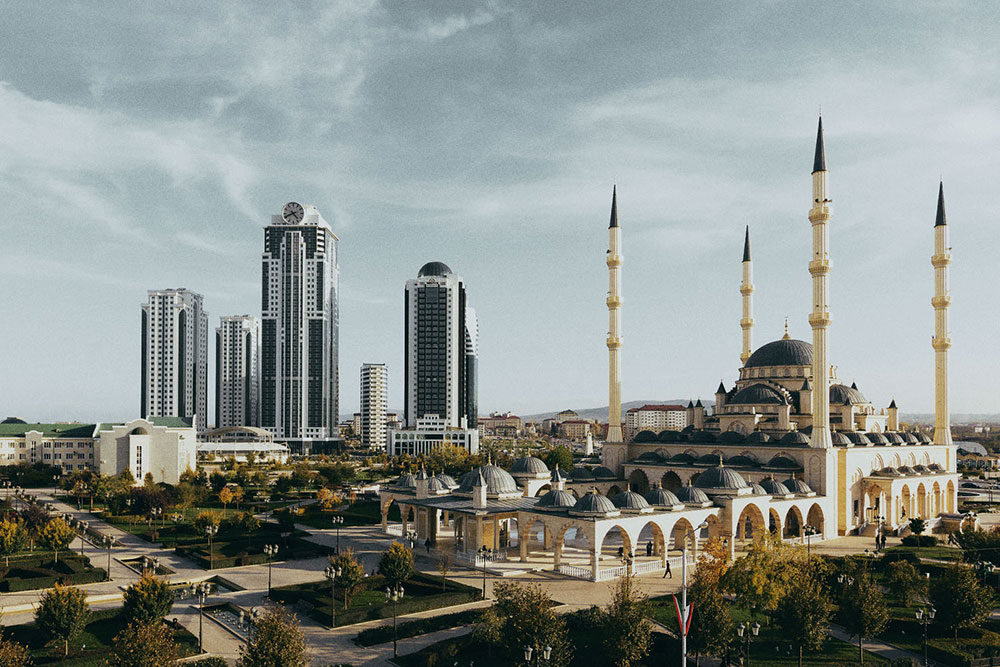
Along with Tatarstan, Chechnya today is seeking an even more special status, as evidenced by the agreement of the federal authorities to introduce Islamic banking practices that can exist as a separate financial structure of Muslim regions, as well as Kadyrov’s attempts to establish high political weight in one of the parties of the country’s power interests. The future of Chechnya through the eyes of the current elite, with a successful transition, seems clearly independent.
External players from the elite of the former independent Ichkeria do not yet play any significant role in the internal politics of Chechnya and its internal Russian status. Their attention is focused on the creation of some kind of integral coalition of national groups that could play a role in the disintegration processes of Russia in a potential future in which the war in Ukraine is lost and the power elites in Russia are replaced. But there is no specificity in their rhetoric, except for theoretical slogans that are not based on domestic Russian reality. For example, the project to recreate the Mountain Republic of the Peoples of the North Caucasus on the model of 1917-1920, which was raised on the flag by representatives of Ichkeria, smacks of idealism. Firstly, today there is not the slightest hint of the balance of power and common interests that emerged in the region after the Bolshevik coup in 1917. Modern Russian republics of the North Caucasus for the most part is in a relationship of conflict both internally and externally rather than of unity. Secondly, the raising of the flag by the Chechens is perceived as an interception of someone else’s historical agenda, since representatives of Dagestan and the Circassian peoples played a key role in the historical Mountain Republic. Hence the skeptical attitude towards this project even in the circles of opposition representatives of the peoples in exile.
We will probably find out what the future of Chechnya will be in the new year 2024. And the closer its offensive, the more and more attention will be focused on this region as the cornerstone of the modern Russian political regime. Putin’s reign began with events in the North Caucasus. Will it end with them?