
Ernest Vardanean, the associative expert of East European Council
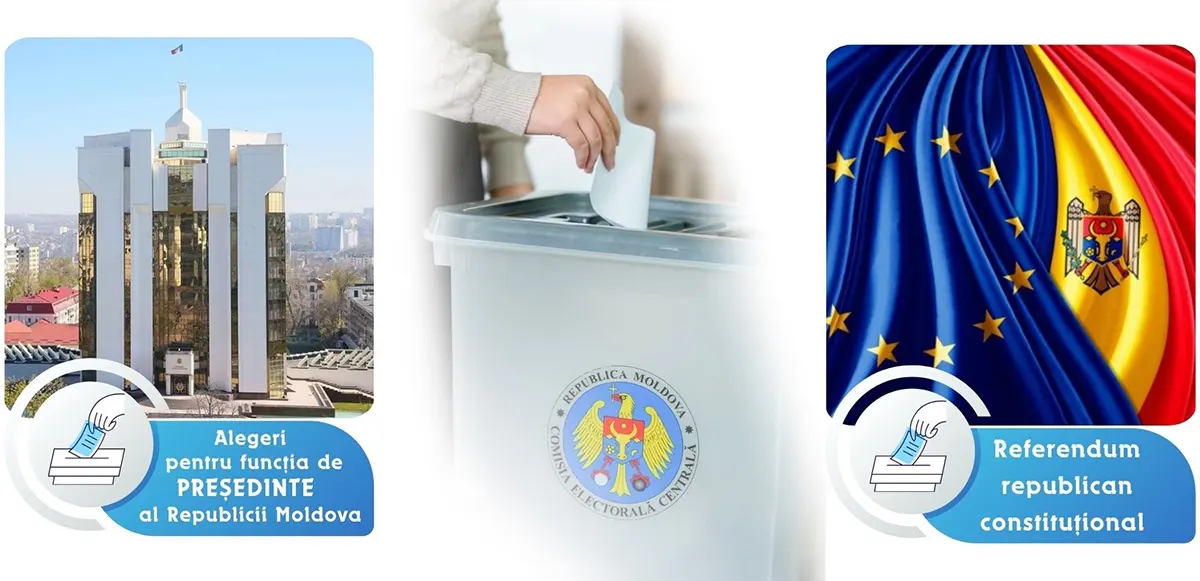
2024 is a very difficult year for a number of former Soviet Union countries, and the Republic of Moldova is one of the typical examples. On October 20, the country will hold another nationwide presidential election, and there is a possibility that the first round will not determine the winner. In this case, the second round will take place on November 3. On October 20, the first constitutional referendum in the history of the Republic of Moldova will also take place, in which citizens will answer the question “Do you support amending the Constitution to allow Moldova to join the European Union?”.
Among other things, this will significantly “heavier” the geopolitical background of the entire electoral process. In addition, the Moldovan leadership has a major foreign policy achievement that will motivate the pro-Western electorate and increase turnout in both the elections and the referendum: on June 25, the first inter-ministerial conference was held in Luxembourg with the participation of a Moldovan government delegation headed by Prime Minister Dorin Recean, where the official start of negotiations on the country’s accession to the European Union was given. On the same day and in the same place, a similar conference was held with the delegation of Ukraine.
Having barely completed the presidential campaign in the fall of 2024, Moldova will begin preparations for the next parliamentary elections, which are scheduled for the summer of 2025, and this is provided that there are no preconditions for the dissolution of parliament and the calling of early elections. On the other hand, Russia’s ongoing military aggression against Ukraine continues to determine the broad context of the regional situation and influences political processes in Ukraine’s neighboring countries. Thus, the domestic political situation in Moldova, given the totality of circumstances, will be quite tense, if we also take into account the increased activity of the opposition, primarily the pro-Russian one.
In this regard, it is appropriate to describe three conditional dimensions of the development of the situation in Moldova: the totality of domestic political factors, the problem of regional security in the context of the war in Ukraine, and the Transnistrian issue. This material is a comprehensive analysis of these main factors, which are considered not separately, but in close connection with each other and with other aspects.
I. Domestic policy. Election campaign. Sentiment in society. Actions of the opposition and Russia’s influence
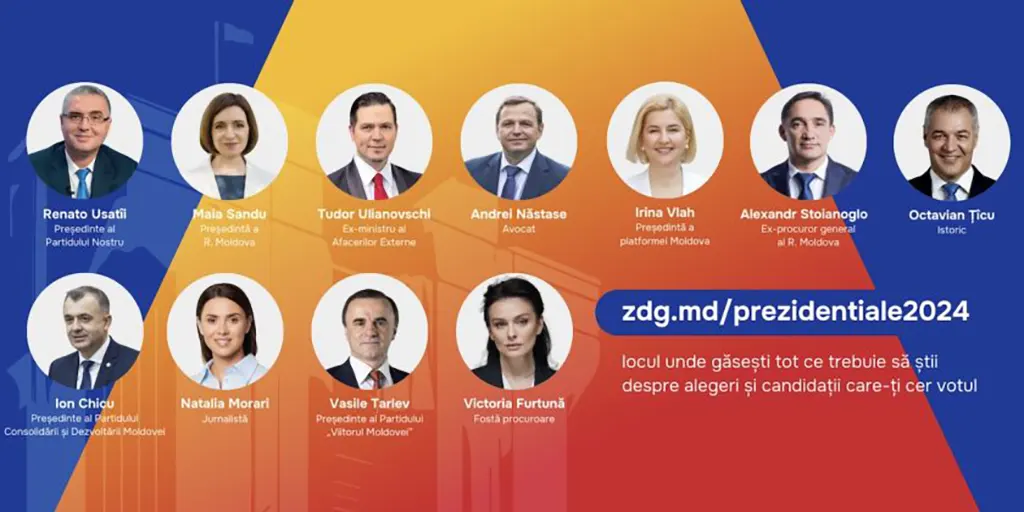
Undoubtedly, the main event of the current year is the next general elections of the President of the Republic of Moldova, who is elected for a term of four years. The current head of state, Maia Sandu, is running for a second term and is conducting an active election campaign both within the country and in the format of meetings with Moldovan voters living abroad. The vote will take place on October 20, but most likely will not be limited to one round.
The polls still show Maia Sandu as the leader in the preference ratings, but do not predict her victory in the first round – neither in the total number of respondents, nor among those who have decided. For example, a study by the IMAS sociological center, conducted in May 2024 by order of Independent News România, shows Sandu in a confident first place, followed by the former President of Moldova, the chairman of the Socialist Party, Igor Dodon, who is far behind. This is, respectively, 35.2% and 16.4% of the total number of respondents (1,088 people) and 41.3% and 19.3% of those who have already decided on their choice (927 respondents). The mayor of Chisinau, the leader of the Alternative National Movement (MAN) party, Ion Ceban, came in third place – he has, respectively, 5.9% and 7%.
However, neither Dodon nor Ceban are running for president, and the poll cannot be considered representative. After the Socialist Party nominated former Moldovan Prosecutor General Alexandru Stoianoglo as a presidential candidate, the balance of power has undergone certain changes. According to a closed poll conducted by an unnamed sociological center at the request of the ruling party and partially aired on television in late September, the votes in the first round of the elections on October 20 could be distributed as follows:
Current President Maia Sandu – 31.6%
PSRM candidate Alexandru Stoianoglo – 14.6%
Our Party leader Renato Usatii – 12%
Former Bashkan of Gagauzia Irina Vlah – 7.3%
Former Prime Minister Ion Chicu – 3.4%
Second round, option 1:
Maia Sandu vs. Alexandru Stoianoglo.
Respectively, 38.74% and 42.45%
Option 2:
Maia Sandu vs. Renato Usatii.
37.2% vs. 36.43%
Option 3:
Maia Sandu – Ion Chicu.
40% vs. 33%
Option 4:
Maia Sandu vs. Irina Vlah.
40% and 33% respectively
Option 5:
Alexander Stoianoglo – Renato Usatii
33% against 30%.
Thus, Alexandru Stoianoglo has good chances to fight in the second round. The outcome of the elections will largely depend on the votes of the diaspora. Political signals demonstrate the growth of dissatisfaction in their ranks with many aspects of Maia Sandu’s policy. In this vein, the supporters of the current President, both within her team and Western partners, will have to make a lot of effort to ensure victory.
The low probability of Sandu’s victory in the first round of elections is largely explained by the fact that a rather tense situation has developed in Moldova against the backdrop of accumulated socio-economic problems, which are aggravated by the political struggle between the government and the opposition, and not only the pro-Russian one. For example, in a survey conducted by Intellect Group in April, 65.2% of respondents indicated tension in Moldovan society, and only 14.2% called the situation in the country calm, 17.3% did not see any changes.
The domestic political agenda in Moldova has been largely taken over by the opposition, primarily by members of the banned Shor Party, whose leader, the fugitive oligarch Ilan Shor, has established relations with Russia, received Russian citizenship and actively defends Moscow’s interests. This opposition force actively “exploits” topical issues, such as rising prices and tariffs, impoverishment of the population, increased emigration, flourishing corruption at all levels, closure of opposition media, etc. Moldovan historian and former member of parliament Octavian Țîcu claims that Ilan Shor left Israel, settled in Moscow and receives large sums from it to send to Moldova in order to destabilize the situation.
According to the head of the General Police Inspectorate of Moldova Viorel Cernuețanu, Russia allocates at least $2 million monthly to the “Pobeda” bloc created by Shor. The criminal group is used by Moscow to destabilize the situation in the Republic of Moldova; money comes to Moldova through various channels, including through couriers.
The issue of combating disinformation and propaganda is becoming increasingly acute as the elections approach. It got to the point that the ruling party “Action and Solidarity” represented by two deputies – Lilian Carp and Igor Chiriac – introduced a bill to expand the interpretation of “treason” in the Criminal Code, equating it with disinformation. “An act intentionally committed by a citizen of the Republic of Moldova against the sovereignty, independence, unity, indivisibility, security or defense capability of the Republic of Moldova in the interests of a foreign state, foreign organization, unconstitutional entity or their representatives, expressed in going over to the enemy’s side during a war or armed conflict; espionage; disclosure of state secrets; assistance in carrying out hostile activities directed against state security.”
Treason will also be considered assistance or complicity in the implementation of hostile activities directed against state security in the form of disinformation campaigns, organized activities over a certain period of time aimed at achieving hostile goals by misinforming society.
On the other hand, the Moldovan authorities themselves give rise to criticism, not only due to many socio-economic problems, but also in the political sphere. For example, there was an unprecedented case of pressure on the IMAS Sociological Research Center headed by the Romanian sociologist Doru Petruți, with whom, under pressure from “certain political forces”, a contract for the implementation of a large-scale (several tens of thousands of euros) study was terminated. The reason was the previous IMAS survey, which revealed a significant increase in the number of people dissatisfied with the government. As a result, IMAS was forced to present the results of the new study not in Chisinau, but in Bucharest, although it did not concern Romania.
Another problem of Moldovan society is the low level of trust in traditional media, primarily TV channels. Over the past year and a half, the Moldovan authorities have closed more than a dozen opposition channels for various reasons, practically “clearing” the media field of alternative opinions, but the result was directly opposite to the expectations of the authorities. For example, a recent KEEVOON Global Research poll showed that only 11% of Moldovan citizens trust news in traditional media. The majority (52%) believe that the media is controlled by the government, and 67% believe that the closure of opposition TV channels was politically motivated.
However, the government is demonstrating resilience, not least because of the weakness of the opposition, or rather its disunity and lack of trust between key figures. At the same time, the pro-Western press of Moldova draws attention to the fact that Igor Dodon, unlike Ilan Shor, is not included in the sanctions lists of the US and EU countries as part of the fight against the Kremlin’s policy of destabilization.
In an interview with Free Europe, Dodon, even before Stoianoglo’s nomination, said that he did not intend to hold discussions with Shor about determining a single opposition candidate for the presidential elections, but “the opposition will have a common strategy in case Maia Sandu wins.” The leader of the Party of Socialists did not explain what strategy he had in mind. In another interview, Dodon said that the Party of Socialists has “its own agenda,” so there can be no talk of any unification with Shor’s “Victory” bloc.
Meanwhile, in May, several representatives of the left and right opposition met in Chisinau. The meeting was initiated by journalist Natalia Morari, wife of Veaceslav Platon, a businessman who fled Moldova and was involved in several criminal cases under Plahotniuc. Today, both Platon and Morari are very active in the media space and harshly criticize Maia Sandu and the ruling party, although Natalia Morari actively supported them in 2020, which she later publicly regretted. Now she is running for president and continues to criticize Sandu. The meeting was attended by Igor Dodon, former Prime Ministers Ion Chicu (currently a presidential candidate) and Vlad Filat, former Foreign Minister Tudor Ulianovski (also a candidate), former Deputy Foreign Minister Valeriu Ostalep, former Bashkan of the Gagauz Autonomy Irina Vlah (candidate), MP from the Alternative National Movement Party (MAN, the party of Chisinau Mayor Ion Ceban) Hayk Vartanyan and others.
The conversation obviously touched on the need to nominate a single opposition candidate, but did not yield any practical results. And then almost half of those present at the meeting became presidential candidates. The idea of nominating a single candidate was forgotten, but even despite this, Maia Sandu’s chances of victory do not look indisputable. On the other hand, the most popular opposition candidate Alexandru Stoianoglo is disadvantaged by the fact that he was publicly nominated and supported by the Socialist Party, which has been firmly labeled as pro-Russian (which it does not particularly deny), and the negativity towards the leader of the PSRM Igor Dodon is extrapolated to Stoianoglo.
The well-known Romanian sociologist and political scientist, specialist in Moldova Dan Dungaciu believes that the Moldovan electoral field lacks a social democratic segment that would not be “fixated” on Russia and would include voters of Ion Ceban, the European Social Democratic Party (former Democratic Party after rebranding) and Russian-speaking voters who do not necessarily support Putin. “We are losing this electorate, since there is no social democratic pole that would enjoy the support of pro-European parties in the European Parliament,” Dan Dungaciu emphasized. In Moldova, the sociologist noted, all supporters of the ruling party are pro-European, but not all pro-European citizens support the ruling party.
The opposition believes that Maia Sandu will not be able to win in the first round, but there is a possibility that the results will be “drawn” the way it needs. First of all, the opposition is suspicious of the amendments to the Electoral Code initiated by the authorities, which allow citizens of the Republic of Moldova living in the United States, Canada, Iceland, Norway, Sweden and Finland to vote by mail. The amendments were approved by the Venice Commission as a pilot project, and if successfully implemented, this voting method may subsequently be introduced in other countries.
However, the opposition fears falsifications. “What will we do if they do introduce voting by mail in the United States and Canada? In our country, polling stations will close at 21:00, but they will work for another 10 hours. What should we do if we wake up in the morning and there are 300,000 votes for Maia Sandu in the envelopes? Is it even possible. Why do you think they included these two countries? First of all, because it is very difficult to verify,” said, in particular, former Prime Minister Ion Chicu, Chairman of the Party for the Development and Strengthening of Moldova.
Former President Igor Dodon is also skeptical about these amendments. According to him, Maia Sandu has low chances of winning the elections, otherwise she would not have introduced such changes to the Electoral Code that create competitive advantages for her. “It is obvious that she wants to win by falsifying the votes. If we pay attention to such maneuvers, then the opposition, I think, will finally unite, will not recognize the election results and will decide how to act together,” said the Chairman of the Party of Socialists.
As already noted, a constitutional referendum will be held simultaneously with the presidential elections on October 20, where Moldovan citizens will answer the question of whether they support joining the European Union. There are different opinions on this matter, and even representatives of the pro-Western political camp consider the idea of holding a referendum on the same day as the elections to be a rather risky step and, at the same time, a kind of vote of confidence in Maia Sandu, who initiated the plebiscite.
President Maia Sandu emphasized that the referendum to be held in the fall “will determine the fate of the country for decades to come.” Parliament Speaker Igor Grosu, in turn, called October 20 a historic day for Moldova. “After more than 30 years, the time has finally come when we, citizens, can tell the whole world that we are Europeans and want to become part of this European family,” he emphasized.
As noted above, not everyone in the right-wing camp shares the enthusiasm for the referendum – or rather, many support its holding, but do not consider it correct to hold it on the same day as the presidential elections, considering this a PR stunt by Maia Sandu.
Since the opposition, and not only the pro-Russian one, was quite skeptical about the idea of holding a referendum, it began to voice proposals to boycott this event. More precisely, the opposition calls on citizens to take part in the presidential elections, but not to take a ballot for participation in the referendum. It is also characteristic that in the left-wing opposition there are forces that do not object to the referendum as such, but consider it necessary to hold it separately from the presidential elections.
Political observer Dionis Cenuse describes several scenarios for the development of events in connection with the referendum and elections. Scenario 1: more than 50% of voters will take part in the plebiscite; This will help Maia Sandu get to the second round, as well as improve the EU’s image in Moldova and undermine the efforts of pro-Russian/anti-European forces. Scenario 2: The turnout at the referendum is sufficient for it to be recognised as valid (33.3%), but in absolute numbers this will not be enough to clearly state the presence of pro-European sentiments in Moldova. 33.3% is less than one million citizens, and for Moldova with a population of 2.8 million people this will be an unconvincing answer to all Eurosceptics. In addition, this will reduce the legitimacy of Maia Sandu’s result in the elections. Scenario 3: The referendum fails (turnout less than 33.3%), and the chances of re-election of the incumbent president are reduced to a minimum. In this case, not only Sandu loses politically, but also the government (remember the parliamentary elections that will be held in the summer of 2025) and the European Union. Such a result will not only strengthen the position of pro-Russian forces, but will also deepen the geopolitical division of society, which has existed for all the years of independence.
Former Prime Minister Ion Chicu considers the planned referendum a “desperate attempt” by Maia Sandu to gain political dividends from holding a plebiscite and elections on the same day. According to the politician, Sandu wants to get a second presidential mandate, speculating on the European aspirations of the residents of Moldova. Ion Chicu voiced the same idea as Dionis Cenuse: if only 33.3% of the population takes part in the referendum, half of which vote in favor of European integration and the corresponding changes to the Constitution, then it turns out that the Basic Law of the country will be changed by a decision of only 17% of voters, which will create a dangerous precedent. In exactly the same way, the former Prime Minister said, it will be possible to hold the next referendum, in which exactly the same number of people will be able to cancel all the changes that concern European integration.
II. Regional security. External support for Moldova’s efforts. The war factor in Ukraine
The central event of the beginning of the summer in Moldova, both in domestic and foreign policy, was the joint statement of the governments of Great Britain, the United States and Canada regarding Russia’s aggressive subversive actions against Moldova. For the first time since 1991, Western governments officially accused Moscow of intending to interfere in the presidential elections and undermine stability in Moldova.
“We firmly oppose the Kremlin’s constant attempts to use disinformation, criminal and secret actions, corruption in order to undermine sovereignty and democratic processes,” the trilateral statement says. The document notes that the governments of the three countries shared with their Moldovan partners all the necessary information that will help prevent subversive actions by the Kremlin and its proxies in Moldova.
As noted above, not everyone in the right-wing camp shares the enthusiasm for the referendum – or rather, many support its holding, but do not consider it correct to hold it on the same day as the presidential elections, considering this a PR stunt by Maia Sandu.
Since the opposition, and not only the pro-Russian one, was quite skeptical about the idea of holding a referendum, it began to voice proposals to boycott this event. More precisely, the opposition calls on citizens to take part in the presidential elections, but not to take a ballot for participation in the referendum. It is also characteristic that in the left-wing opposition there are forces that do not object to the referendum as such, but consider it necessary to hold it separately from the presidential elections.
Political observer Dionis Cenuse describes several scenarios for the development of events in connection with the referendum and elections. Scenario 1: more than 50% of voters will take part in the plebiscite; This will help Maia Sandu get to the second round, as well as improve the EU’s image in Moldova and undermine the efforts of pro-Russian/anti-European forces. Scenario 2: The turnout at the referendum is sufficient for it to be recognised as valid (33.3%), but in absolute numbers this will not be enough to clearly state the presence of pro-European sentiments in Moldova. 33.3% is less than one million citizens, and for Moldova with a population of 2.8 million people this will be an unconvincing answer to all Eurosceptics. In addition, this will reduce the legitimacy of Maia Sandu’s result in the elections. Scenario 3: The referendum fails (turnout less than 33.3%), and the chances of re-election of the incumbent president are reduced to a minimum. In this case, not only Sandu loses politically, but also the government (remember the parliamentary elections that will be held in the summer of 2025) and the European Union. Such a result will not only strengthen the position of pro-Russian forces, but will also deepen the geopolitical division of society, which has existed for all the years of independence.
Former Prime Minister Ion Chicu considers the planned referendum a “desperate attempt” by Maia Sandu to gain political dividends from holding a plebiscite and elections on the same day. According to the politician, Sandu wants to get a second presidential mandate, speculating on the European aspirations of the residents of Moldova. Ion Chicu voiced the same idea as Dionis Cenuse: if only 33.3% of the population takes part in the referendum, half of which vote in favor of European integration and the corresponding changes to the Constitution, then it turns out that the Basic Law of the country will be changed by a decision of only 17% of voters, which will create a dangerous precedent. In exactly the same way, the former Prime Minister said, it will be possible to hold the next referendum, in which exactly the same number of people will be able to cancel all the changes that concern European integration.
II. Regional security. External support for Moldova’s efforts. The war factor in Ukraine
The central event of the beginning of the summer in Moldova, both in domestic and foreign policy, was the joint statement of the governments of Great Britain, the United States and Canada regarding Russia’s aggressive subversive actions against Moldova. For the first time since 1991, Western governments officially accused Moscow of intending to interfere in the presidential elections and undermine stability in Moldova.
“We firmly oppose the Kremlin’s constant attempts to use disinformation, criminal and secret actions, corruption in order to undermine sovereignty and democratic processes,” the trilateral statement says. The document notes that the governments of the three countries shared with their Moldovan partners all the necessary information that will help prevent subversive actions by the Kremlin and its proxies in Moldova.
A similar statement was made by President Maia Sandu at a joint press conference with her Italian counterpart Sergio Mattarella, who recently visited Chisinau. “The Kremlin is trying to undermine our efforts, democratic processes and the strengthening of institutions, using dirty money that comes to Moldova and is aimed at destabilization, financing pro-Kremlin forces, and interfering in elections. Moldova is facing disinformation and propaganda,” Sandu said.
The Moldovan leadership welcomed the joint statement by the United States, Canada and Great Britain. In particular, the speaker of the parliament, Igor Grosu, said that Moscow is acting in Moldova through the hands of Ilan Shor’s people. In turn, the ruling party MP, member of the Security and Public Order Committee, Adrian Keptonar, noted that the country’s authorities are aware of the threats from Russia.
At the same time, Special Envoy, Coordinator of the US State Department’s Global Engagement Center James Rubin clarified that the information released in the joint statement by the US, Canada and Great Britain regarding the Kremlin’s attempts to influence the results of the presidential elections in Moldova is based on reliable and credible sources. “We believe that this is a plan by the Russian authorities to try to defeat the current president of Moldova or organize a coup d’etat if they fail to defeat her in the elections. I cannot give you specific names of who exactly is doing this. They will try to provoke protests and overthrow the government through manipulation, they will try to manipulate the security services, the population, to cause unrest – this is Russia’s intention,” Rubin said.
Former Chairman of the Constitutional Court, former member of the Moldovan Parliament Alexandru Tanase noted the unprecedented nature of the joint statement by the US, Canada and Great Britain. “Most likely, the intelligence services of these three states have information that allows them to conclude that something more is being prepared than just manipulation of public opinion, injection of money or other tools that have traditionally been used. It is possible that Moscow, in the midst of a war, when there is no need to respect any rules, may resort to inciting unrest in Chisinau,” Tanase said.
Meanwhile, even before the joint statement by Washington, Ottawa and London was released, the US State Department issued a separate decision to impose sanctions against the Bashkan of the Gagauz Autonomous Region, Eugenia Gutsul. The US called her “an active accomplice of the fugitive, convicted oligarch Ilan Shor and his Shor party, as well as their Kremlin-backed attempts at illegal political interference.” The sanctions include a ban on entry to the US, asset freezes and a ban on transactions in the United States and with American citizens. Prime Minister Dorin Recean welcomed this decision by the US government, noting that Chisinau is closely cooperating with him and other Western partners in the fight against the Kremlin’s subversive actions.
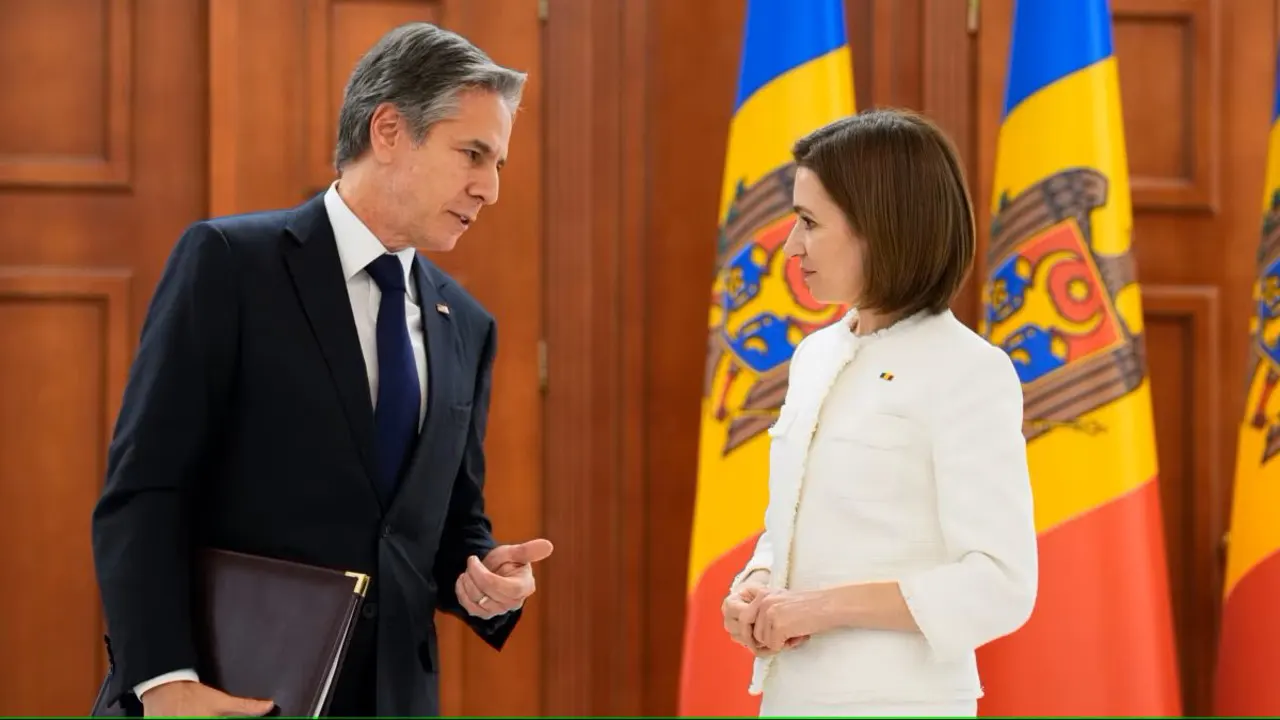
The US also demonstrated support for the current Moldovan authorities during the visit of Secretary of State Antony Blinken to Chisinau on May 29. This is the second visit of the head of American diplomacy to Moldova since March 2022. Blinken discussed with the Moldovan leadership issues of strengthening the country’s economy and energy security, as well as combating Russia’s disinformation campaign.
Blinken’s current visit took place after Moldova and the European Union signed the Agreement on Partnership in the Field of Security and Defense, which was the first document of this kind signed with a country that is not a member of the European Union.
In addition, German Defense Minister Boris Pistorius, who visited Chisinau on May 31, expressed public support for the Moldovan leadership. “Moldova is feeling the consequences of Russia’s aggressive war against Ukraine. Threats against Moldova have increased, energy prices are rising, Russia’s attempts to destabilize the situation are intensifying, as well as the presence of Russian troops in the Transnistrian region. We will not allow Russia to destabilize the situation and will do everything possible to stop these attempts,” the German minister said.
Romanian President Klaus Iohannis made a similar statement. “As dramatic regional events continue to increasingly require our full attention and coordination, we need to act to benefit our Alliance (NATO) as a whole,” the Romanian leader said, adding that Russia still poses the greatest security threat.
In turn, Florent Parmentier, an expert at the Paris-based Jacques Delors Institute and a specialist in Moldova and the Transnistrian issue, believes that part of Russia’s strategy in the region is to discredit the European Union and undermine the process of European integration. “The creation of the political group “Victory” in Moscow, for example, was accompanied by criticism of the EU and the referendum on European integration, as well as fear-mongering about the unification of Romania and the Republic of Moldova,” Parmentier said.
Representatives of the Ukrainian leadership also spoke about the electoral situation in Moldova. For example, Advisor to the Head of the President’s Office Mikhail Podolyak warned Moldova about the danger posed by pro-Russian parties. “I want Moldova not to forget that the preservation of pro-Russian parties, which also hold congresses in Moscow, leads to tragedy. That is, it does not happen that in one place it works like in Ukraine, and in another place it works differently. In any case, it will lead to tragedy. I do not interfere in the internal politics [of Moldova], but I speak from the outside about how it looks,” Podolyak noted. “Russia is interested in the existence of only impoverished former post-Soviet republics. Keeping people in poverty is easier, since they are susceptible to any propaganda influences.” Finally, Ambassador Marko Shevchenko, who is completing his mission in Chisinau, said that if pro-Russian forces win the elections in Moldova, Ukraine will close the border with the Republic of Moldova. “It seems to me natural that if a government comes to power [in Moldova] that advocates strategic partnership with Russia, this means that Russia is returning to Moldova. “A natural step on the part of Ukraine is to strengthen its security along the entire border,” Shevchenko said on air on one of the Moldovan TV channels. The Ukrainian Foreign Ministry did not comment on the statement of the ambassador to Moldova.
For its part, the leadership of the Republic of Moldova, represented by the parliamentary majority, expressed solidarity with the people of Ukraine by adopting a resolution on May 30 condemning Russia for the deportation of Ukrainian children. “Hundreds of children have been killed, thousands have been wounded, they are the most vulnerable victims of aggression. Moreover, almost 2/3 of Ukrainian children have become internally displaced persons, and another 2 million children, together with their mothers, were forced to leave their home country,” the text of the resolution says.
III. The Transnistrian issue
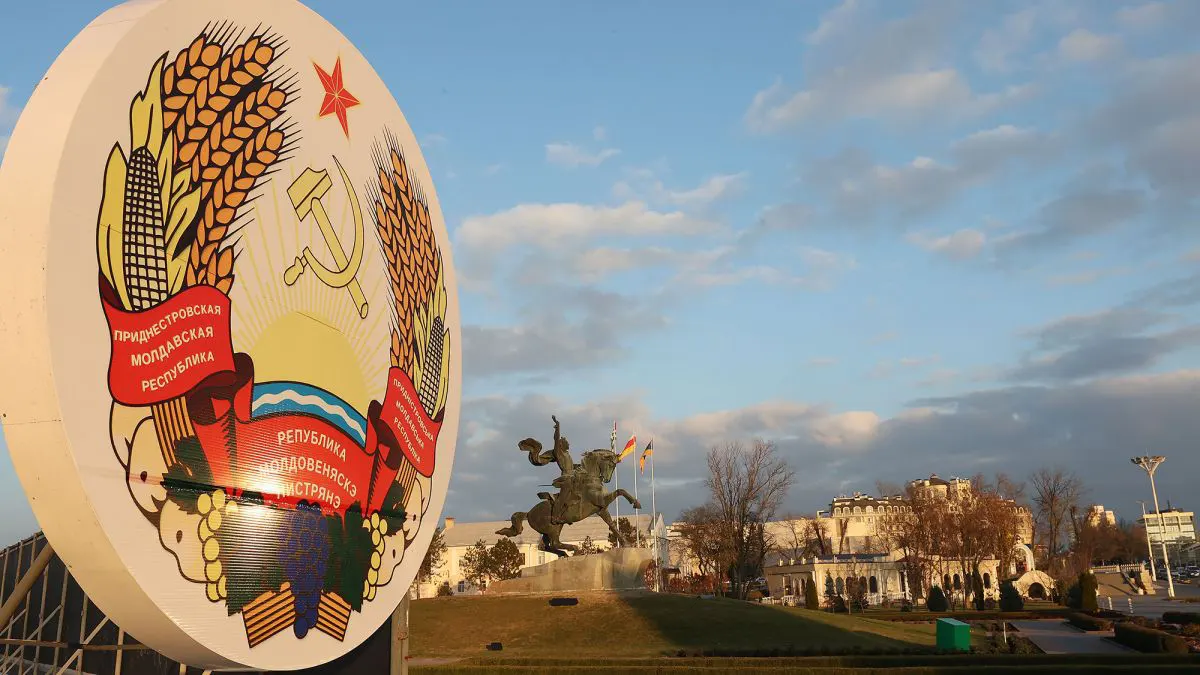
In the Transnistrian region of the Republic of Moldova, unlike the rest of Moldova, there are no pre-election preparations, except for the right of the citizens of the Republic of Moldova living in Transnistria to participate in the presidential elections and, possibly, in the referendum on October 20. So the current situation on the left bank of the Dniester should be considered in the context of the regional situation and political processes on the right bank. Recently, a discussion has arisen again in the Moldovan media about whether the Republic of Moldova should join the European Union without the uncontrolled Transnistria (as in the case of Cyprus in 2004) or whether it is necessary to first achieve reintegration and then European integration. In absentia, answering the participants of the public discussion, the Minister of Foreign Affairs Mihai Popșoi said that the future of the Transnistrian region is inseparable from the Republic of Moldova and is linked to the EU.
“Moldovans living in the Transnistrian region, as well as many Russians who are in the Republic of Moldova and Transnistria, do not want to have anything to do with the vague idea of the “Russian world,” Popșoi said. “If you look at the data, the Transnistrian region currently exports more than 70% of everything it produces to the European Union. And only a small part goes to the Russian Federation or the CIS countries.”
Popșoi reaffirmed Moldova’s commitment to a peaceful solution to the Transnistrian problem: “This is just an artificial construction by the Kremlin with the aim of limiting the sovereignty of the Republic of Moldova. The Transnistrian region is an integral part of the Republic of Moldova, and we are committed to finding a peaceful solution to the conflict.” Vice Prime Minister for Reintegration Oleg Serebrian expressed a similar opinion, noting the positive role that the European integration process can play in the country’s reintegration.
Former Romanian President in 2004-2014 Traian Basescu believes that Moldova has two options for resolving the Transnistrian issue in the context of the republic’s integration into the European Union: convince the Transnistrians that it is better to be in Europe with Moldova, or give up Transnistria. Basescu believes that Moldova should not miss the opportunity to join the EU because of the Transnistrian issue. “If (Moldova) wants to join (the EU) quickly, then unification with Romania is the solution. If you want to join slowly, you can join without unification with Romania. But it will take time,” he said. The Transnistrian conflict will be resolved and the Russian army will leave the region, said Lilian Carp, head of the parliamentary commission on national security, defense and public order, co-author of the above-mentioned bill on expanding the interpretation of the concept of “treason”. In his opinion, the end of the war in Ukraine will allow Chisinau and Tiraspol to find a solution to the existing issues in order to unite Moldova. At the same time, he is sure that by autumn we should expect an intensification of the hybrid war on the part of Russia.
The aforementioned French political scientist Florent Parmentier notes that Ukraine has not removed from the agenda the option of the forceful liquidation of the Transnistrian pro-Russian enclave. However, in such a scenario, a much greater risk lies not in the military escalation as such, but in the socio-economic collapse that could occur in Transnistria, which is completely dependent on Russian aid. The same expert describes three scenarios for the development of events around the Left Bank.
Scenario 1: gradual reintegration with Moldova. If Russian troops are far from Odessa, Maia Sandu remains in power in Chisinau and the course towards European integration is supported by a referendum, Transnistria will have no choice but to gradually cede its unrecognized, but still sovereignty to the constitutional authorities of Moldova. This process will, however, be accompanied by friction between the “elite” groups in Tiraspol: business (Sheriff), Moscow’s protégés in the political leadership and Russian agents in the security forces.
Scenario 2: the frontline approaches Transnistria, Ukraine lacks manpower, the Transnistrian authorities are still vulnerable to a potential military operation from Ukraine. Meanwhile, Russian forces organize a series of incidents in order to escalate the tensions between Chisinau and Tiraspol and completely sever their relations. Russia can then recognize the “independence” of Transnistria and immediately annex it, destabilize Gagauzia, and ultimately force Moldova to federalize with a veto for the “federal subjects” (i.e., Moscow).
Scenario 3: maintaining the status quo. It differs from the first scenario in its great uncertainty. By 2026-2027 (obviously, assuming the war is over), Europe and the Russian Federation will try to find ways to stabilize the continent, which will mean Ukraine and Moldova refusing to join NATO, as well as “broad discussions” about the guarantee mechanism for these agreements. In this scenario, the 5+2 negotiating format will be restored, but with a much weaker Ukraine, controlled by Moldova, and a less influential US and EU. And then the conflict settlement will be postponed again indefinitely.
When analyzing the Transnistrian factor, especially in the context of Russia’s ongoing aggression against Ukraine, one must take into account such an aspect as the extreme caution of Moldova’s statements and especially actions. Despite the broad political support that Chisinau provides to Kyiv (the most recent example is the aforementioned resolution of the Moldovan parliament condemning Russia’s actions), the Moldovan leadership is acting extremely cautiously in the Transnistrian issue.
Former Transnistrian official Gennady Chorba, who now harshly criticizes both Tiraspol and Moscow, noted several important details in an interview with the Ukrainian publication Glavkom. Firstly, Russia, by destabilizing the situation in Moldova, “is trying in every possible way to delay the moment when Chisinau turns to Kyiv for help in demilitarizing Transnistria and within the framework of the process of reintegrating Transnistria into the legal field of the Republic of Moldova.” Chorba means that Ukraine is interested in ammunition depots in Colbasna, access to which can only be obtained in the event of Transnistria’s return to the constitutional field of Moldova and the complete elimination of the Russian military presence in the region. But this, in turn, can only be done after Chisinau officially appeals to Kyiv with a request to conduct a joint operation to demilitarize the Transnistrian region. And this is precisely what is not happening for various reasons.
Secondly, says the former Tiraspol official, there are people in the leadership of the Republic of Moldova who actually work for Moscow and undermine Chisinau’s efforts both to get closer to Kiev and to resolve the Transnistrian problem in general. It should be noted that several of my own sources at different times claimed that a number of key officials in the Moldovan government work situationally or intentionally in the interests of Russia, but they are so influential that Maia Sandu cannot get rid of them without damaging her power. That is, what Ghenadie Ciorba said is close to reality.
The Transnistrian “elite”, meanwhile, is taking advantage of the uncertainty in the region to retain power or at least the material benefits they have. Thus, the leadership of the Sheriff company is still interested in dialogue with Ukraine and Western countries in order to maintain business positions. Moscow’s protégés in the authorities are trying to play Russia’s game, but not so much as to openly challenge Sheriff. Finally, the security forces, who are agents of the Russian security agencies, are trying to carry out Moscow’s orders to destabilize the region, but “Sheriff” has so far managed to keep the situation under control.
In this context, it is appropriate to quote the Ukrainian publication “Business Capital”, which notes that the Transnistrian conflict was initially a consequence of attempts by the “elites” of the two banks to redistribute property, and then turned into criminal-economic cooperation between Chisinau and Tiraspol. This transition “was carried out during the period 2001-2005 by a group of Moscow, Transnistrian and Moldovan functionaries of the former CPSU, who established strict rules of the game.”
“Nothing has changed since then. As a result of the latest elections in Moldova, only the people sitting on the schemes built at that time are being shaken up, but the schemes themselves remain exactly the same, with minor variations due to changes in the situation. Chisinau from time to time squeezes out a slightly larger share for itself, taking advantage of the fact that it occupies a key position in these schemes, the publication says. – Neither Chisinau, nor Tiraspol, nor the Kremlin tower that controls the Russian share of the cash flows from these schemes, want to change anything. And they don’t want to “settle” anything either. They want to preserve the situation and milk the Transnistrian cow as long as possible.”
Conclusions
The situation on the Ukrainian front continues to have an indirect, but still significant impact on the foreign and domestic policy of the Republic of Moldova. In Chisinau, they are well aware that the preservation of Moldovan statehood largely depends on the success of the Ukrainian Armed Forces. On the other hand, Moldovan society understands that the start of negotiations with the European Union and the further success of European integration are largely explained by the EU’s “package approach” and ultimately also depend on the preservation of the Ukrainian state.
This, in turn, determines the caution of Chisinau’s actions in the Transnistrian direction (not to give Russia a reason to use the Left Bank against Moldova and Ukraine). At the same time, the process of European integration itself is not made directly dependent on the reintegration of Transnistria (since such dependence obviously plays into Moscow’s hands). As a result, it turns out that the war in Ukraine and the frozen Transnistrian conflict, being, respectively, a foreign policy and internal-external problem of Moldova, have a direct or indirect, but still significant impact on the balance of political forces within the country.
The Ukrainian leadership should take note of this complicated structure, which, among other things, is a factor of hybrid influence on the situation in Moldova, especially given the upcoming presidential elections and referendum on European integration. Russia will not abandon its attempts to destabilize the situation in Moldova, including, not least, the Transnistrian region. Tiraspol for Moscow is both a potential second front against Ukraine and an obstacle to Ukraine receiving the huge amount of ammunition that the Ukrainian Armed Forces need today. In addition, Tiraspol for Moscow is an anchor on Moldova’s leg, a constant factor of uncertainty and instability, not only for Chisinau itself, but also for its European partners.
Our experts have opportunity to express their own vision on situation and they opinion can differ from position of editorial board