
The 2025–2026 reform became the most far-reaching restructuring of Kazakhstan’s political system since the 1995 Constitution. Formally, it began on September 8, 2025, when in his Address to the Nation President Kassym-Jomart Tokayev stated that the Senate had fulfilled its “important historic mission of ensuring the stability of state-building” and proposed moving to a unicameral parliament. Initially, the pace was expected to be cautious: at least a year of discussion, a referendum in 2027, and only then constitutional amendments.
However, the process accelerated sharply. On October 8, 2025, by presidential decree, a working group headed by State Counsellor Erlan Karin was established; it emerged that the reform would affect 40 articles of the Constitution, 10 constitutional laws, and more than 50 codes and laws. By January 2026, the plan had evolved into what was effectively a new Constitution. At the National Kurultai on January 20, 2026, Tokayev proposed introducing the office of vice president and abolishing the post of state counsellor. On February 11, the Constitutional Commission presented the final draft, and on the same day a decree on the referendum was signed.
The referendum took place on March 15, 2026, on a single question — the adoption of the new Constitution as a whole, without the possibility of voting on individual amendments. Turnout reached 73.12%; 87.15% of participants voted in favor (7,954,667 people), while 898,099 voted against. In total, 84% of the articles of the current Constitution were amended.
The new Basic Law entered into force on July 1, 2026; on the same day, the powers of the bicameral parliament were terminated, and elections to the Kurultai are to be held within two months.
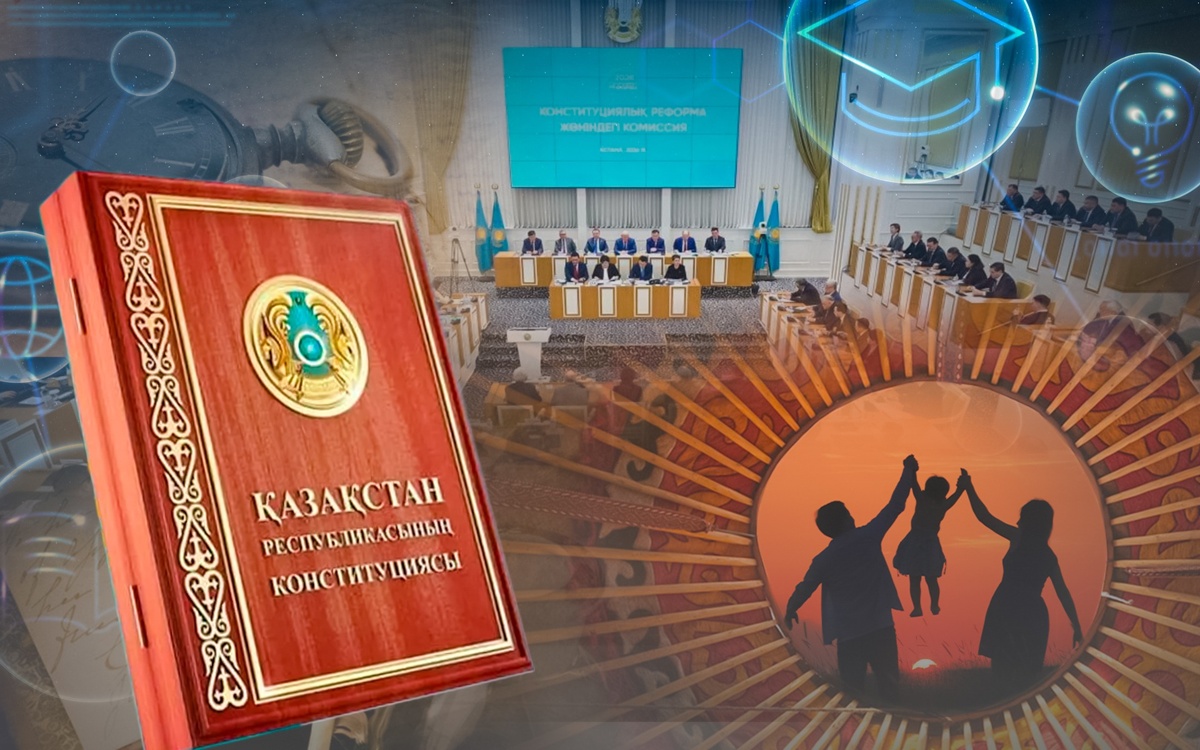
The institutional framework of the new system
The core of the reform is the transition from a bicameral parliament (Senate + Mazhilis) to a unicameral body called the Kurultai. It consists of 145 deputies elected exclusively through party lists (a proportional system) in a single nationwide constituency for a five-year term. Crucially, there will be no presidential quota — all deputies are to be elected via party lists.
The accompanying changes to the architecture of power include:
The People’s Council (Қазақстанның Халық Кеңесі) — a new advisory body under the president with the right of legislative initiative, intended to become an additional channel of public influence on lawmaking.
The office of vice president, appointed by the president with the consent of the Kurultai, alongside the abolition of the institution of the state counsellor.
Expanded powers of parliament: it will take over key кадрові appointments, including the approval of the heads of the National Security Committee, the Prosecutor’s Office, and the National Bank, as well as decisions on war and peace and consent to the appointment of the vice president.
The dismantling of Nazarbayev-era institutions
The previous system with a bicameral parliament and the Assembly of the People of Kazakhstan is being dismantled.
The ideological and value-based amendments include:
updating the preamble in line with the principles of a “Just Kazakhstan,” national unity, and the unitary state structure;
enshrining the concept of the family as a union between a man and a woman;
strengthening human rights guarantees;
banning foreign financing of political parties;
prioritizing domestic law over international law.
Lawmaking is also to be digitalized through the e-Parliament system.
At the same time, the president’s basic prerogatives remain intact: he still determines domestic and foreign policy, serves as commander-in-chief, nominates the prime minister and the heads of the силових agencies, and retains the power to dismiss them and dissolve parliament.
Transformation of the party landscape — the key intrigue
This is where the reform has produced the most dramatic shifts. The logic of a unicameral parliament formed solely through party lists objectively increases the importance of political parties: the formation of parliament exclusively through party lists is supposed to contribute to their institutional strengthening.
Initial configuration
At the beginning of the reform, there were seven registered parties in the country. Following the 2023 Mazhilis elections, the distribution was as follows:
AMANAT — 53.9%
Auyl — 10.9%
Respublica — 8.59%
Aq Jol — 8.41%
People’s Party of Kazakhstan — 6.8%
OSDP — 5.2%
Baytaq — 2.3% (did not pass)
A 5% threshold has been retained for entering the Kurultai. The requirements for party registration also remain unchanged: an initiative group of at least 700 people from two-thirds of the regions and at least 5,000 party members.
Elections to the unicameral Kurultai are scheduled for August 2026.
Experts generally agree that the field is more likely to contract than expand. Political analyst Marat Shibutov believes that Ädilet (with the AMANAT asset), Aq Jol, and Auyl will certainly overcome the 5% threshold. Daniyar Ashimbayev predicts a reduction: whereas six groupings are currently represented, after the election there will likely be only four; Ädilet and Auyl are guaranteed to pass, while Aq Jol is the likely fourth. According to experts, the rest may lose both electoral and material support and disappear into the depths of Kazakhstan’s political history.
The emergence of the Ädilet party
In spring 2026, a new — and now dominant — player appeared. On May 7, 2026, the founding congress of the Ädilet party was held in Astana; its chairman became Aibek Dadebai, the former head of the Presidential Administration. State registration was completed on June 1, 2026. The party positions itself as “digital” and openly pro-presidential; its political council includes Dana Medeuova, a niece of President Tokayev.
The absorption of AMANAT
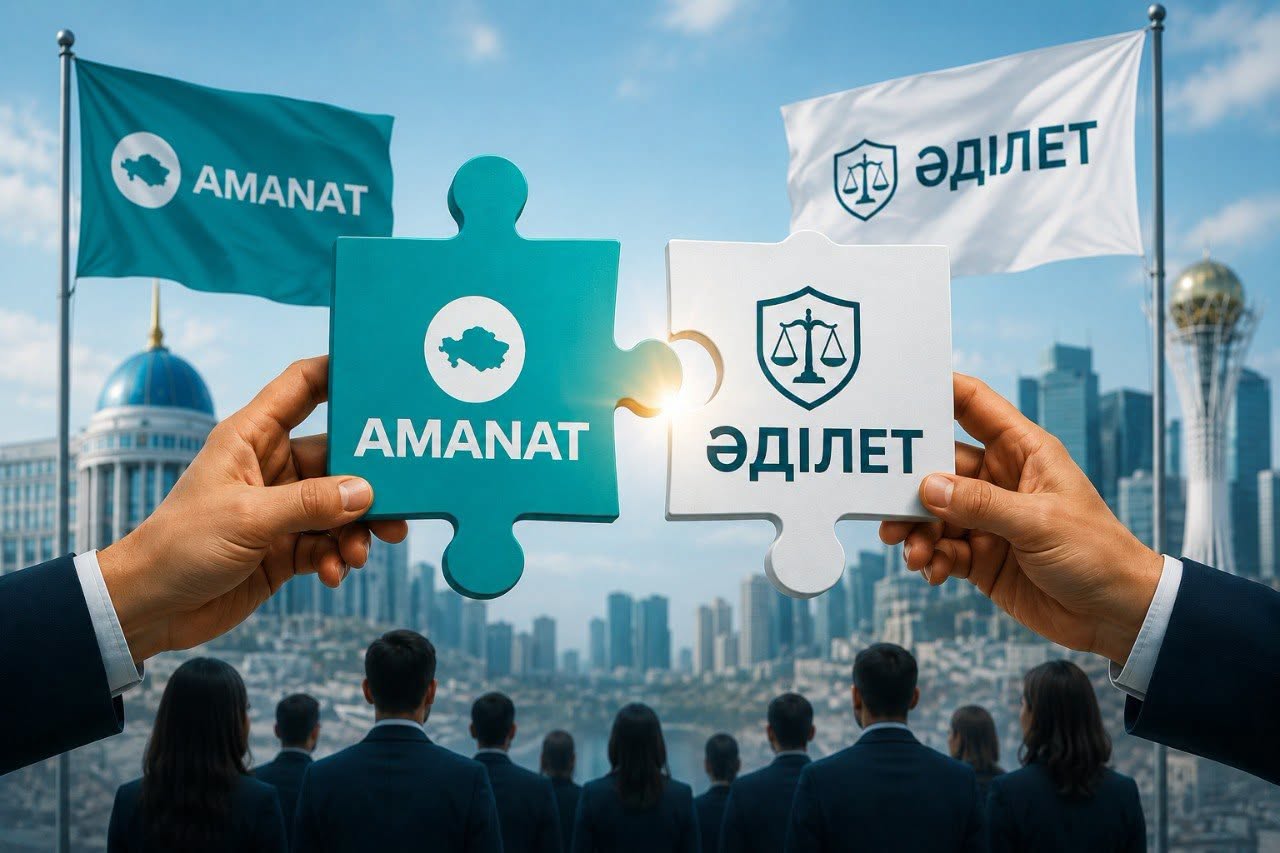
This is the key event of the season and a symbolic break with the Nazarbayev era. On June 12, 2026, at its congress, AMANAT members announced their intention to join Ädilet, and on June 14 all 613 delegates of the Ädilet congress unanimously voted to absorb the ruling party. AMANAT leader Erlan Koshanov explained this by saying that the country was completing a “major transformational period,” while public consciousness still retained associations connected with the party’s past. President Tokayev supported the merger and thanked Koshanov for his work.
Legally, AMANAT will continue to exist as a legal entity for several more months to complete the necessary procedures, while the question of selecting former AMANAT members under the new brand remains open.
Shifts among the others
At the same time, Aq Jol is undergoing a generational change: its long-time leader Azat Peruashev stepped down and proposed Daniya Yespayeva for the leadership. The other parliamentary parties (Respublica, People’s Party of Kazakhstan, Auyl, OSDP) as well as Baytaq are preparing for the campaign; for example, Respublica and OSDP enter the election as established parliamentary forces rather than newcomers.
At the same time, the opposition flank remains weak. OSDP, a party presenting itself as a “democratic opposition,” entered the Mazhilis for the first time only in 2023 and is represented there by just four deputies. Today, the party is stagnating both organizationally and in terms of image, steadily losing support. It appears to be one of the main candidates to exit the party-parliamentary field of the republic.
The situation in Baytaq is even worse. It raises not only the question of the party’s ability to enter parliament, but of its very survival. According to Kazakh political analysts, the current pace of its “development” is distinctly negative.
The first blow to the party was its failure in the spring 2023 parliamentary elections. A number of significant figures within the party — including members of its electoral list and heads of regional branches — blamed Baytaq’s leader, Azamatkhan Amirtayev, for the defeat. The accusations included embezzlement of funds donated by party members, Amirtayev’s political and managerial incompetence, and totalitarian methods of internal governance aimed at completely suppressing dissent.
As early as 2023, fellow party members accused Amirtayev of violating the party charter and announced his expulsion; one party member stated that he had turned the Greens into “A. Amirtayev Sole Proprietorship.”
Extraordinary congresses, mutual accusations, demands for an audit of the leader’s activities, and public statements about a “raider takeover” of the party followed.
The public struggle for control of the party objectively reduced Kazakh voters’ trust in the “green” discourse as such. Against this backdrop, insiders in government and expert circles were already talking about an imminent collapse: the party was failing to justify the hopes placed in it either from below or from above.
Environmental experts and some media outlets view Baytaq as an imitation “green” project, whose leadership came into conflict with grassroots environmental activists, while subsequent internal scandals undermined trust in the very idea of a “green party.” For example, Amirtayev supported the development and drainage of the unique group of Small Taldykol lakes in Astana, while local environmental activists and residents were trying to preserve them. Baytaq’s leader publicly accused the defenders of the lakes of being biased.
The agreements that Baytaq would become the mouthpiece of the green agenda in the republic have also been broken more than once. The party has not initiated or carried out a single significant environmental event: both its forums and media activities have been largely performative, despite the tens of millions of tenge received by party-affiliated media from the state.
The final straw was a public scandal centered on Amirtayev. In search of at least some support, Baytaq’s leader turned his attention to Russian parties and business circles. However, his attempt to fly to Russia ended unexpectedly: Russian security services denied him entry, finding hidden reasons to distrust him.
Thus, Kazakh experts say that Amirtayev has discredited himself in every direction: before voters, before many party members, before the republic’s leadership, before environmentalists in Kazakhstan and abroad, and somehow even before the FSB. As a result, Baytaq now faces a dilemma: to cast aside its limiting old methods and figures and move forward, or to continue accumulating negativity, finally losing trust and committing political suicide.
What comes next
Less than two months remain before the election. At first glance, this is a very short period. At the same time, political processes in the republic sometimes demonstrate such dynamics — both in terms of speed and substance — that many things may happen which are not visible today even to experienced analysts.
We will continue publishing analytical materials on developments in Kazakhstan and hope that these processes will be of interest to our readers not only in Poland, but throughout Europe.