
Turkey between stability and cataclysms: what to expect from Ankara in 2023?

Research of Alexander Gnydiuk, Leading expert on Central Asia and East Europe
The year 2022 has become a serious challenge for official Ankara and President Recep Erdogan, who has been constantly balancing between domestic political challenges, firstly related to economic problems and huge inflation rates, and efforts to strengthen Turkey’s regional positions in a period of another external turbulence caused to a greater extent by the Russian-Ukrainian war. The most controversial thing for the current government was that the entire cascade of events took place in the most difficult period – a year before the next presidential and parliamentary elections, which, according to the forecasts of many expert centers, will be the most difficult for Recep Erdogan during the entire period of his political career.
The nature of the existing institutional model of governance in Turkey is reduced to an axiom – Recep Erdogan is perceived by his own voters as the key beneficiary of all processes – positive or negative. Turkey enters the year 2023 in a rather difficult situation with a huge number of unresolved problems: inflation, unemployment and a huge increase in social tension related to these indices.
If we talk about foreign policy, despite all efforts to become a mediator in the settlement of the Russian-Ukrainian crisis and a huge number of successful cases (grain agreement, etc.) for Turkish citizens, other problems remain a priority – overcoming the “Syrian crisis” (including the return of millions of refugees back to Syria ) and strengthening Ankara’s position in the South Caucasus region (signing a full-fledged peace agreement between Azerbaijan and Armenia and launching the Zangezur trade corridor), but each of the mentioned problems is in a very difficult phase with an unpredictable development format.
Therefore, we propose to analyze in detail the most serious factors that will influence Ankara’s position or steps both in the middle of its own state and in regional politics.
Economy
The situation with the economy remains the worst during the entire period of Recep Erdogan’s stay in power in Turkey – which is 24 years. For example, the consumer price index (basic food products and household goods) grew by 64% at the end of December last year, and inflation at the end of 2022 reached a mark of 84.3%. And this is only according to official data, while studies by independent analytical centers show much worse figures – the Inflation Research Group reported 186% inflation in November. Despite the government’s efforts to stabilize the situation by increasing pensions and salaries of civil servants by 25%, which was announced by Recep Erdogan at the beginning of the year, the situation will remain quite difficult for a long time.
Therefore, it is expected that at least until the elections, the government will adhere to the policy of low interest rates introduced last September in order to control the national currency and implement comprehensive measures to reduce inflation. Also, the Turkish authorities resorted to increasing spending on the social sphere precisely with the expectation of “fertilizing” the population on the eve of the elections. In particular, Ankara directed 1.4% of the budget to subsidize energy for the population, the minimum wage was doubled and more than 2 million citizens were given the opportunity to retire earlier. Instead, Moody’s and Fitch’s credit ratings have been downgraded from “investment grade” in 2016 to Bolivia and Cameroon in 2023, a sign of growing problems that the current government is trying to postpone until after a very difficult electoral cycle.
On the other hand, the stock market is booming in Turkey as investors seek to preserve their assets amid rampant inflation. The Borsa Istanbul 100 index (the top company on the Istanbul Stock Exchange) rose by 80% in dollar terms and by 150% in national currency – this is the largest increase since 1999. Also, international financial agencies predict a decrease in inflation in Turkey in 2023 and further stabilization of the situation along with a decrease in unemployment. In particular, the Turkish authorities plan to stabilize the inflation rate at 15% in 2024 and reduce it to 8% in 2025. Western analysts, however, are less optimistic about the rate of inflation decline and expect it to fall to around 40% before the May elections, which will improve the government’s position somewhat, but will certainly not guarantee a sure victory.
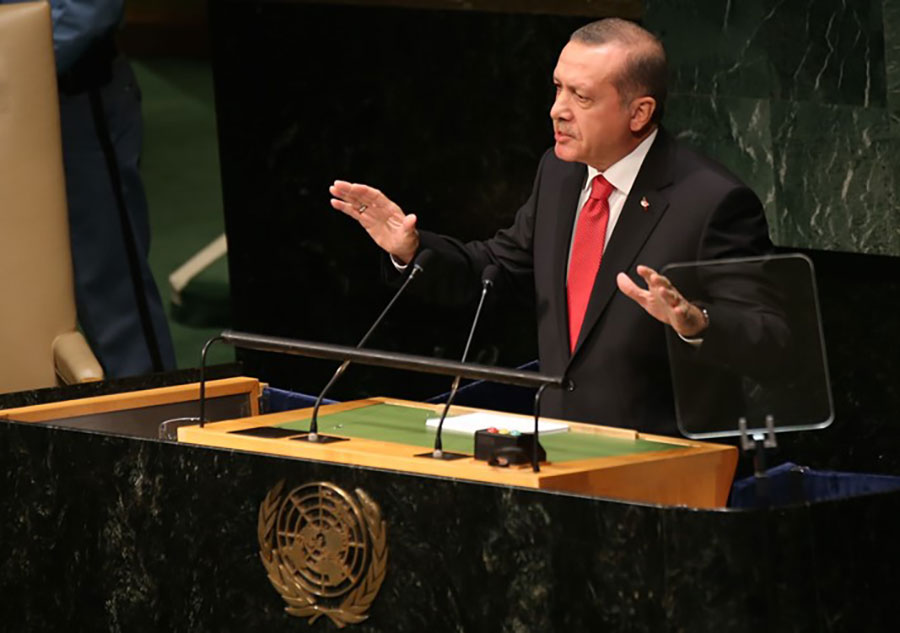
The transformation of the political system in Turkey in 2017, when President Erdogan received monopoly rights to govern the state, led to the deepening of economic problems that had been accumulating for the past few years and led to a reduction in the activity of international investors. For example, in 2017, foreign investors owned 65% of the country’s stock market, while now this mark has more than doubled to 30%. Despite increased activity in the stock market among its own citizens and record growth rates, the problem of a decrease in the real share of foreign investment will remain very painful for Ankara.
Election campaign
 The election race in Turkey will probably be the most difficult for the incumbent government due to the huge number of economic problems. Although the local government is trying to stabilize the situation through various “social bonuses” and it is already beginning to bear some electoral fruits, the result will largely depend on the ability or desire of the opposition to play a consolidated role by supporting a single candidate.
The latest sociological research carried out by the OPTIMAR company emphasizes this dynamic, but at the same time demonstrates the contradictory positions of the ruling Justice and Development Party, which, with a high probability, will be forced to conduct difficult negotiations on the creation of a new coalition, because simultaneously with the presidential campaign in Turkey, parliamentary elections.
According to the research data, as of the beginning of the year, the situation with the top 5 forces looked as follows:
- Justice and Development Party (ruling) – 45%;
- Republican People’s Party (opposition) – 21.6%;
- National Movement Party (ruling coalition) – 11.4%;
- People’s Democratic Party (opposition) – 7.8%;
- Good party (opposition) – 7.1%.
According to the data of this study, the authorities can count on 56% of the vote – that is, the majority of voters, while the forces from the opposition bloc (coalition of six parties) have indicators of support at the level of a conditional 30%. According to the forecasts of many independent experts, the combined opposition will be able to practically guarantee 35-40% of the votes in the parliamentary and presidential elections.
However, the gaps between the opposition and the government are not so significant, given the realities of political life in Turkey. Therefore, it is logical to assume that the outcome of these races will be determined precisely by the context of the ability of the opposition leaders. Last December, the most likely opponent of Recep Erdogan, the mayor of Istanbul, Ekrem Imamoglu, came under the absolute pressure of the state machine because of a statement made back in 2019, when Imamoglu called the representatives of the Election Center of Turkey “idiots”, being dissatisfied with the results of the calculations during the municipal election. It was Ekrem Imamoglu who was considered the most dangerous opponent for the current head of state, Recep Erdogan, but not everything is so simple.
The actual persecution of Ekrem Imamoglu led to the intensification of the protest movement in the two largest cities – Istanbul and Ankara, and after a few weeks, the mayor of the capital (Ankara) Mansur Yavash sided with the protesters, who openly supported the candidacy of Kemal Kilicdaroglu, who was previously supported by the mentioned mayor of Istanbul Imamoglu. Thus, the chances of one candidate being supported by the majority of opposition forces automatically increase, as does the probability that it will be Kemal Kılıçdaroğlu, who has already started a very powerful information campaign. Confirmation of this is the latest scandal on the air of the Turkish TV channel TV100, when during Kılıçdaroğlu’s speech, the broadcaster trivially turned off the broadcast and launched an advertisement for the private military campaign of SADAT (functionally analogous to the Russian PMK “Wagner” in Turkey). Such a step on the part of the authorities is a huge nonsense, since the scandal only benefited Kılıçdaroğlu, who was defended by the international community and a huge number of Turkish citizens through social networks, which can give an additional impetus to the opposition.
As of now, the biggest problem not only for Erdogan, but also for the opposition is the so-called “Kurdish factor”. The paradox is that the People’s Democratic Party, the second most popular opposition political force after the Republicans, actually refuses to support Kılıçdaroğlu and plans to nominate its own candidate for the presidential elections. Such a step can significantly weaken the chances of Kylichdaroglu and simply dilute part of the opposition electorate. It is clear that the position of the “Kurdish” forces is part of a political game and an attempt to win a “golden share” for themselves in terms of the distribution of government portfolios in the future, but whether they will be able to reach an agreement with other opposition forces in the end remains an open question.
Instead, the Turkish authorities launched a powerful campaign against the Peoples’ Democratic Party, accused of separatism and ties to the outlawed Kurdistan Workers’ Party. The accounts of the People’s Democratic Party were frozen (about 30 million dollars), and the Constitutional Court of Turkey is considering the issue of the ban and dissolution of this political force.
Such circumstances are pushing all opposition forces to consolidate, as their political future will depend on it, given all the existing risks and Erdogan’s efforts to strengthen his position by “hard methods”. In any case, the readiness for protest activity in Turkey will increase in the coming weeks, which creates a very dangerous precedent for the current regime.
Based on current realities, it is expedient to predict the unification of the largest opposition parties and full support for Kılıçdaroğlu in the presidential elections, including pro-Kurdish forces. February-March is the period of the most intense confrontation for the support of those who have not yet decided on their choice – this is from 15% to 18% of voters. During this period, the risk of large-scale protests and violent clashes inside the country will become extremely high – much will depend on further legal repression of the opposition (the conditional arrest of Kılıçdaroğlu or one of the other politicians may become a trigger for the radicalization of the opposition). Therefore, Recep Erdogan will try to demonstrate his own strength, first of all, in the international arena, where the Syrian direction will become a priority.
Frames of foreign policy positioning
International politics will be an integral part of the election campaign, as Recep Erdogan will try in every possible way to demonstrate the subjectivity of Turkey, which is directly associated with his figure.
Key tracks:
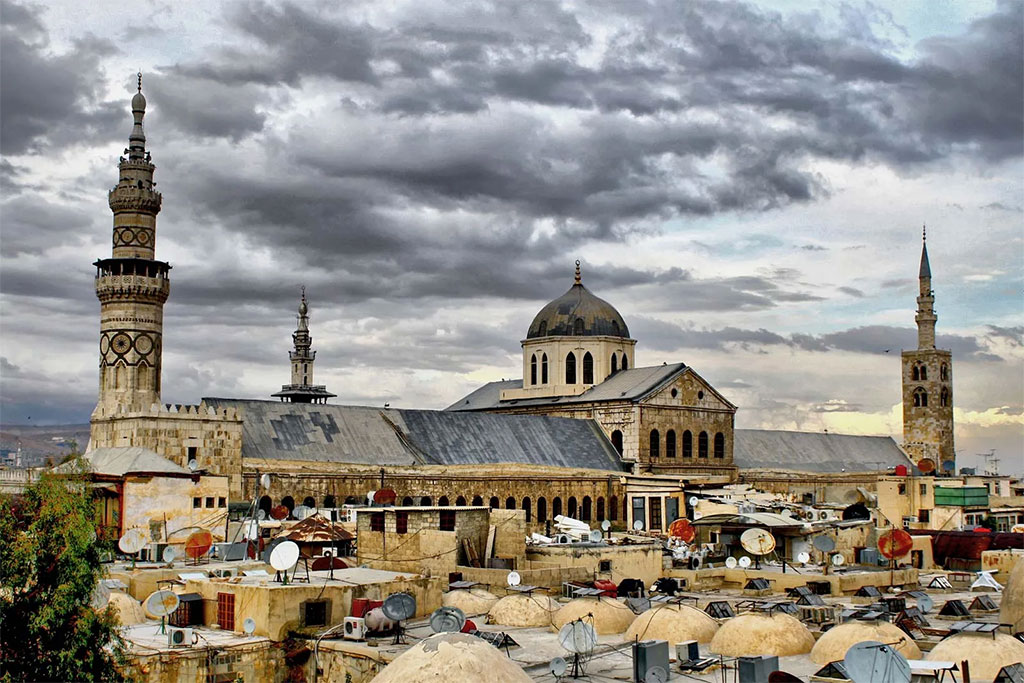 Syria – it will be about the solution of the Syrian crisis from the point of view of the official Ankara. This is the thawing of relations with the regime of Bashar al-Assad and reaching an agreement on the creation of an autonomous entity in the north of Syria, where millions of Syrian refugees will be resettled and one of the most painful internal political problems for Turkish society will be solved – we are talking about the so-called security or 30-kilometer zone in the north, where it will be possible to resettle those same refugees and relieve the structure of social costs for them. Of course, this is an ideal option, and for the successful completion of this process, Ankara will need to negotiate with Washington, Moscow, Israel and the biggest players at the EU level – as of now, this seems unlikely, but we cannot rule out some intermediate solutions and direct agreements with Damascus aimed at more on the media component.
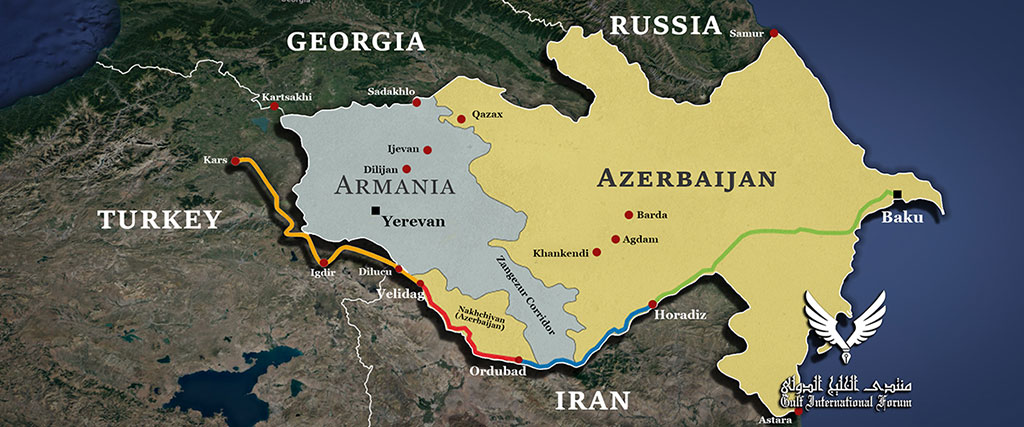 Zangezur Corridor – the situation is no less complicated. The prospect of a peace treaty between Armenia and Azerbaijan remains rather weak in the medium term. Despite this, the issue of launching or admitting to this route is a priority for Ankara. In part, the Turkish authorities are already implementing a similar project through the energy component, where Turkey is trying to reserve the place of a gas hub from the South Caucasus and Central Asia to Europe. On this track, the Turks have individual successes – agreements with Kazakhstan, Azerbaijan and Turkmenistan. Ankara and Baku are even trying to connect Russia to this through the South Stream and other projects, but the issue of logistics remains unresolved. Despite the stabilization of tensions between the Turkish-Azerbaijani alliance and Iran, it is not possible to agree on a settlement with Armenia – Yerevan has the support of France and Germany, which do not share Ankara’s aspirations and try to play against them. Much will be determined by the position of China, which is potentially very interested in launching the Zangezur route to obtain an additional channel for supplying its own goods to Europe.
NATO. Turkey is using frank blackmail regarding the membership of Finland and Sweden solely for the purpose of obtaining separate bonuses for itself. The situation with anti-Turkish speeches in Sweden and the burning of the Koran added to Ankara’s arguments for another wave of tension, and the Turkish opposition cannot in any way criticize the government for such steps, because it will “shoot itself in the foot”. Ankara will try to split the bids of Finland and Sweden into two different tracks in order to weaken Stockholm and force it to make concessions. In this direction, certain positive trends are possible for Ankara. It has already become known that, for the first time since 2019, Helsinki has approved an application for the export of military products to Turkey, as stated by Riikka Pitkanen, a special adviser to the Ministry of Defense of Finland. We are talking about steel for the manufacture of armor, not about any heavy weapons or aviation, but the fact itself is a precedent that Ankara will take full advantage of. As of now, several things are clear: Turkey will delay membership negotiations with Finland and Sweden until around April in order to make the most of it in the election campaign; Ankara will maximally bargain with Washington for concessions on at least one of two issues – complete carte blanche regarding the Syrian issue or the lifting of the embargo on the supply of weapons (primarily F-16 aircraft). As long as the negotiations continue, the degree of political tension and statements from all sides will decrease and, probably, the parties will be able to reach an acceptable result for all. In this aspect, only one thing is clear – by the end of 2023, Finland and Sweden will receive full membership in the Alliance.
Russian-Ukrainian war. Since Putin’s full-scale invasion of Ukraine, Recep Erdogan has been trying to use this situation to his maximum advantage through the status of a kind of mediator. On this “front”, he can boast of some successes – the grain agreement, the exchange of prisoners of war and the status of a negotiating platform. At the same time, Ankara is trying to get its economic dividends from economic cooperation with Moscow and is doing so quite successfully, despite serious criticism in the West. Ankara still has a number of common areas of interest with the Russian Federation and coordinates its actions with the Kremlin with varying degrees of success – one of the rounds of Armenian-Azerbaijani negotiations in Moscow, negotiations on Syria. At the same time, Ankara continues to provide systematic aid to Ukraine in the form of humanitarian cargo and even heavy weapons in very significant quantities. Such a policy will continue in the future until the election and under the condition of the victory of Recep Erdogan.
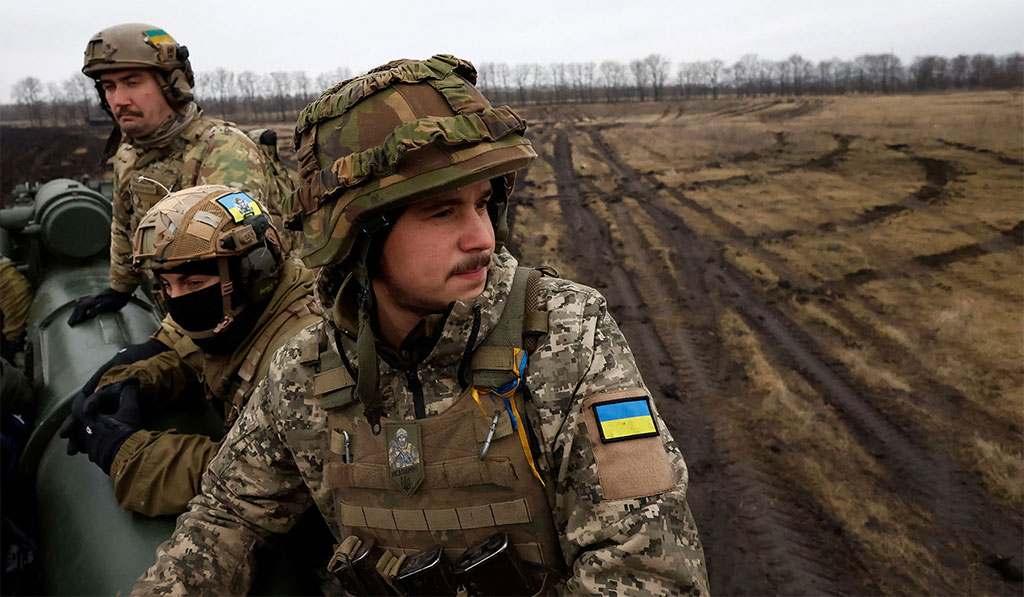
Ankara is interested in Ukraine surviving this war and maintaining its own statehood in a form that will be sufficient to partially deter Russia, but the issue of Kyiv regaining control over the territory at least until February 24, 2022 is not a matter of principle for them – it is necessary to clearly understand
Turkey seeks to achieve the maximum weakening of the Kremlin in order to reduce Russian influence in Syria, the South Caucasus and Central Asia – they will consistently implement this policy, but they are definitely not interested in transforming / changing the political system or violating the territorial integrity of the Russian Federation. Ankara is interested in a weak Russia, which does not always involve radical transformations.