
Anton Naichuk, Ph.D, the head of East European Council
Prime Minister Viktor Orbán’s “shuttle diplomacy” has already raised many questions and has become the quintessence of political self-promotion. The visit to the Russian Federation was unexpected and caused a wave of indignation, but the Hungarian side still has the opportunity to “surprise” the international community in the future.
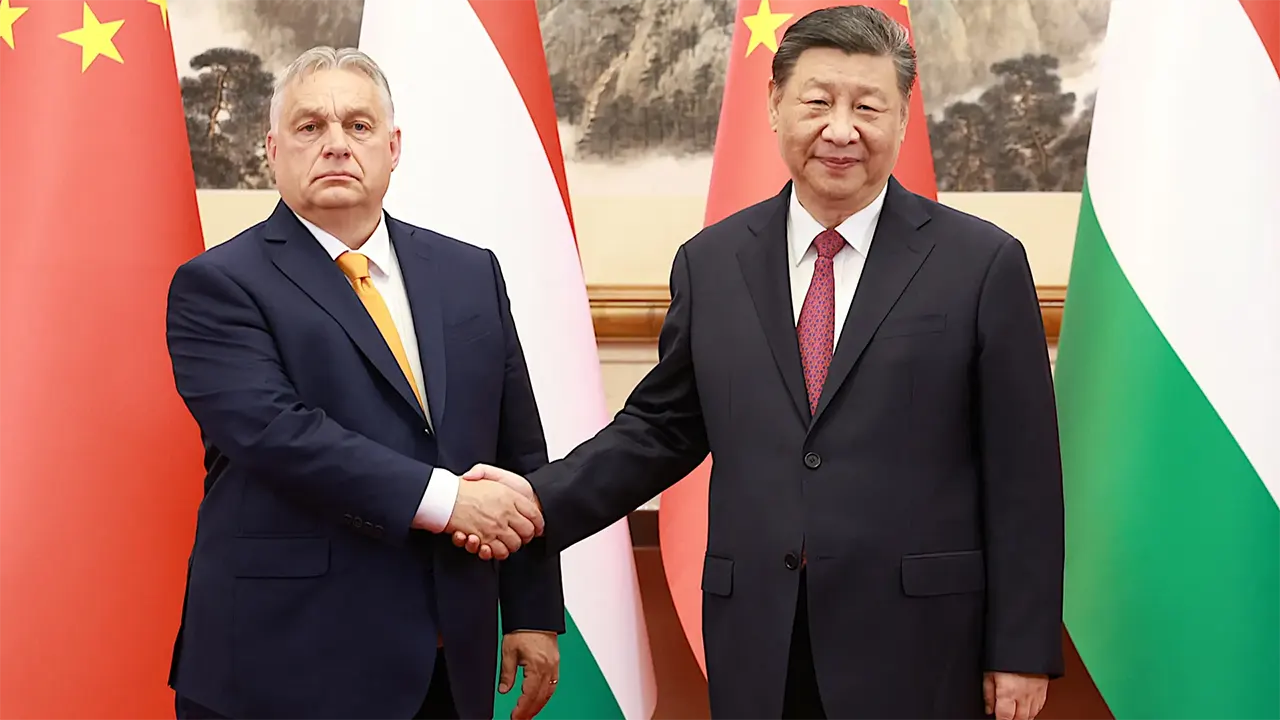
The next surprise from official Budapest was Orbán’s arrival in Beijing.
It seems that the Hungarian Prime Minister plans to actively use the Ukrainian issue in order to get an argument and a reason to improve relations with China, as well as to create “added political value” for himself in the eyes of Xi Jinping.
It is important for Orbán to demonstrate to the Chinese side that Hungary fully supports the “peace plan” for Ukraine proposed by the official Beijing. In addition, Orbán is even engaged in the formation of a group in the European Parliament, which will advocate an end to the war and is open to consultations with Chinese colleagues.
All this fits into the strategy of Hungary’s great diplomatic game. It can be assumed that Orbán’s agenda at the negotiations will include not only the Ukrainian case, but also bilateral economic cooperation, the prospects of Chinese investments and everything where the Hungarian Prime Minister can make a profit.
On the one hand, “peace in Ukraine” is a convenient reason for the development of relations with China and the key to a successful Hungarian policy in the Chinese direction.
On the other hand, it is also a justification and “legitimization” of political communication with Russia: while on one side of the table there are abstract initiatives to end the war, on the other – projects in the field of atomic energy and contracts for Russian gas.
In Orban’s understanding, he flew to Moscow to negotiate peace and there is no need to condemn him for that. He pursues similar prices in Beijing, offering himself as a bridge in establishing relations between China and the European Union.
Unfortunately, such efforts by Orban in China will only create problems for Ukrainian diplomacy. While official Kyiv is trying to demonstrate to the Chinese side that Europe is united around Volodymyr Zelenskyi’s peace formula, and a just peace is based on territorial integrity and the withdrawal of Russian troops, Orban is showing Xi that there is an alternative vision among European countries and that the war must be stopped immediately on the front line . At the same time, to the question “What will happen to the occupied territories?” the Hungarian side does not give an answer.
Should we expect results from Orbán’s trip to China? In the domestic political arena in Hungary – yes. The Prime Minister will position himself as the new leader of Europe, who is welcomed at the highest level on his foreign trips. In the context of ensuring a just peace – hardly. China is not against receiving another diplomatic tool that will lobby for Chinese interests in Europe and promote Chinese narratives. In this case, Orbán appears to be a strong candidate. Ideally for Beijing, if an interstate conditionally pro-China political group is really formed in Europe, and if Orban is so keen on it, he can start forming it. However, from a strategic point of view, the trip of the Hungarian delegation to Beijing does not change the real state of affairs: everyone will remain in their positions.
However, the question remains open: will Orbán stop “surprising” the international community? Not a fact.
A potential next surprise in the coming days may be a meeting with the US presidential candidate Donald Trump, which will fit into Hungary’s “peacemaking diplomacy”.
Orban already has the experience of direct communication with the leader of the Republican Party and there will be no organizational problems with holding another summit. The formal reasons are various: the congress of Republicans at the invitation of the Prime Minister of Hungary or the intention of the Hungarian side to discuss the “mystical plan” to end the war allegedly authored by Trump.
Such a meeting will have a special resonance in the time frame close to the NATO Summit in Washington and against the background of the continuation of the election contests in the USA.
Why would a meeting with Trump be of interest to Orbán, and what goals might the Hungarian Prime Minister pursue?
First, Orbán will make a clear “bet on Trump’s victory” and even try to play along with his presidential campaign. The Hungarian side will reuse “peaceful” narratives, appealing to Trump as a “future peacemaker.”
Secondly, Orbán will be able to offer Trump “intermediary services” in establishing communication with Russia.
Currently, the Trump team, even if such a desire appears, will not be able to conduct a direct dialogue with the Russian regime, given the toxicity of such contacts. Moreover, even if we imagine the scenario of Trump’s arrival in the presidential chair, the organization of the summit with the Russian president will also have enough problematic moments.
In such cases, Orbán can act as an unofficial mediator and a safe communication tool, gaining another political PR and status for himself.
Under favorable circumstances for Orbán, the Prime Minister will even be able to offer Hungary as a bridge for the resumption of US-Russian consultations on “strategic security”, and possibly a platform for a “peace summit” in Budapest with the participation of all parties, including representatives of the aggressor country .
Thirdly, Orbán would like to position himself in front of Trump as a reliable ally and partner in Europe with whom the Republican can build strategic communication even bypassing France or Germany.
It is likely that the Hungarian Prime Minister hopes that Trump’s victory will radically change the situation for him: if now his political position is ignored and often purposefully framed, then if the elections in the USA are successfully completed for him, the leaders of other European countries will see him as “the right Trump’s hand in Europe. For Orbán, this is an attempt at political self-affirmation at the global level.
If Orban’s meeting with Trump takes place against the background of the NATO summit, it will carry risks for Ukrainian interests. After all, while official Kyiv will fight for additional air defense systems, weapons and joining the Alliance, Orban will talk about the de-escalation of the situation between NATO and Russia, the need to stop military supplies to Ukraine, the need for a ceasefire and the rest of the appeals, which will situationally play into the hands of the Russian side.
It is important that when Orbán was visiting Moscow, the European establishment emphasized the absence of the Hungarian Prime Minister’s negotiating mandate with the EU. In the case of Trump, Orbán will again put the rest of the European partners in an awkward position: they will have to condemn such actions or refrain from any assessment.
Will Orbán’s hypothetical meeting with Trump have significant results?
It is worth noting that, as of now, Trump’s key goal is to win the elections, and despite frequent public appeals to the topic of war, right now, it will not be a priority for him. In this context, any initiatives of Orbán will not play a fundamental role for Trump and will be considered by him exclusively as a small element of the election campaign, and not as a strategic opportunity.
Trump has neither the authority, nor the desire, nor the time to “play diplomatic games” regarding Ukraine and Russia until he returns to the White House. It would probably make more sense for him if Orbán brought him investors rather than a peace plan. Theoretical mediation in contacts with the Russian side is generally not in time for Trump now, and it is not yet clear how much they will be needed in the future. First, we still have to wait for the results of the elections, and secondly, Trump’s approaches may not meet Russian or Hungarian expectations at all.
And finally, given the dynamics of the situation in Ukraine, there are reasons to believe that the Trump team does not yet have a detailed model of actions in case of victory in the elections. There are political declarations about ending the war, but the tools for implementing the plan are hardly prescribed.
Orbán’s diplomacy can help him achieve political PR, but in the field of ending the war, such proposals do not correspond to the objective state of affairs and do not provide a clear understanding of how to ensure a just peace. Given Trump’s business approach, such abstract conversations on the part of the Hungarian Prime Minister may remain in the background for the Republican leader.
That is why, if the teams of Orban and Trump organize a joint meeting for them in July, it will not bring a just peace in Ukraine closer, but will only become an element of the political game, where each side pursues its goals – it is far from the front lines on Ukrainian soil.