
What role does Ukraine play in the parliamentary elections in Poland
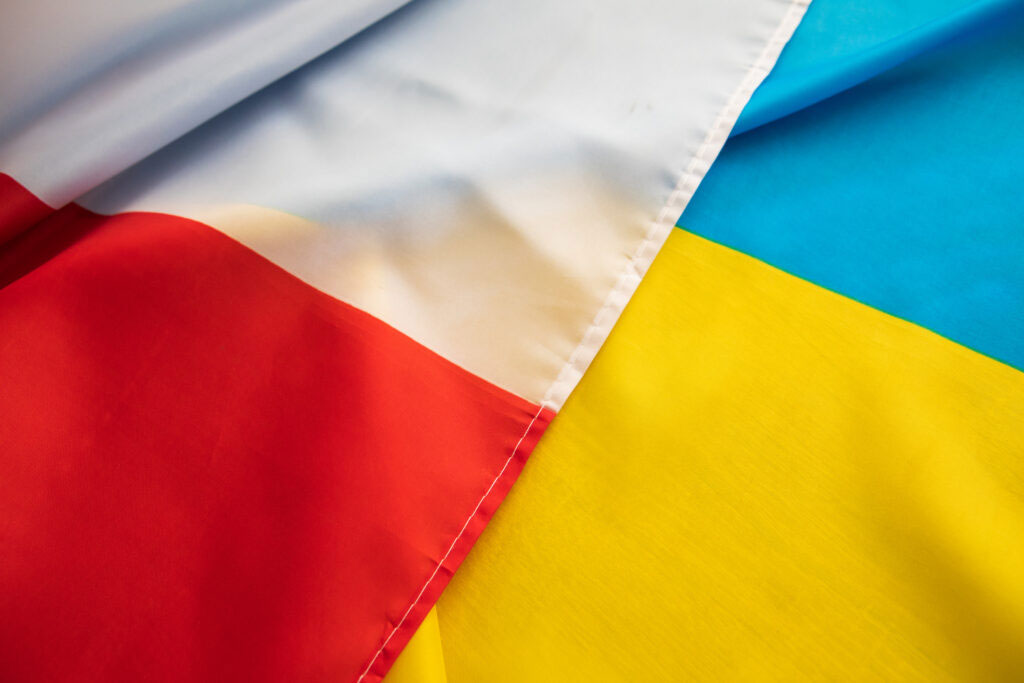
What role does Ukraine play in the parliamentary elections in Poland and how to preserve the strategic alliance between the countries. Anton Naychuk, East European Council
Before the parliamentary elections in Poland, which will be held on October 15, 2023, the topic of Ukraine is at the forefront of political discussions and will play an important role in the parties’ competition for their own electorate.
A characteristic feature of the foreign policy approaches of “Law and Justice”, which has been ruling the country for a long time, and is now the favorite in the race, is an understanding of the need for a strategic security alliance with Ukraine, an interest in creating better opportunities for Polish business during the reconstruction of Ukraine.
However, positive orientations are somewhat “overshadowed” by fierce disputes in the field of agrarian policy, as well as unresolved problems related to historical memory. Unfortunately, they are reflected in the content of the election campaign.
Behind-the-scenes and public discussions within the framework of the East European Economic Forum, which took place on September 5-7 in Karpacz, Poland and brought together the political establishment from all political camps, demonstrated that the “pitfalls” of bilateral relations remain two topics – the “Volyn tragedy” and “grain export from of Ukraine”.
These are the key factors that provide the basis for criticism of the Ukrainian vector of official Warsaw policy by radical opposition forces, party “Law and Justice” to resort to harsh actions and rhetoric, and lay the foundation for shaking the stable position of the Polish population regarding the good-neighborly approach to Ukraine.
Undoubtedly, their solution will contribute to an even greater cementing of partnership relations between the countries, but are there scenarios and tools that will allow us to find an understanding?
Given the available opportunities and in the case of a pragmatic policy – there is.
First, Ukraine sent a clear signal to the Polish side about its readiness to resolve the painful issue of common history once and for all, when agreements were reached between Volodymyr Zelenskyi and Onzey Duda on establishing historical justice and commemorating the victims of the tragic events in Volyn in 1943.
It is interesting that an Expert Council has already been established in Kyiv on the basis of the T.G. Shevchenko National University, headed by Doctor of Historical Sciences Pavel Gai-Nizhnyk, to implement the decisions of the Presidents, and Warsaw University has decided to join its work.
In addition, on the site of the XXXII East European Forum in Karpacz, People’s Deputy from the “Servant of the People” party, Oleg Dunda, somewhat unexpectedly for Polish expert and political circles, announced the creation of a specialized inter-parliamentary group with the aim of supporting at the state level the results of the activities of the Expert Council made up of academic circles and specialists in in various industries.
Such support at the political level, as well as practical steps at the expert-academic level, caused a sufficient resonance in the environment of the Polish political establishment and were regarded as constructive proposals.
They became a “step to meet” the official Warsaw, they should not be ignored and will prove to be an effective tool for settling old contradictions, ensuring historical justice and stopping the politicization of a painful tragedy.
At a minimum, Ukraine eliminates the reasons for the opposition “Confederation” to accuse Kyiv of unwillingness to take into account Poland’s needs in putting all the dots on the “i”, exhuming the bodies of victims of those terrible events.
There will be no reason for the radical wing of “Law and Justice” to accuse its own Government or the President of a passive policy in the Ukrainian direction, which does not correspond to Polish national interests.
A clear impulse came from Kyiv, the next step after Warsaw.
Secondly, the topic of banning the import of agricultural products is extremely difficult for Ukraine, especially in the conditions of terrorist actions of the Russian Federation and the blocking of the “grain corridor”.
Of course, the Ukrainian side expects maximum assistance from all partners, and Poland’s decision to extend the ban on the import of grain from Ukraine after September 15 does not fit into our vision.
However, it is necessary to analyze the situation in its entirety.
Currently, no political force in Poland will support the removal of restrictions on Ukrainian grain due to political implications. Even the key opposition force “Civic Platform” (there is no need to doubt its pro-Ukrainian position), still added one of the leaders of “Agrounia” to its ranks, which criticized Ukraine and always “warmed up” the specified topic.
Is it worth mentioning that the previously mentioned “Confederation” set the goal of consolidating the “farmer electorate”, competing with “Law and Justice” for votes and raising the stakes in the confrontation even more, using the “Ukrainian factor”?
Unfortunately, there is no ideal solution for Ukraine. Trying to put pressure on Poland through European institutions is a fair and reasonable scenario from the point of view of law, but will it bring results through the prism of political expediency? At present, it is difficult to answer.
It is clear that bilateral contradictions should not cross “red lines”, and Ukraine and Poland are obliged to remain stable and predictable partners in the future, Polish business will play an important role in the restoration of Ukrainian infrastructure, invest in the restoration of the Ukrainian economy, and the Polish side will continue to perform the functions of a logistics hub .
For this, it is necessary to find an acceptable formula for the settlement of the situational conflict. To begin with, Ukraine can appeal to the optimization of grain transit routes, which will trigger an increase in export capacity. Among the practical solutions on the surface:
– transfer of phytosanitary control over products from the Ukrainian-Polish border to the port of Klaipeda, which will speed up the work of the “Baltic corridor”;
– construction of a separate logistics hub in one of the ports of Poland, which will expand the transit infrastructure;
– opening and optimizing the operation of new checkpoints, etc.
If results are achieved in unblocking grain supplies to the Polish market, which is critically difficult, then an intermediate solution will be the development of transit opportunities in order to increase the volume of supplies to key consumers.
The existing problems, artificially aggravated on the eve of the elections in Poland, do not look like deadlock situations without an acceptable solution for both sides.
In one of them – regarding the tragic events in Volyn in 1943 – quite effective proposals have already been developed and presented at the expert-political level. Otherwise, Ukraine will have to finalize its approach taking into account all the circumstances.
However, the key condition is not to forget the strategic need of the official Kyiv and Warsaw for alliance, which should always be in the first place.
Original publication in press
https://24tv.ua/ru/uberech-strategicheskij-sojuz-mezhdu-ukrainoj-polshej_n2391814